
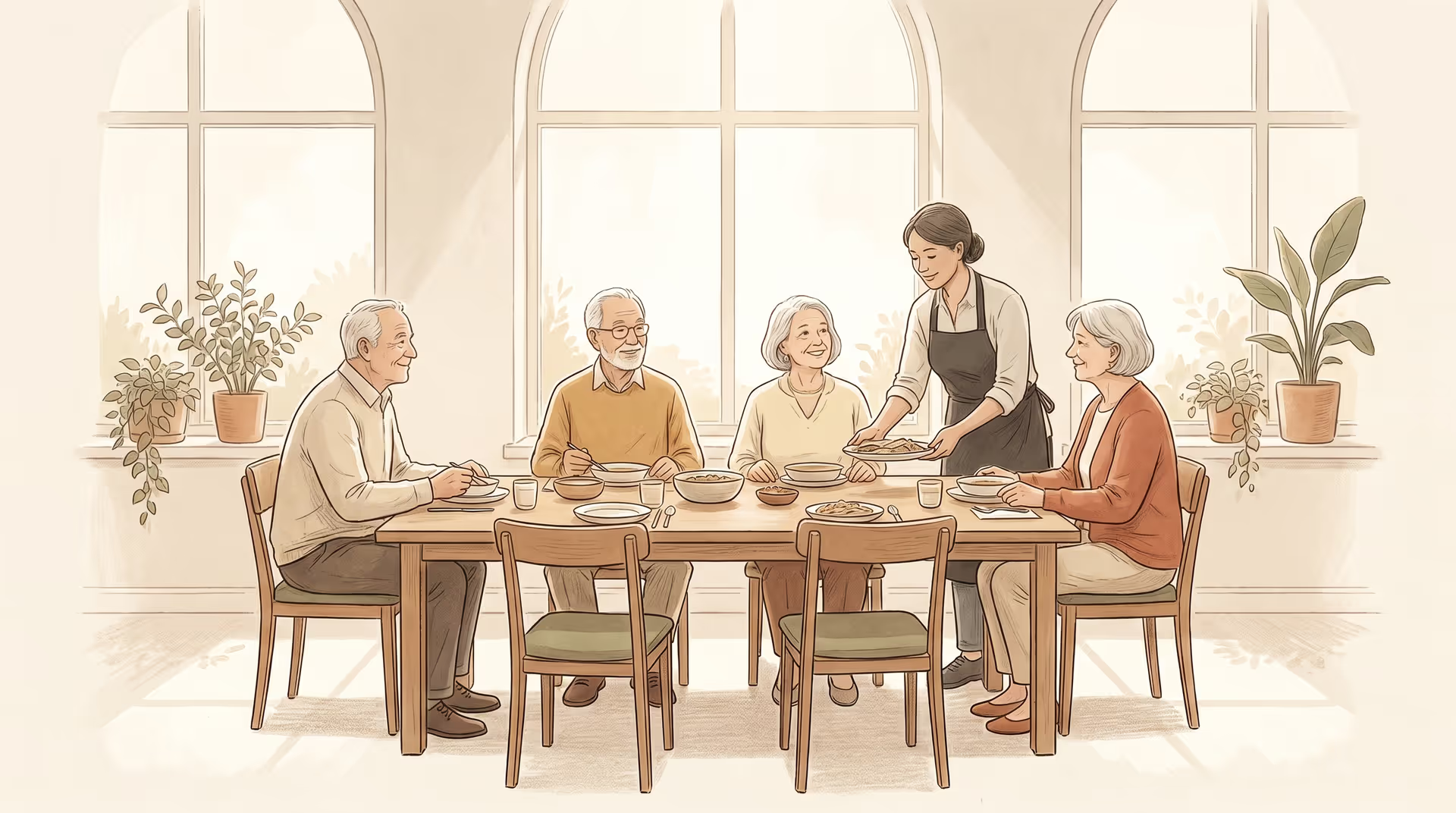
Ask most people to picture life in a senior living community and they conjure something gray: a hospital corridor, a TV droning in a shared lounge, days that blur together. That picture is decades out of date. A modern community looks far more like a small residential neighborhood with a good restaurant, a fitness studio, a calendar of things to do, and help nearby for the moments you need it.
Daily life is far richer than the stereotype suggests: the rhythm of a typical day, the food, the friendships, how much privacy and independence you keep, what happens when care needs grow, and the myths that keep families anxious longer than they need to be.
A typical day, hour by hour
The thing that surprises most newcomers is how ordinary and self-directed a day is. Nobody marches anyone to a schedule. A common rhythm looks like this:
- Morning. Wake on your own clock. Breakfast in the dining room (often the most social part of the day) or coffee in your own apartment. Many residents fit in a walk, a stretch class, or the newspaper.
- Midday. Lunch, then the day's options open up: a fitness or art class, a lecture, a card game, a trip to the pharmacy or a museum on the community shuttle, or simply a nap and a good book.
- Afternoon and evening. A club meeting, happy hour, live music, a movie, or dinner with the friends you now eat with most nights. Then your own quiet evening, in your own space, on your own terms.
The structure is there if you want it and invisible if you don't. That balance (support on tap, autonomy by default) is the whole design philosophy of a good community.
Dining: closer to a restaurant than a cafeteria
Meals are one of the biggest day-to-day upgrades, and not just because someone else cooks. Most communities now run restaurant-style dining with menus, table service, flexible hours, and rotating chef-prepared options instead of a single tray at a fixed time. Communities handle dietary needs (low-sodium, diabetic-friendly, allergies, soft textures) as a matter of routine.
Just as important is what happens around the table. Shared meals are where acquaintances become friends, and where staff quietly notice if someone's eating less or seems off: an informal early-warning system that someone living alone simply doesn't have.
Activities and social life: the real reason people thrive
Families consistently underestimate this. Isolation is genuinely dangerous for older adults; the National Institute on Aging links chronic loneliness and social isolation to higher risks of heart disease, depression, and cognitive decline (NIA on social isolation). A community is a direct cure for that: peers down the hall, a full calendar, and built-in reasons to get up and engage.
A typical week's calendar might include fitness and balance classes, walking groups, gardening, art and music, lifelong-learning lectures, card and game nights, religious services, volunteer projects, and group outings. The movement matters too; the NIA notes that regular physical activity is one of the most powerful things older adults can do for independence and mood (NIA on exercise benefits). You don't have to do any of it. But it's there, every day, and the easy access is what turns "I should" into "I did."
Privacy and independence: still your home
A persistent fear is that moving means surrendering control. In practice you have your own private apartment (bedroom, bathroom, and usually a kitchenette) that you furnish, decorate, and lock. You come and go freely, keep your car if you drive, host family and friends, and live by your own routine. Staff handle housekeeping, maintenance, and laundry, which removes chores while leaving your freedom intact. For most residents, shedding the burden of a house they could no longer manage expands their independence.
Care when you need it, not before
The reassuring part for adult children is that care scales to the person. Independent living offers the lifestyle and services with little hands-on help. Assisted living layers in help with daily tasks like medication, bathing, and dressing. Memory care is a secure, specially trained setting for dementia. Many communities have several of these so a resident can move along the continuum without leaving their friends and familiar halls. The federal government's care navigator has a plain-language rundown of how these tiers differ (LTCFEDS care navigator).
The point is that you don't sign up for more support than you need today. You sign up for a place that can grow with you.
Myths vs. reality
| The myth | The reality |
|---|---|
| "It's just a nursing home." | Most residents are active and independent; skilled nursing is just one specific tier among several. |
| "I'll lose my independence." | You keep a private, lockable home and your own schedule; chores go away while your choices stay. |
| "It's lonely and institutional." | Built-in neighbors and a daily calendar make it easier to stay social than living alone. |
| "The food is bad cafeteria food." | Restaurant-style menus, flexible hours, and dietary accommodations are now standard. |
| "Once you move, you're stuck there." | Tiers of care let you adjust support over time, often in the same community. |
| "It's only for people who can't cope." | Many move while thriving, to ditch home upkeep and gain a fuller social life. |
How Mirador helps
Because day-to-day life varies so much from one community to the next, the only way to know what a place is really like is to see it. Mirador's directory lets you compare nearby communities and read real, verified resident and family reviews (the unfiltered version of daily life) so you're judging a community by lived experience instead of a brochure. When you're ready, our guide on what to expect when moving to senior living and our questions to ask on a tour turn a vague worry into a concrete checklist.
Frequently asked questions
Will I have to give up my privacy? No. You have a private apartment you furnish and lock, and you live by your own schedule. Shared spaces are there to use when you want company.
Can my spouse and I live together? Yes. Most communities have one- and two-bedroom apartments for couples, and some can provide different levels of care to each partner under the same roof.
What if my needs change over time? Many communities span independent living, assisted living, and memory care, so support can increase without an upsetting move. If you're weighing options, see home care vs. senior living.
How do I find out what a specific community is really like? Tour it, eat a meal there, talk to residents, and read verified reviews from current families. Our guide to starting your search walks through the steps.
