
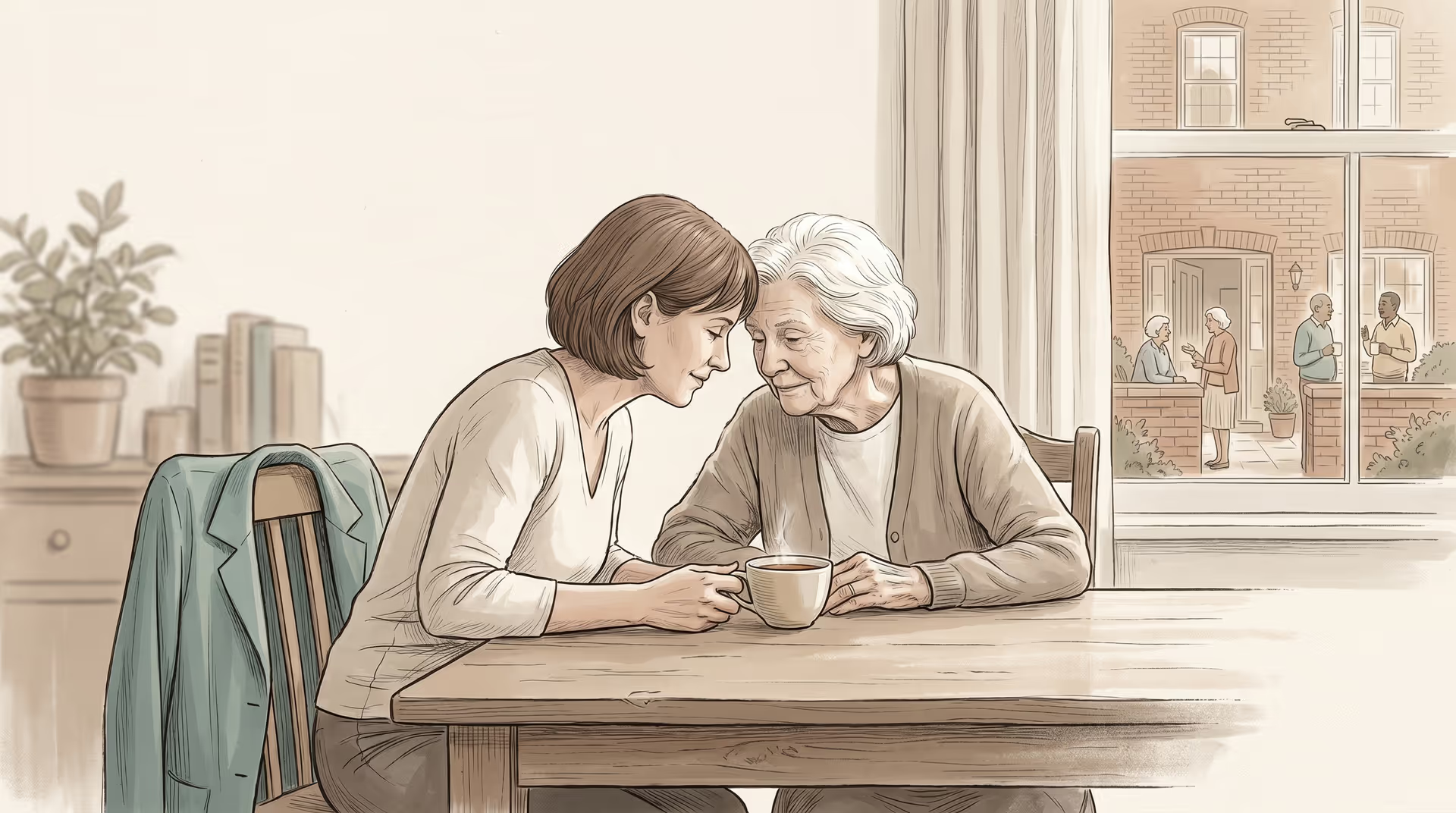
When the daily routine starts to feel like too much (a parent who skips meals, a spouse who needs help with the stairs, a loved one who seems isolated and unsteady), families usually land on the same crossroads. Should you bring help into the home, or move to a senior living community? Both paths can deliver excellent care. The right one depends on the level of help your loved one needs, your budget, and how much the comfort of "home" matters against the value of a built-in community.
It's a decision worth weighing the way a Certified Senior Advisor would: honestly, dimension by dimension, with a side-by-side comparison you can take to the kitchen table.
What each option really means
Home care keeps your loved one in their own home and brings caregivers to them. Non-medical home care (sometimes called personal care) covers help with daily tasks: bathing, dressing, meal prep, light housekeeping, medication reminders, and companionship. It's billed by the hour, so you can buy as little as a few hours a week or as much as round-the-clock support. (Home health care, skilled nursing or therapy ordered by a doctor, is a separate, usually short-term service.)
Senior living moves your loved one into a residential community where housing, meals, daily-care assistance, and activities are bundled into one monthly fee. "Senior living" is an umbrella term: independent living for active seniors, assisted living for those who need help with activities of daily living, and memory care for dementia. The community owns the building, employs the staff, and handles maintenance, so your loved one trades homeownership for a managed, all-in-one environment.
The side-by-side comparison
Here is the breakdown most families wish someone had handed them at the start.
| Dimension | Home care | Senior living |
|---|---|---|
| Where you live | Stay in your own home | Move to an apartment in a community |
| How care is staffed | One caregiver focused on your loved one | Shared staff serving many residents, on-site 24/7 |
| How you pay | Hourly; scales up as needs grow | Flat monthly fee covering housing, meals, and care |
| Best at lower needs | Very cost-effective for a few hours/day | Pays for services your loved one may not use yet |
| Best at higher needs | Cost climbs sharply near 24-hour care | Cost stays predictable as needs increase |
| Socialization | Depends on outside visits and companionship hours | Built-in: dining, activities, and neighbors daily |
| Safety | Home may need modifications; help isn't always present | Grab bars, call buttons, and staff always on site |
| Meals & housekeeping | Caregiver helps; you still run the household | Included and handled for you |
| Independence & familiarity | Highest: own home, own routine | Structured, but private apartment and choice of activities |
| Couples | Both stay home together | Many communities accommodate couples with different needs |
Cost: where the math usually tips
Home care wins decisively at the low end. If your loved one needs four hours of help a few mornings a week, paying by the hour is far cheaper than a full community fee. But the hourly model is also its weakness: as needs grow toward 24-hour supervision, home care costs climb steeply, often surpassing the all-inclusive monthly fee of assisted living, which doesn't change much whether a resident needs a little help or a lot.
A useful rule of thumb: tally the hours of care your loved one really needs each week, multiply by your local hourly rate, and add household costs they're still paying: mortgage or rent, utilities, food, home upkeep. Then compare that total to a community's monthly fee, remembering that the community fee already includes housing, meals, and maintenance. For a deeper look at funding either path, see our guide on how to pay for assisted living. Medicare generally does not cover long-term non-medical care in either setting; the National Institute on Aging explains the options for paying for long-term care.
Level of care and safety
Match the setting to the need. Home care is ideal when your loved one needs help with specific tasks at specific times. Senior living works best when care needs are constant, unpredictable, or escalating, because trained staff are always on the premises, not scheduled to arrive at 9 a.m.
Safety is the dimension families underestimate. A home can be made safer with aging-in-place modifications (grab bars, a stair lift, better lighting), but during the hours no caregiver is present, a fall or a missed medication has no backstop. Communities are purpose-built: emergency call systems, accessible bathrooms, and someone on-site every hour of the day. The NIA's overview of long-term care facilities describes the 24-hour supervision and on-site staffing that define the residential model.
Socialization: the quiet deciding factor
Cost and care get the attention, but loneliness often decides the question. The National Institute on Aging warns that social isolation in older adults carries serious health risks, and a senior living alone, even with a caregiver a few hours a day, can spend long stretches without meaningful contact. Senior living answers this structurally: shared dining, daily activities, and neighbors down the hall. Home care can supplement companionship, but it rarely replaces a built-in community. If your loved one is already withdrawing or grieving the loss of a spouse, weigh this heavily.
How to decide: a quick checklist
Lean toward home care if your loved one:
- Is deeply attached to their home and routine
- Needs help with only a few tasks or a few hours a day
- Has a strong nearby network of family and friends
- Has a home that's safe (or affordable to modify)
Lean toward senior living if your loved one:
- Needs supervision or help around the clock
- Is isolated, lonely, or rarely leaves the house
- Lives in a home that's hard to navigate or maintain
- Has care needs that are growing month over month
Still unsure? Start by getting specific about the need. The Eldercare Locator, a public service from the U.S. Administration on Aging, can connect you to local assessment resources at eldercare.acl.gov. When you're ready to compare communities, our guide on how to start your senior living search and our overview of personal care for seniors can help you take the next step.
The Mirador angle
There's no single right answer, only the right answer for this person, this budget, and this moment. What most marketing won't tell you: home care and senior living aren't rivals so much as points on a continuum. Many families start with a few hours of home care, add hours as needs grow, and move to a community when the math, the safety risk, or the isolation tips the scale. Revisit the comparison table whenever the situation shifts. Mirador exists to make that comparison clear-eyed: browse real communities and their care levels in our senior living directory when you're ready to see what's available near you.
Frequently asked questions
Is home care always cheaper than senior living? Only at lower care levels. A few hours of help a week is far cheaper than a community fee. But as needs approach 24-hour care, hourly costs usually overtake the flat monthly fee of assisted living, and you're still paying separately for housing and meals at home.
Can my parent move from home care to senior living later? Yes, and many families do exactly that. Home care is often the first step; a community becomes the better fit when care needs, safety risks, or isolation grow. Planning for that possibility early makes the eventual transition smoother.
Does Medicare pay for either option? Medicare generally does not cover long-term non-medical home care or assisted living. It may cover short-term, doctor-ordered skilled home health or rehabilitation. Families typically pay for long-term care privately, through long-term care insurance, or via Medicaid for those who qualify.
What if both spouses need care? Home care can support a couple together in their home. Many senior living communities also accommodate couples, even when each spouse needs a different level of care, so neither path automatically separates a couple.
