
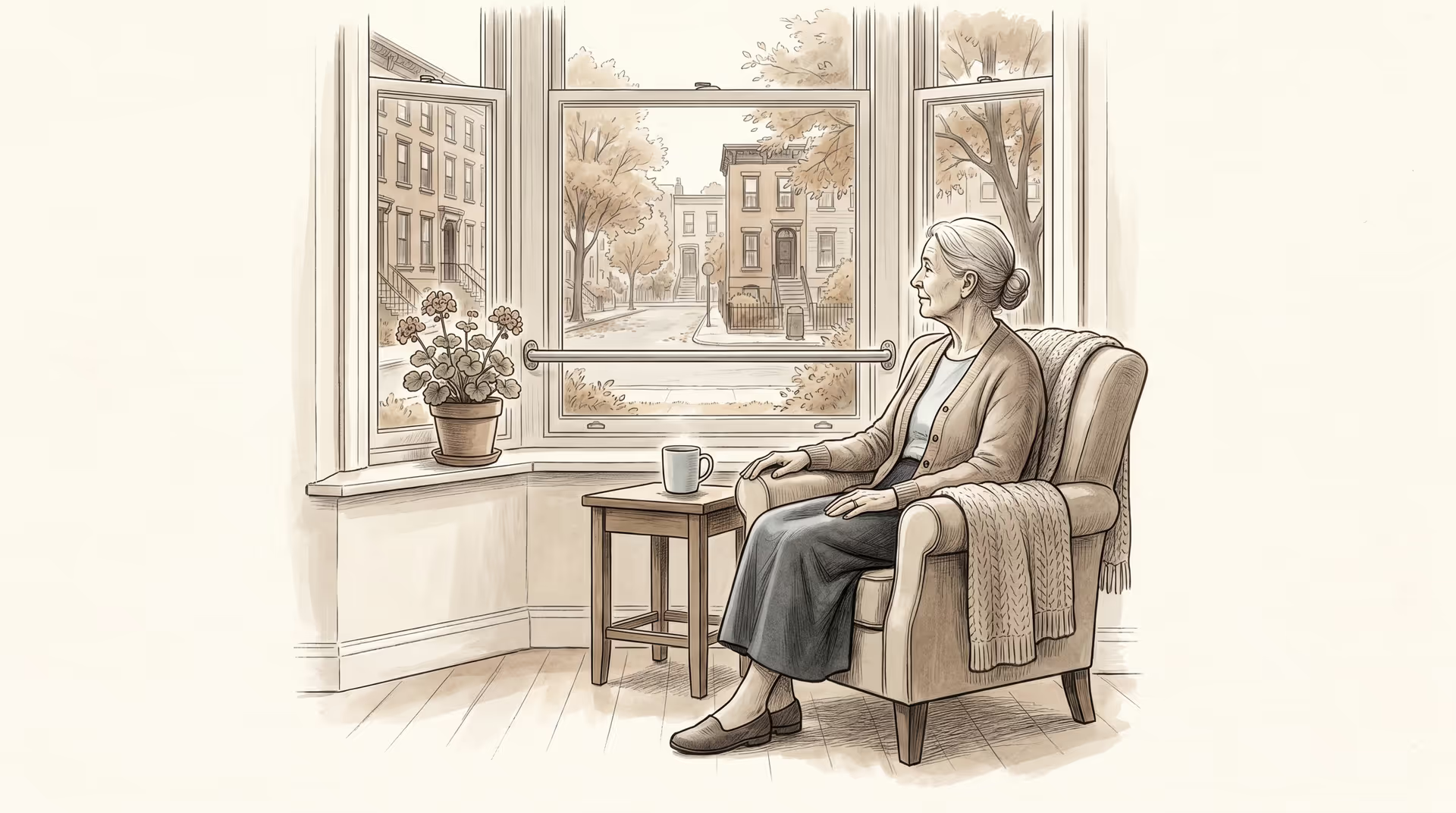
When people picture their later years, most picture them at home. The large majority of adults over 50 would prefer to stay in their own homes as they age, surrounded by familiar rooms, neighbors, and routines. "Aging in place" is the name for that choice: growing older in your own home with whatever support you need, rather than moving to a care community.
It's a wonderful goal. It is also not automatically the right goal for everyone, and it rarely happens by accident. The people who age in place most successfully are the ones who decided to do it deliberately, and then planned for it honestly. This guide will help you make that decision with clear eyes: the real pros and cons, a self-assessment you can actually sit down and answer, what support and safety it takes, and the signs that it may be time to consider something else.
What aging in place really means
Aging in place simply means continuing to live in your own home as you grow older, adapting the home and adding support as your needs change. It does not mean doing everything alone. A person aging in place might use a grab bar in the shower, a weekly housekeeper, a few hours of home care, meal delivery, and a medical alert pendant, and still be "aging in place." The home stays constant; the support around it grows.
The National Institute on Aging frames the central planning question well: the best time to think about how to age in place is before you need a lot of care, while you are still able to make and act on your own decisions (NIA: Aging in Place).
The honest pros and cons
| Pros | Cons |
|---|---|
| Stay in a familiar, comforting environment | Isolation and loneliness if social ties fade |
| More control over daily routine and independence | Fall and safety risks in an unmodified home |
| Often lower monthly cost than a care community | Care costs and home upkeep can climb unpredictably |
| Keep your neighborhood, pets, and community | Family caregivers may carry a heavy, growing load |
| Comfort of long-held memories and possessions | Care can be harder to coordinate and scale up |
Notice that several of the cons are risks you can plan around. Loneliness, fall hazards, and caregiver strain all have well-understood countermeasures. The cons that are hardest to solve tend to be the medical ones: needs that require 24-hour supervision or skilled nursing are difficult and expensive to replicate at home.
A self-assessment: 12 questions to ask yourself
What actually helps is a checklist you can answer today. There's no scoring formula. Instead, pay attention to the questions where your honest answer is "no" or "I'm not sure." Those are your planning to-do list.
Your health and mobility
- Can I safely move around my home, including stairs, without a serious fall risk?
- Can I manage my own medications, or do I have a reliable system to help?
- Are my chronic conditions stable and manageable with outpatient care?
Your home
- Could I live on a single level if stairs became difficult?
- Are my bathroom and kitchen safe, or could they be modified to be?
- Is my home affordable to maintain (taxes, repairs, utilities) for years to come?
Your support and connection
- Do I have people nearby (family, friends, neighbors) who can check in and help?
- Do I have regular social contact, or am I at risk of becoming isolated?
- If I needed a few hours of paid help each day, could I arrange and afford it?
Your logistics and money
- Can I get to medical appointments and errands if I stop driving?
- Do I have a realistic budget for care costs that may rise over time?
- Have I talked with my family about what staying home would actually require of them?
If you answered "yes" to most of these, aging in place is a very reasonable plan. Keep it under review as things change. If several answers gave you pause, treat it as a map of what to shore up first.
Making the home safe
Falls are the single biggest threat to aging in place; they are the leading cause of injury for older adults, and most happen at home (CDC: Older Adult Fall Prevention). The good news is that you can usually make a home far safer with modest, well-targeted changes.
High-impact starting points the NIA recommends include securing or removing loose rugs, improving lighting (especially on stairs and at night), adding grab bars in the bathroom, and keeping frequently used items within easy reach (NIA: Home Safety Tips for Older Adults). For a deeper, room-by-room plan (including walk-in showers, ramps, and lever handles), see our guide to home modifications for aging in place.
The support and the costs
Aging in place is rarely free, and pretending otherwise is how plans fall apart. The realistic categories to budget for are:
- In-home care: companion care, personal care, or home health, paid hourly. This is usually the largest variable cost, and it scales with need.
- Home modifications: a one-time-ish investment, from a few hundred dollars of grab bars and lighting up to larger bathroom or entry remodels.
- Services: meal delivery, transportation, housekeeping, yard care, and a medical alert system.
- Ongoing home costs: property taxes, insurance, maintenance, and repairs that don't stop with age.
Medicare does not pay for long-term personal care at home. It covers limited, doctor-ordered home health services under specific conditions (Medicare: Home health services). For help finding local support: area agencies on aging, transportation, meals, and caregiver programs, the federal Eldercare Locator is the best starting point (Eldercare Locator). When you compare these numbers against a care community, do it as a total picture rather than rent-vs-mortgage; our breakdown of home care vs. senior living walks through it.
Signs it may be time to consider other options
Choosing to age in place is a plan you revisit over time. Watch for these signals that the current setup may no longer be safe or sustainable:
- Repeated falls, or a fall that caused a serious injury
- Difficulty with everyday tasks like bathing, dressing, cooking, or managing medications
- Noticeable weight loss, missed medications, or unopened mail piling up
- Growing isolation, loneliness, or signs of depression
- A primary family caregiver who is exhausted, overwhelmed, or burning out
- Care needs that now require round-the-clock supervision
Seeing one or two of these doesn't mean a move is required tomorrow; sometimes more support at home is the answer. But they are worth taking seriously. Our guide to signs your aging parent needs help goes deeper, and if the conversation does turn toward a community, how to start your senior living search is a calm, practical place to begin.
Frequently asked questions
Is aging in place cheaper than assisted living? Sometimes, but not always. If you need only light help, staying home is usually less expensive. As care needs grow (especially toward full-time, hands-on care), the cost of in-home help can meet or exceed a care community, where staffing is shared. Compare the total monthly picture, not just rent versus your existing housing costs.
Does Medicare pay for help at home? Not for long-term personal care. Medicare covers limited, medically necessary home health care (like skilled nursing or therapy) ordered by a doctor, under specific conditions. Day-to-day help with bathing, dressing, or meals is generally paid out of pocket, through long-term care insurance, or through Medicaid for those who qualify.
When is the right time to start planning? Before you need a lot of care. Planning early (while you can weigh options and make your own choices) is what lets aging in place actually work, rather than becoming a crisis decision after a fall or a diagnosis.
Can I age in place if I have dementia? Often in the early stages, with a safe home and reliable support. As dementia progresses, supervision needs typically rise beyond what a home setup can safely provide, and many families revisit the plan at that point.
A clear-eyed choice
Aging in place is a beautiful goal, and for many people it's entirely achievable. The difference between hoping to stay home and actually doing it well comes down to honesty and planning: knowing where your answers were "no," making the home safe, lining up support before you need it, and agreeing as a family to revisit the plan as things change. Make the decision deliberately, and revisit it whenever your health, home, or support situation changes.
