
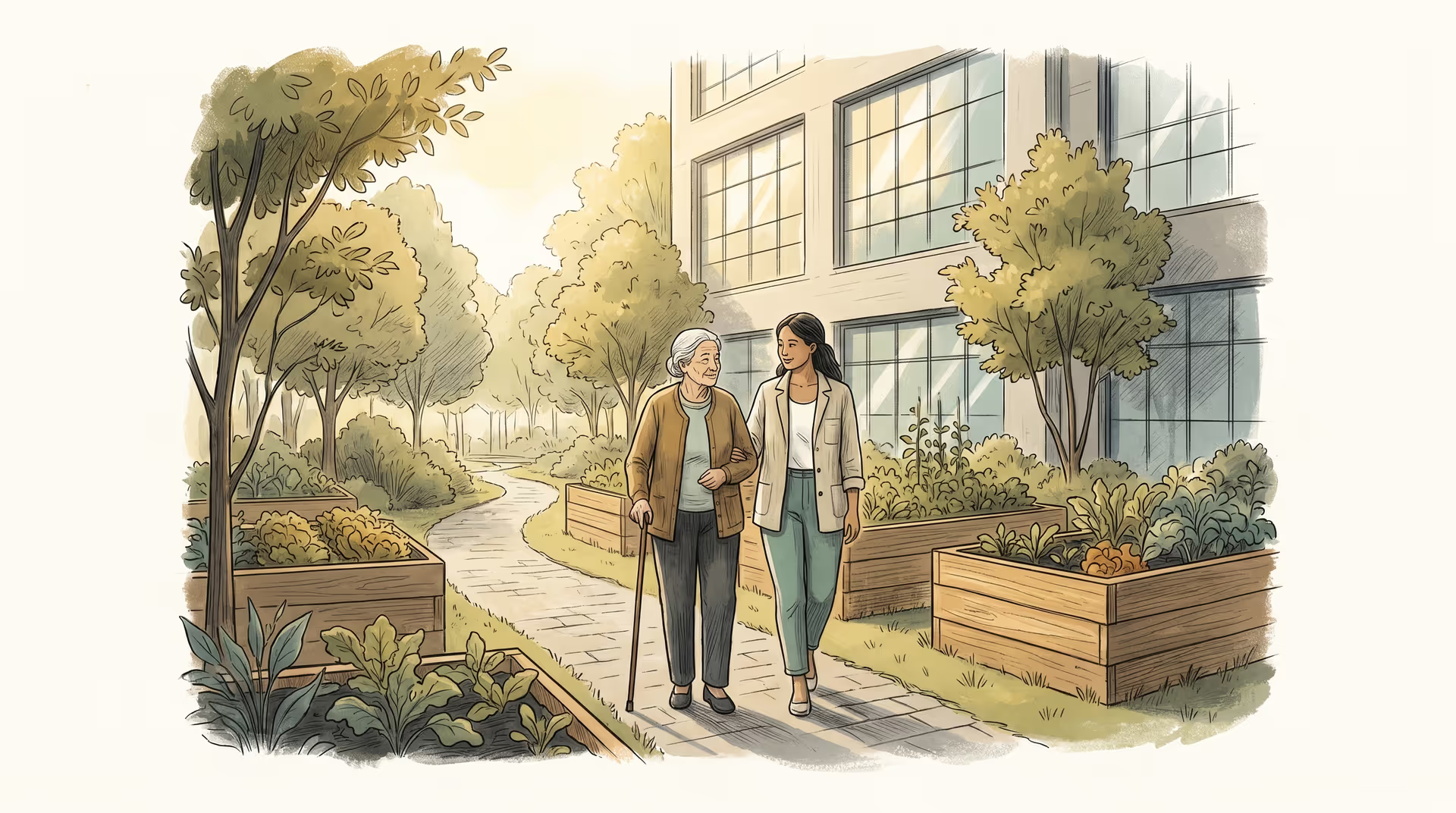
When most families tour a senior living community, they're listening for things like meal options, activity calendars, and how the care team responds when something goes wrong. "Is the building green?" rarely makes the list. But sustainability and resident comfort turn out to be closely connected. A community that's been built and run with the environment in mind is usually a quieter, cleaner, more comfortable, and sometimes more affordable place to live.
What really makes a senior living community "green"? Each feature tends to make daily life better for the people inside it, and there are specific questions to ask on a tour so you can tell genuine sustainability from a marketing brochure.
What "green" really means in senior living
"Green" is a broad word, and in senior living it shows up in six main places:
- Energy efficiency and clean power: better insulation, efficient HVAC, LED lighting, and sometimes solar or geothermal systems.
- Sustainable building and certification: design and construction that meet recognized standards like LEED.
- Healthy indoor air: good ventilation, filtration, and low-emission materials.
- Locally sourced, garden-to-table dining: fresher food, on-site gardens, less waste.
- Walkability and access to nature: paths, courtyards, gardens, and daylight that pull residents outside.
- Waste reduction: recycling, composting, and reusable rather than disposable everything.
The useful insight for families is that none of these are purely environmental. Each one maps to something a resident can feel.
Why green features mean healthier, more comfortable living
Energy-efficient buildings hold a steadier temperature, so rooms don't swing from stuffy to chilly. Better-sealed, better-insulated walls are also quieter, which matters more than people expect in a setting where rest and sleep are foundational to health.
The dining piece is just as tangible. A community with raised garden beds or a relationship with nearby farms tends to serve fresher, more flavorful food, and the garden itself becomes a gentle, purposeful activity for residents who spent their lives growing things.
And the financial angle is real. The U.S. Green Building Council, the nonprofit behind the LEED green building standard, notes that green buildings substantially cut energy, water, and waste costs over their lifetime. In a community, lower operating costs can translate into more stable monthly fees, because utilities are one of the largest line items a provider has to cover.
Green feature, resident benefit, and what to ask
Use this table on a tour: for each feature, you can see what it does for a resident and the exact question that separates a real commitment from a slogan.
| Green feature | What it means for residents | What to ask on the tour |
|---|---|---|
| Energy-efficient design (insulation, efficient HVAC, LED) | Steadier indoor temperature, quieter rooms, lower utility load behind your fees | "How does the building keep rooms comfortable, and are appliances and lighting Energy Star rated?" |
| LEED or other green certification | Independent proof the building was designed and built to a real standard | "Is the building LEED certified or built to a recognized green standard? Which level?" |
| Healthy indoor air | Fewer irritants and odors, easier breathing, less aggravation of asthma or allergies | "How is fresh air brought in and filtered? Do you use low-VOC paints and cleaning products?" |
| Garden-to-table / local sourcing | Fresher, tastier meals and a hands-on gardening activity | "Where does the produce come from? Is there a resident garden, and can residents take part?" |
| Walkability and access to nature | Daily movement, sunlight, and time outdoors, all tied to better mood and health | "Are there safe walking paths and gardens? How easy is it for a resident to get outside daily?" |
| Waste reduction (recycling, composting) | A cleaner campus and a culture of stewardship residents can join | "What gets recycled or composted, and can residents participate if they want to?" |
Tying it to wellness, not just the building
It's tempting to treat "green" as an engineering checklist, but the features that matter most to a resident are the ones that get them moving, eating well, and spending time outdoors. Access to gardens and walking paths supports physical activity and emotional well-being at the same time, which is exactly why outdoor space shows up again and again across the dimensions of wellness for seniors. A truly green community is designed to make the healthy choice the easy, obvious one.
This is also why a green tour and a normal tour should feel like one tour. The same things you'd notice on any visit (the air, the light, the food, whether people are really outside) are the things that tell you whether sustainability is lived or laminated onto a sign.
How to spot real green vs. greenwashing
A few honest signals separate substance from marketing:
The strongest signal is specifics over slogans. "We're committed to sustainability" is a slogan, while "Our building is LEED Gold and our kitchen sources produce from three local farms" is a fact you can verify. Watch, too, for whether residents are involved: genuine programs invite them into the garden, the recycling, and the composting, while window dressing keeps it all behind the scenes. Most of all, it should show up in the experience. Comfortable temperatures, fresh air, good food, and people outside are things you sense within ten minutes of walking in.
When you tour, fold these into your broader visit. Our guides on what senior living is really like and the questions to ask on a senior living tour will help you keep sustainability in proportion: it's one meaningful piece of a much larger decision about care, cost, and community.
Trusted resources
- EPA, Indoor Air Quality: how ventilation, filtration, and materials affect the air inside a building.
- ENERGY STAR: the federal program for identifying energy-efficient buildings, appliances, and equipment.
- U.S. Green Building Council, LEED: the nonprofit standard for green building design, construction, and operation.
Frequently asked questions
Does a "green" senior living community cost more? Not necessarily. Green features are often an investment the provider makes that lowers ongoing utility and operating costs, which can help keep monthly fees stable over time. Ask how the building's efficiency affects fees rather than assuming green equals premium.
Is green building really better for my parent's health? The health benefits are real and concrete: steadier temperatures, quieter rooms, cleaner indoor air, fresher food, and easier access to the outdoors. Those add up to better comfort, breathing, sleep, and mood.
How do I verify a community's green claims? Ask for specifics: certifications like LEED, whether appliances are Energy Star rated, where the food comes from, and how air is ventilated and filtered. Then trust your senses on the tour: the air, the light, the food, and whether residents are really outside.
Should sustainability be a top priority in my search? It's one meaningful factor in a much bigger decision. Care quality, staffing, cost, and location come first. Treat green features as a bonus that signals a well-run, thoughtfully designed community.
