
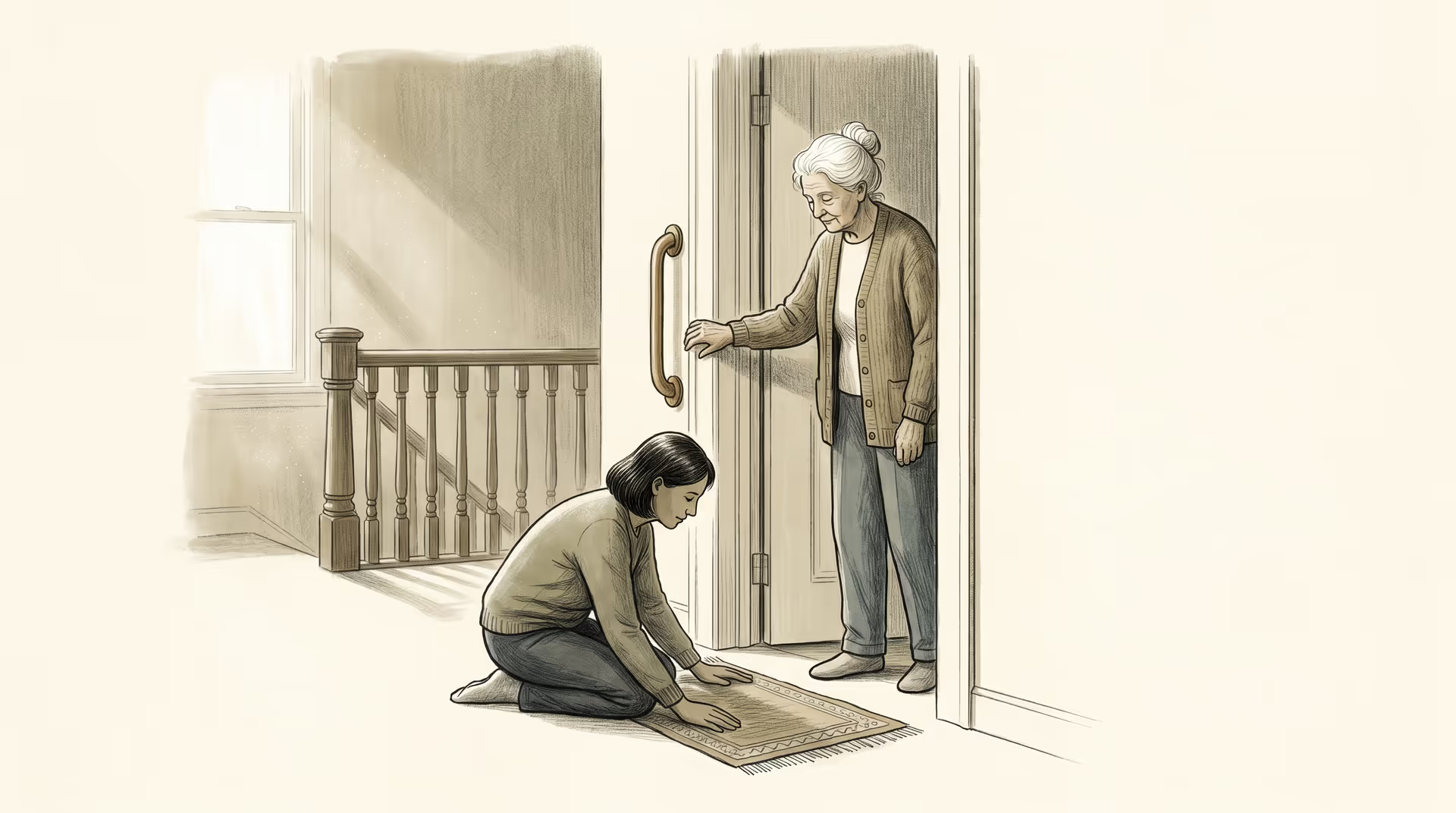
A fall is rarely just "a stumble." For an older adult, a single fall can be the hinge point between an independent life at home and a sudden, unwanted move into higher-level care. The good news is that falls are not an inevitable part of aging. They are predictable, and most are preventable. The risk lives in a handful of identifiable factors, and you can reduce nearly every one of them.
This guide walks through what causes falls, a room-by-room safety review you can do this weekend, and the medical and lifestyle habits that keep older adults steady on their feet. At the end, you'll find a printable-style home hazard checklist you can work through one room at a time.
Why falls happen
Falls are almost never caused by a single thing. They're usually the result of several small risks stacking up: a slippery rug, a new blood-pressure medication, dim hallway lighting, and weaker legs all converging on one ordinary Tuesday. These are called risk factors, and they fall into two buckets:
- Things about the person: leg weakness, poor balance, vision changes, dizziness, certain medications, foot pain, and a previous fall (one of the strongest predictors of the next one).
- Things about the environment: clutter, loose rugs, poor lighting, missing grab bars, slick floors, and stairs without sturdy railings.
The reason this matters: because the causes stack, the prevention stacks too. You don't need one heroic fix; several small ones, working together, dramatically lower the odds.
The five pillars of prevention
Public-health programs like the CDC's STEADI initiative (Stopping Elderly Accidents, Deaths & Injuries) organize prevention around a few evidence-based levers. Each one breaks down into practical steps.
| Pillar | What to do | Why it works |
|---|---|---|
| Move your body | Balance and leg-strength exercises a few times a week (tai chi, standing leg lifts, sit-to-stand) | Stronger legs and better balance are the single most studied way to cut fall risk |
| Review medications | Ask a doctor or pharmacist to review everything (including over-the-counter and supplements) once a year | Some medications cause drowsiness, dizziness, or low blood pressure; combinations multiply the effect |
| Check your vision | Get eyes examined yearly; update glasses; be cautious with new bifocals on stairs | Outdated prescriptions and depth-perception changes make hazards harder to judge |
| Fix the home | Remove trip hazards, add grab bars and lighting, secure rugs and railings | Most falls happen at home, doing everyday things |
| Wear the right shoes | Supportive, low-heeled shoes with non-slip soles, worn even indoors | Slippers, socks, and bare feet remove the grip and support your feet need |
For the exercise piece specifically, balance and lower-body strength matter most. Our guide to the best exercises for seniors covers gentle, build-as-you-go routines that don't require a gym.
A room-by-room home safety review
Most falls happen at home during routine activities: getting out of bed, stepping into the shower, carrying laundry up the stairs. Walk through each room as if you're seeing it for the first time and ask: what could I trip on, slip on, or grab if I lost my balance?
Floors and walkways. Clear paths of clutter, cords, and stacks of newspapers or magazines. Remove throw rugs entirely, or secure them with double-sided tape. Tape down or reroute electrical and phone cords.
Stairs and steps. Make sure there's a sturdy handrail on both sides, fix loose or uneven steps, and keep the staircase well lit with a switch at the top and bottom. Mark the edge of steps with bright tape if they're hard to see.
Bathroom. This is the highest-risk room in the house. Install grab bars inside and beside the tub or shower and next to the toilet. Add a non-slip mat or adhesive strips in the tub. Consider a shower chair and a raised toilet seat if standing up is hard.
Bedroom. Place a lamp within reach of the bed, keep a flashlight or nightlight on the path to the bathroom, and make sure the bed is at a height that's easy to get in and out of.
Kitchen. Keep everyday items on lower shelves so there's no need for a step stool. Wipe up spills immediately. If you must reach high, use a stable step stool with a handrail, never a chair.
Lighting throughout. Add brighter bulbs in hallways, stairwells, and entryways. Night lights in the bedroom, bathroom, and hall make middle-of-the-night trips far safer.
A thorough home review pairs naturally with planning ahead. If you're weighing whether the house can support someone safely for the long term, our guides to home modifications for aging in place and whether aging in place is right for you walk through the bigger picture.
The Mirador home fall-hazard checklist
Work through this one room at a time. Check the box when it's done, and revisit it once or twice a year, because homes and bodies both change.
- Throw rugs removed or secured with non-slip backing or tape
- Walkways clear of cords, clutter, and low furniture
- Handrails on both sides of every staircase, firmly anchored
- Bright, easy-to-reach light switches at the top and bottom of stairs
- Grab bars installed by the toilet and inside the tub/shower
- Non-slip mat or strips in the tub and shower
- Night lights in the bedroom, hallway, and bathroom
- Lamp and phone within reach of the bed
- Frequently used kitchen items moved to waist-to-shoulder height
- Spills and wet floors cleaned up immediately
- Supportive, non-slip shoes worn indoors (no socks-only or loose slippers)
- A sturdy step stool with a handrail (never a chair) for reaching high
- Annual medication review scheduled with a doctor or pharmacist
- Annual eye exam scheduled and glasses prescription current
What to do after a fall
How you get up matters. If a fall happens:
- Stay calm and still for a moment. Take a few breaths and check for pain before trying to move.
- If you're hurt or can't get up, call for help, use a medical alert device or phone, and try to keep warm by reaching for a blanket while you wait.
- If you feel able to get up, roll onto your side, push up onto your hands and knees, crawl to a sturdy chair, and use it to rise slowly, pausing to make sure you're steady before standing fully.
- Tell a doctor, even if you feel fine. A fall is a signal. It often points to a fixable cause (a medication, an inner-ear issue, low blood pressure), and catching it early prevents the next one.
Falls also affect daily independence in ways that are easy to underestimate. If a fall (or fear of falling) is starting to limit someone's everyday routines, our overview of activities of daily living can help you gauge how much support someone might need.
Frequently asked questions
Are falls just a normal part of getting older? No. While risk rises with age, falls are not inevitable. The large majority are caused by factors you can change: strength, balance, medications, vision, and the home environment.
What's the single most effective thing I can do? Exercise that builds leg strength and balance has the strongest evidence behind it. Combine it with a medication review and a home safety sweep for the biggest impact.
Should I worry about a fall if I didn't get hurt? Yes, tell your doctor anyway. A fall without injury is a warning sign that something (often medical) is making you unsteady, and addressing it now helps prevent a more serious fall later.
Where can I find trusted, free resources? The CDC's STEADI patient resources, the National Institute on Aging's guide to falls and fractures, and the nonprofit National Council on Aging's falls prevention center all offer free, evidence-based guidance.
