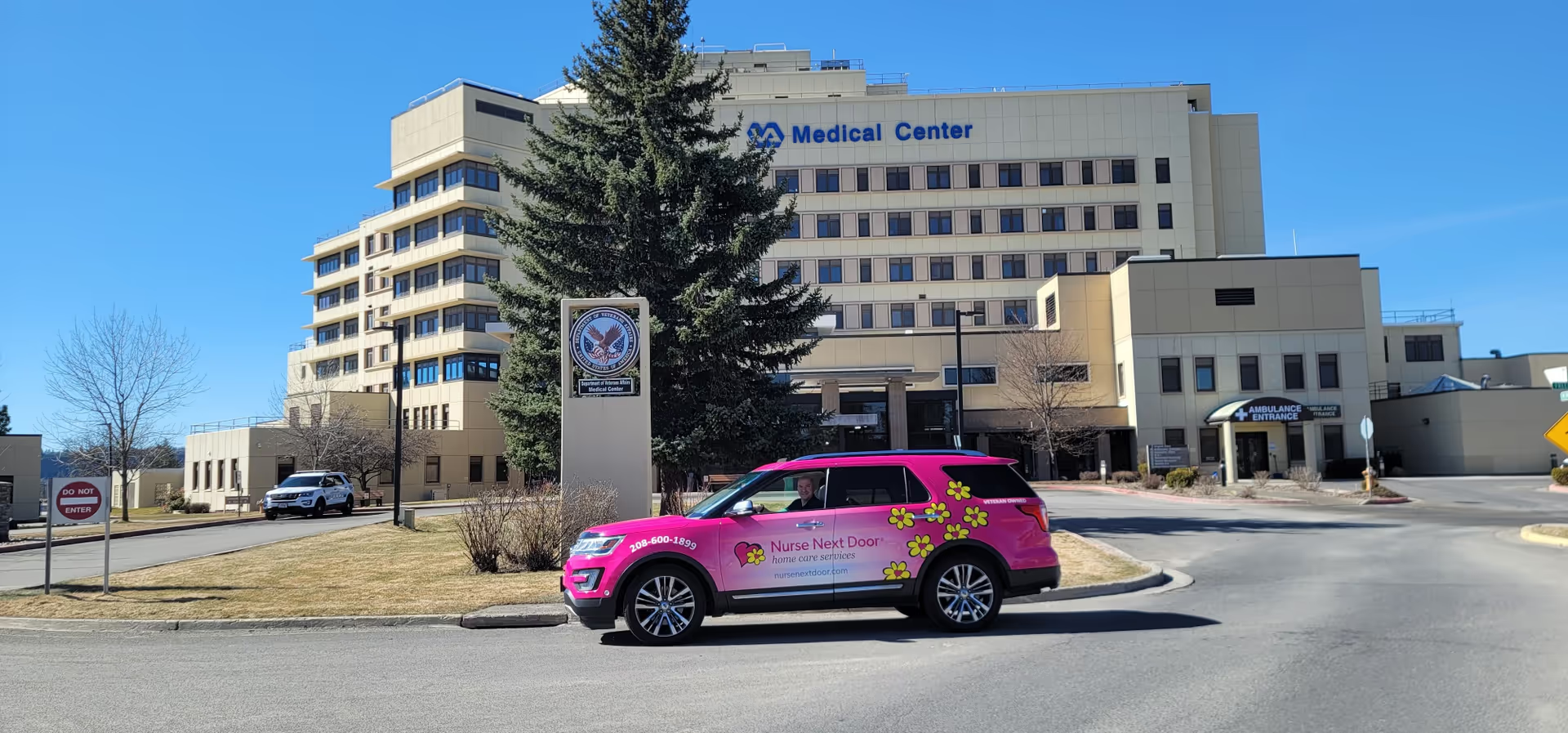
Overall impression: Reviews present a consistently positive view of the agency's in-home care, with recurring praise for the quality of care delivered by individual caregivers and for management involvement. Families describe caregivers as compassionate, professional, patient, and skilled in dementia-appropriate engagement and memory activities. Reviewers also highlight practical supports—transportation to appointments, grocery runs, household tidying—that contribute to maintaining clients safely at home.
Caregiver quality and clinical supports: Caregivers are frequently described as warm, attentive, and motivated to build relationships with clients and families. Multiple accounts emphasize dementia-friendly approaches, stimulation through activities and memory games, and competent end-of-life support. The agency is credited with providing thorough training, clinical coordination, and detailed logs or progress notes that help families track care and changes in condition.
Office communication and reliability: The company's office and owner involvement receive positive mention for responsiveness, flexibility, and willingness to step in for urgent needs (including holiday and short-notice coverage). At the same time, there are recurring operational concerns: several families experienced intermittent lapses in communication, scheduling mismatches, and gaps between updates. These issues manifest as delayed or inconsistent messages and, in some cases, administrative burdens from frequent phone calls or phone-handling practices that families wished were smoother.
Scheduling, staffing, and availability: The agency is generally viewed as reliable and punctual, with many reports of consistent shift coverage and caregivers who arrive on time. However, reviewers also indicate occasional problems with caregiver-client matching and coverage continuity. A practical constraint mentioned by families is limited availability tied to funding source or payer changes; transitions such as switching to Medicaid were described as affecting future service availability. Prospective clients should confirm current payer acceptance and discuss continuity plans for staffing.
Value and management: Reviewers commonly characterize the service as high-value—caregivers who go beyond basic tasks, engaged management, and operational practices that support family involvement. The agency’s responsiveness, ability to support daily living tasks, and readiness to provide 24/7 or short-notice help contribute to perceived value. For decision-making, families should weigh these strengths alongside the operational caveats noted above and ask specific questions about caregiver continuity, communication protocols, and funding limitations during intake.