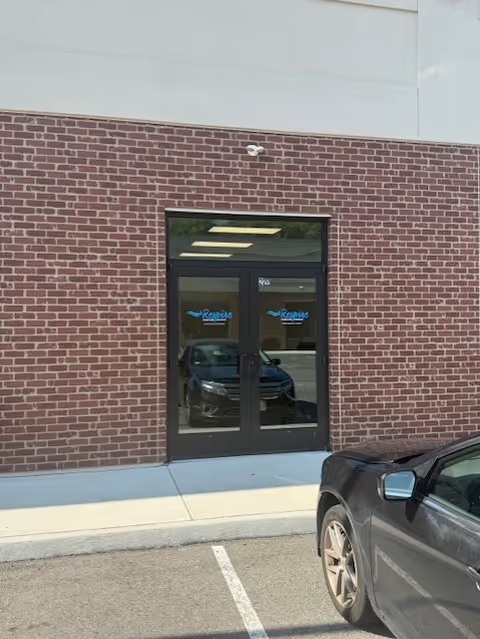
Overall impression: Reviews present a mixed but consistent pattern. Many customers describe strong front-line care: compassionate, attentive aides and sales consultants who are patient, thorough, and willing to go beyond standard expectations. Installer and technician competence is frequently highlighted; several accounts praise meticulous installations, clear operation training, proactive parts sourcing, and quick turnarounds when service is well-staffed. The company’s rentals, loaner vans, home test drives, financing help, and on-site demonstrations are repeatedly cited as conveniences that ease the mobility transition for clients and families.
Caregiver quality and client interaction: Caregivers and customer-facing staff are commonly described as warm, respectful, and helpful. Families report clear explanations of equipment use, patient training during deliveries, and staff who treat clients like family. These interpersonal strengths appear to be a consistent asset and are often the reason clients recommend the agency or return for additional services.
Communication, scheduling, and reliability: A contrasting pattern centers on office-level communication and scheduling. Many accounts point to slow or absent callbacks, transfers without resolution, long waits for appointments, and limited weekend or after-hours support. Scheduling variability between branches is notable; some locations are praised for responsiveness and short-notice flexibility, while others are characterized by long delays and appointment bottlenecks. This inconsistency affects perceived reliability of both routine service and emergency responsiveness.
Repairs, equipment reliability, and safety considerations: Several reviewers describe recurring mechanical or lift failures and repeated service visits for the same issue. Where local service teams are proactive, repairs are quick and coordinated; where they are not, parts delays, warranty-processing hold-ups, and frequent follow-up visits create prolonged downtime. These patterns have operational and safety implications for clients who depend on wheelchair-accessible vehicles and lift systems, making branch-level reliability an important selection factor.
Billing, value, and management: Billing and pricing generate recurring concerns. Common themes include unexpected or high charges for parts and labor, deposit or down-payment disputes, perceived markups on replacement parts, and inconsistent trade-in valuations. Paperwork errors and occasional management unresponsiveness compound these frustrations, though there are instances where regional managers or specific employees resolved complaints satisfactorily. Prospective clients should therefore seek written estimates, clarify warranty and parts policies, and confirm refund or trade-in procedures in advance.
Notable patterns and guidance for prospective clients: Strengths cluster around compassionate caregiving, skilled installations, helpful rentals, and customer-focused staff in many locations. Weaknesses tend to be systemic: uneven branch performance, inconsistent communication from the service department, delays in parts and warranty handling, and variable pricing transparency. Families evaluating MobilityWorks should prioritize assessing the reputation and responsiveness of their local branch, get timelines and costs in writing, ask about after-hours and emergency support, and verify warranty and parts procedures to reduce the risk of prolonged downtime or unanticipated charges.