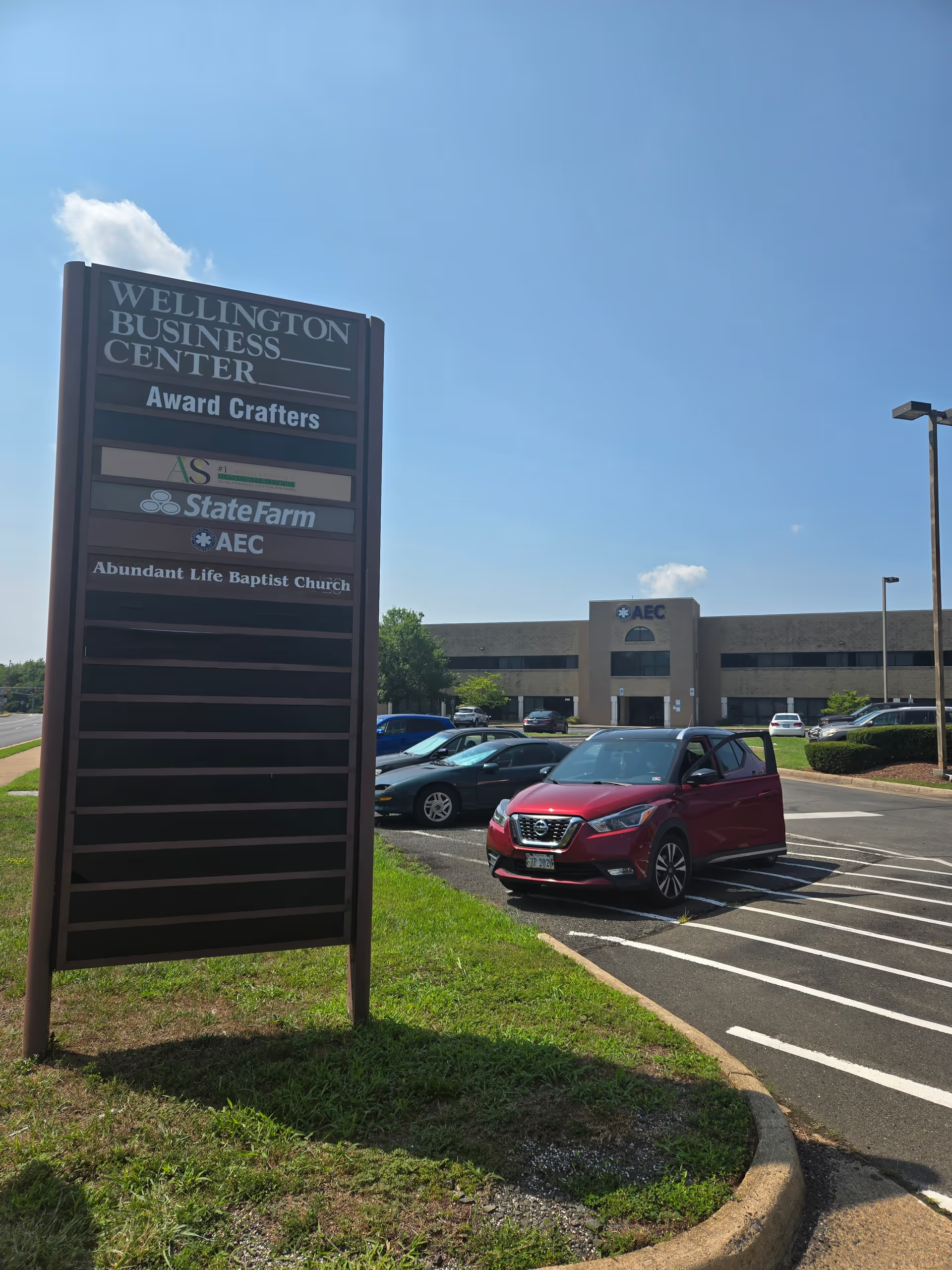
Across the collected summaries, Comfort Keepers of Manassas is described primarily in positive, operational terms. Caregiver quality is the strongest, most consistent theme: reviewers emphasize warmth, compassion, professionalism, and training. Caregivers are described as attentive, trustworthy, and effective at day-to-day personal care and in promoting client independence. There are specific references to clinically minded actions—such as proactive skin-integrity monitoring—that indicate attentiveness to common home-care clinical risks.
Office communication and administrative support are also repeatedly highlighted. Families describe the office and intake teams as responsive, supportive, and accessible; reviewers note prompt callbacks (including on weekends), helpful answers to questions, and a client portal that aides coordination. These elements combine to produce frequent comments about reduced family stress and restored peace of mind, including cases in which family members coordinate care from a distance.
Reliability and scheduling flexibility are another salient pattern. Reviewers cite dependable caregivers, prompt scheduling accommodations, weekend responsiveness, and an ability to tailor plans to individual needs. That consistency appears to reinforce trust between clients, caregivers, and administrative staff. The agency’s management is credited with facilitating smooth transitions and providing hands-on support during intake and plan adjustments.
Areas where the published reviews offer less clarity become potential operational gaps to probe further. There is little explicit commentary about pricing, billing practices, or insurance/payment coordination; prospective clients may want clearer, upfront information on those topics. The reviews do not detail the agency’s offerings for specialized clinical programs (for example, formal dementia-care pathways or advanced medical-nursing services), so families with highly specialized needs should confirm scope and staff qualifications. In addition, explicit policies around caregiver-assignment continuity are not described in the summaries; those interested in long-term consistency may wish to ask how caregiver matching and continuity are managed.
Overall, the pattern across these summaries is of an agency that delivers compassionate, responsive in-home care with a strong administrative backbone for scheduling and communication. For prospective clients, recommended next steps would be to confirm pricing and payment arrangements, clarify availability of any specialized clinical programs needed, and discuss caregiver continuity expectations during intake.