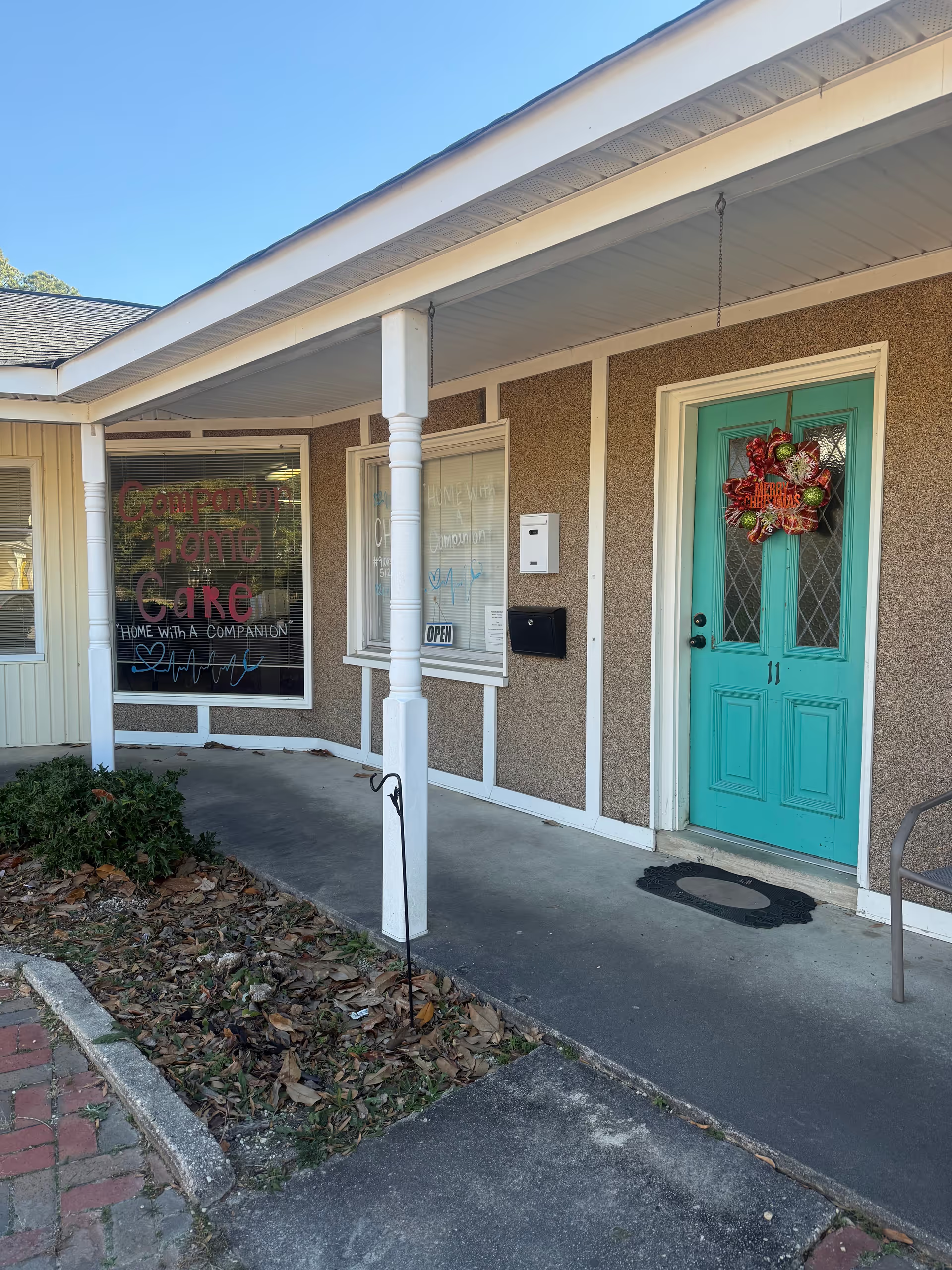
Caregiver quality: The reviews portray caregivers as consistently warm, compassionate, and respectful. Review language highlights a service orientation that emphasizes interpersonal connection and dignity; clients and families describe long-term relationships with aides and praise caregivers for going "above and beyond." These comments suggest reliable bedside manner and strong client-facing skills rather than a focus on complex clinical interventions.
Office communication and management: The agency appears to be owner-driven, with the owner described as personally involved and caring. That hands-on oversight likely produces responsive, relationship-focused communication and direct escalation paths for families. At the same time, the owner-centric model suggests day-to-day decision-making is closely tied to individual leadership rather than large-scale corporate structures.
Reliability of shifts and scheduling flexibility: Positive remarks from long-term clients and language about dedicated service imply consistent caregiver assignments and a willingness to accommodate client needs. Phrases such as "goes above and beyond" indicate flexibility and personalized scheduling in practice. Explicit details about back-up staffing or formal coverage protocols are not present in the summaries provided, so definitive statements about contingency planning cannot be made.
Billing and perceived value: Reviews are uniformly favorable, with strong recommendations and praise for the agency's compassion and ethics. That pattern indicates that families perceive the service as good value for the level of personal attention received. However, the summaries do not provide direct information about pricing, billing transparency, or contract terms, so those aspects remain unspecified.
Notable patterns and caveats: The dominant themes are warmth, owner involvement, and long-term client satisfaction. Those are strengths for families prioritizing personalized, relationship-based care. The trade-offs associated with a small, owner-led agency are suggested by the same themes: potential capacity limits during high demand, less visible specialized clinical offerings, and fewer formal administrative processes compared with larger agencies. Because the provided summaries are uniformly positive and brief, the overall assessment is limited by the lack of critical detail; prospective clients should confirm capacity, clinical capabilities, and formal policies (scheduling contingencies, documentation, and billing) directly with the agency prior to contracting.