
Ask older adults what has carried them through the hardest seasons of life (a loss, an illness, a move away from a longtime home) and many will point to something larger than themselves: a faith, a sense of purpose, a quiet conviction that their life still means something. That inner dimension has a name: spirituality. And a growing body of research suggests it is not a soft extra in later life but a real contributor to how well we age.
Spirituality is easy to misunderstand and easy to dismiss. It is neither a cure nor a substitute for medical care, and it looks different for every person. But for many older adults, tending to the spirit is as natural, and as restorative, as tending to the body. Spirituality means something specific in the context of aging, differs from religion in important ways, matters for well-being, and can be nurtured through practical, everyday habits.
What spirituality means in later life
Spirituality is the search for meaning, connection, and purpose: the sense that your life is part of something larger and that it matters. It can be expressed through faith and worship, but it does not have to be. A walk in the woods, a moment of gratitude at the dinner table, time spent mentoring a grandchild, or simply sitting in stillness can all be spiritual acts.
Researchers who study aging have noticed that spirituality often changes shape over a lifetime. In younger years it may be anchored in doctrine, ritual, and the rules of a tradition. In later life it frequently becomes more experiential and reflective, rooted in memory, relationships, and the lessons of a long life rather than in scripture alone. A review of the spiritual needs of older adults published in the U.S. National Institutes of Health's PubMed Central library describes this turn toward meaning-making, especially as people face illness, loss, and the questions that come with the end of a long life.
Spirituality vs. religion
People often use the two words interchangeably, but they describe different things: one organized and shared, the other personal and internal.
| Religion | Spirituality | |
|---|---|---|
| What it is | A shared system of beliefs, practices, and community within an organized tradition | A personal search for meaning, purpose, and connection to something larger |
| Where it lives | Often in a congregation, a sacred text, a set of rituals | Anywhere: in nature, relationships, service, quiet reflection |
| How it's expressed | Worship, prayer, observance, membership | Many ways, with or without a faith tradition |
| Who it's for | Those who identify with a particular faith | Everyone, including the secular and the unaffiliated |
You can be deeply religious and deeply spiritual, you can be one without the other, or you can be spiritual with no religious label at all. None of these is "more correct." What matters for healthy aging is whether a person has a sense of meaning and connection that sustains them.
Why spirituality supports healthy aging
Spirituality is one thread in the larger fabric of well-being. We explore that fabric in our overview of the dimensions of wellness for seniors, where spiritual wellness sits alongside physical, social, and emotional health.
- A sense of purpose. Research consistently links feeling that your life has meaning to better outcomes in later life, and the effect is practical, not abstract. Purpose gets people out of bed, into activities, and engaged with others. The National Institute on Aging encourages older adults to keep participating in activities they find meaningful precisely because purpose and engagement support both mind and body.
- Resilience in hard times. Later life brings real loss: of spouses, friends, roles, and physical ability. People with a spiritual framework often reframe hardship as something they can grow through rather than simply endure. This "meaning-making" gives a cognitive anchor during grief and illness.
- Lower anxiety and depression. Across studies, older adults with stronger spiritual engagement tend to report less anxiety, more hope, and greater life satisfaction.
- Built-in community. Spiritual life is rarely solitary. A congregation, a meditation group, or a volunteer circle provides regular human contact, a powerful buffer against the isolation that shadows so much of later life.
The well-being benefits of spirituality and the well-being benefits of belonging are deeply intertwined, which is why we treat social connection and loneliness in older adults as a health issue in its own right.
Practical ways to nurture spiritual wellness
Spiritual wellness is not something you either have or lack; it is something you practice. None of the following requires a particular belief, and all of them are within reach at almost any age or ability level.
- Lean into community. Attend services if faith is part of your life, or join a meditation group, a discussion circle, or a volunteer team if it isn't. The connection itself is restorative; the NIA offers practical tips for staying connected as you age.
- Make room for reflection. Prayer, meditation, journaling, or simply sitting quietly each morning creates space to process a long life. Mindfulness and meditation in particular have a real evidence base for easing stress and supporting emotional health; the National Center for Complementary and Integrative Health summarizes what the research shows.
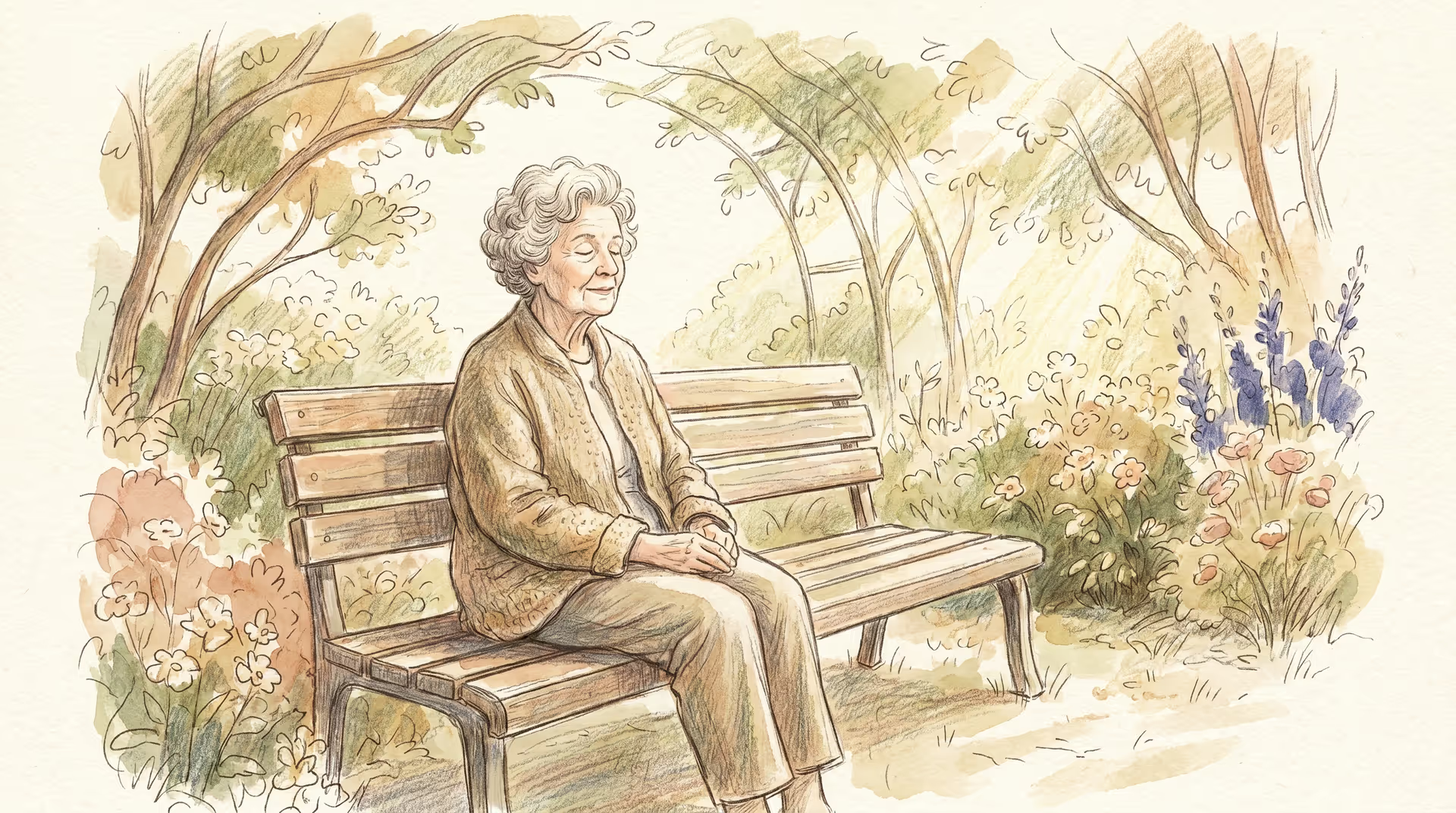
- Spend time in nature. A garden, a park bench, a view of the sky: natural beauty has a way of restoring perspective and a sense of awe.
- Practice gratitude. Naming a few things you are thankful for, daily or weekly, gently shifts attention from what has been lost to what remains.
- Be of service. Mentoring, volunteering, or offering a listening ear turns life experience into a gift for others, one of the most reliable sources of late-life purpose.
A reflective spiritual wellness checklist
Use this as a gentle inventory. Read each prompt slowly, and notice which ones invite a longer pause.
- I have a sense that my life has meaning and purpose right now, not only in the past.
- I have at least one practice (prayer, meditation, journaling, quiet walks) that helps me reflect.
- I feel connected to a community, a faith, or a circle of people who share my values.
- I can name a few things I am genuinely grateful for this week.
- I have a way to make sense of loss and hardship that brings me some peace.
- I spend time in nature, beauty, music, or art that lifts me out of myself.
- I have ways to give to others: my time, my attention, my hard-won wisdom.
- I feel free to express my beliefs (or my questions) without judgment.
A few checked boxes is plenty. The empty ones are simply invitations: places where a small, kind change might bring more meaning into the days ahead.
How senior living can support the spirit
A thoughtful senior living community recognizes that residents arrive with rich inner lives. The best ones make space for the spirit: chaplaincy and access to clergy of many faiths, on-site services and study groups, transportation to houses of worship, meditation or quiet rooms, gardens and walking paths, volunteer and mentoring programs, and gathering spaces where friendships, the soil in which meaning grows, can take root. If you are touring communities, it is entirely fair to ask how they support residents' spiritual and emotional lives alongside their physical care.
Frequently asked questions
Do I have to be religious to benefit from spirituality? No. Spirituality is about meaning, purpose, and connection, and you can cultivate all three with or without a religious faith. Many of the practices above (reflection, gratitude, time in nature, service to others) are available to anyone.
My loved one was never very spiritual. Is later life too late to start? It is rarely too late. Many people find that later life, with its natural pauses and its big questions, actually opens the door to reflection and meaning in ways earlier, busier years did not.
How is spiritual wellness different from mental health? They overlap but are not identical. Mental health concerns how you think and feel emotionally; spiritual wellness concerns meaning, purpose, and connection to something larger. Tending to one often helps the other, but spiritual support is not a substitute for professional mental health care when you need it.
What if my loved one's faith differs from mine? The goal is to support their sense of meaning and follow their lead. Ask what practices, traditions, or relationships matter to them, and look for ways to make those easier to maintain.
