
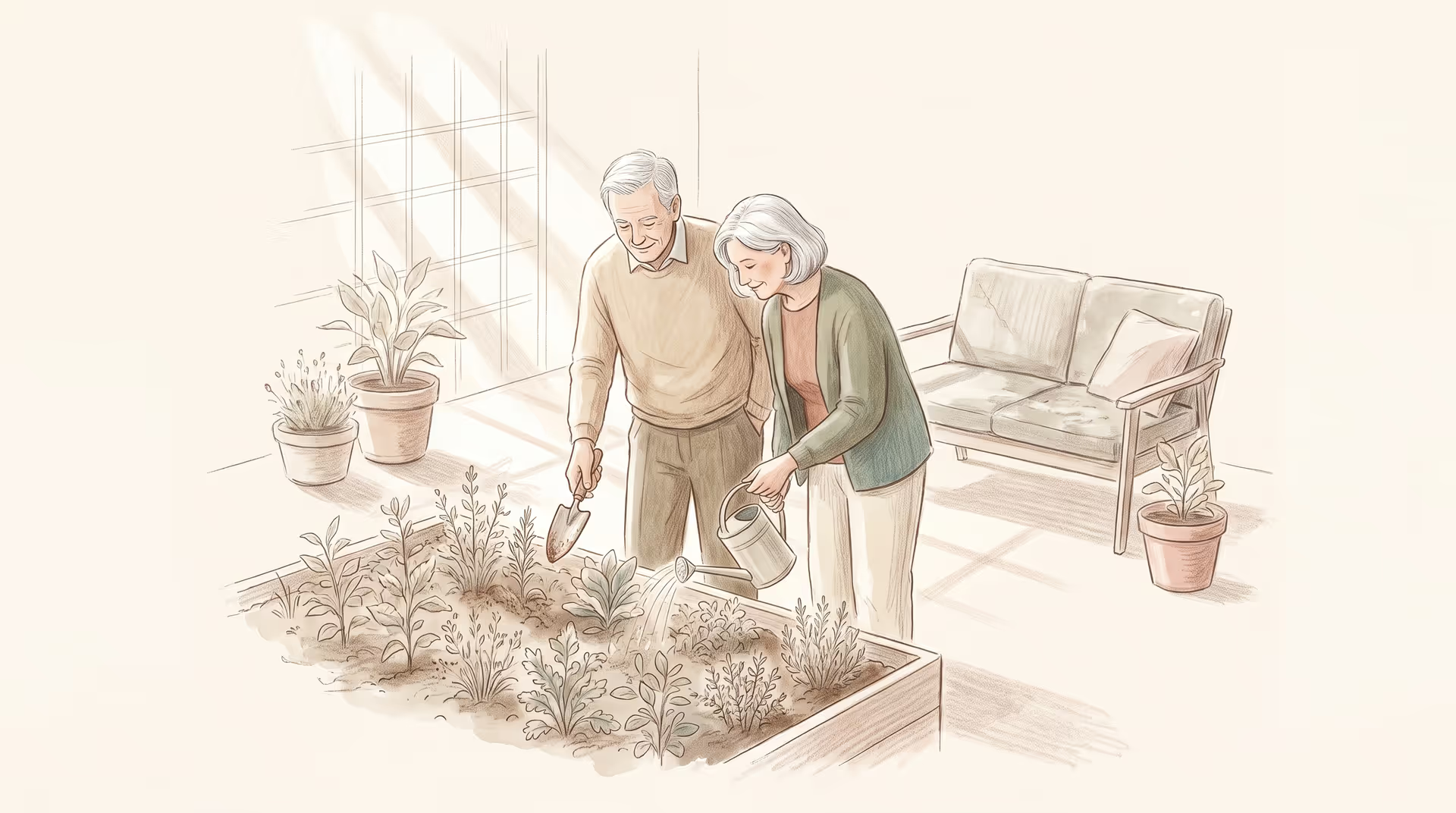
Gardening is more than a hobby. For many older adults it offers gentle exercise, mental stimulation, and a reason to get outside. If you are arranging in-home care for a parent, gardening can be a safe, meaningful activity to include in their routine. Below are the main benefits and simple ways to help your loved one garden safely.
A short list of what gardening gives seniors
- Low-impact physical activity that builds strength and balance
- Time outdoors for vitamin D and better sleep
- Mental stimulation and memory work like planning and sequencing
- A sense of purpose and small, regular achievements
- Social connections through gardening groups or neighbors
Physical benefits: gentle exercise with purpose
Gardening moves the body in useful ways. Tasks like digging, planting, watering, and carrying small pots use muscles you need for everyday life. These actions help maintain strength, flexibility, and coordination. For many older adults, gardening counts as low-impact aerobic activity. That matters because regular movement can help control weight, support heart health, and keep joints limber.
Sunlight during outdoor gardening also helps the body make vitamin D. That supports bone health and immune function. At the same time, being active outside often improves sleep. Many caregivers and clinicians note that a little daily activity in the garden can lead to deeper, more regular rest.
Mental and emotional benefits: calm, focus, and meaning
Gardening is restorative. Time spent in nature lowers stress and helps people relax. Research on older gardeners shows that simply being in a garden or viewing plants can reduce tension and improve mood. The smells, colors, and tactile work of gardening also help people stay present. That kind of mindfulness can lower anxiety and lift spirits.
Growing plants gives small, steady rewards. Those daily wins — a seed sprouting, a tomato ripening, a bloom opening — build confidence and purpose. For someone who may be adjusting to loss of roles or routines, those rewards matter a lot.
Cognitive benefits: simple mental workouts
Planning planting times, remembering to water, and learning plant names all stimulate memory and thinking. Gardening tasks require attention, sequencing, and problem solving. Studies have linked regular gardening to better life satisfaction and cognitive engagement in older adults. One long-term study reported a lower risk of dementia for people who kept active with tasks like gardening. While gardening is not a cure, it is a useful, enjoyable way to keep the brain working.
Social benefits: natural chances to connect
Gardening can be social. Community gardens and gardening clubs give older adults a place to meet people and trade tips. Even casual chats with neighbors while tending a front-yard planter reduce isolation. Research on older gardeners found that people who belong to gardening groups report more social and physical benefits than those who garden alone. For many seniors, sharing seeds, tools, or a small harvest becomes a dependable way to stay connected.
How to make gardening safe and comfortable at home
You do not need a big yard. Small changes make gardening easier and safer for seniors.
- Start small. A few pots on a patio or windowsill can be enough.
- Use raised beds or table-top planters. These cut bending and kneeling.
- Choose lightweight pots and ergonomic tools with padded handles.
- Offer seating while working: a sturdy garden stool or bench.
- Encourage gloves, wide-brim hats, and sunscreen to protect skin.
- Keep a watering can light or use a soaker hose to cut lifting.
- Clear paths and keep the garden level to reduce fall risk.
- Plan short sessions. Thirty minutes several times a week is helpful.
- Stay hydrated and watch for overheating in hot weather.
- Check medications and health conditions with a doctor before increasing activity.
If bending and kneeling are hard, raised beds and container gardens let seniors work at waist level. For limited grip strength, trowels and pruners with enlarged handles help. Padded knee cushions or a wheeled garden cart can also reduce strain.
How caregivers can support gardening as part of home care
Caregivers can turn gardening into a routine activity that fits a care plan. They can:
- Help with heavier tasks like moving soil or large pots.
- Set up a safe, shaded spot with seating and easy access.
- Break tasks into short, achievable steps.
- Use gardening as a social activity: invite a neighbor or family member.
- Join a community garden program if transportation is available.
- Celebrate small successes like a harvest or new bloom.
When gardening becomes part of the weekly routine, it supports movement, mood, and social contact. It also gives families a simple way to spend meaningful time together.
When to be cautious
Gardening is not risk-free. Talk with your loved one’s healthcare provider before starting a new activity plan. Watch for signs of fatigue, dizziness, joint pain, or breathing trouble. Avoid gardening alone in extreme heat. If balance is a concern, consider supervised gardening or adaptive equipment.
Final thought
Gardening can fit easily into an in-home care plan. It offers gentle exercise, mental stimulation, and social chances. With a few simple adjustments, your parent can enjoy the many small rewards of growing plants. If you need help adding gardening to daily care, discuss options with your in-home care team. They can help make gardening safe, doable, and enjoyable.
