
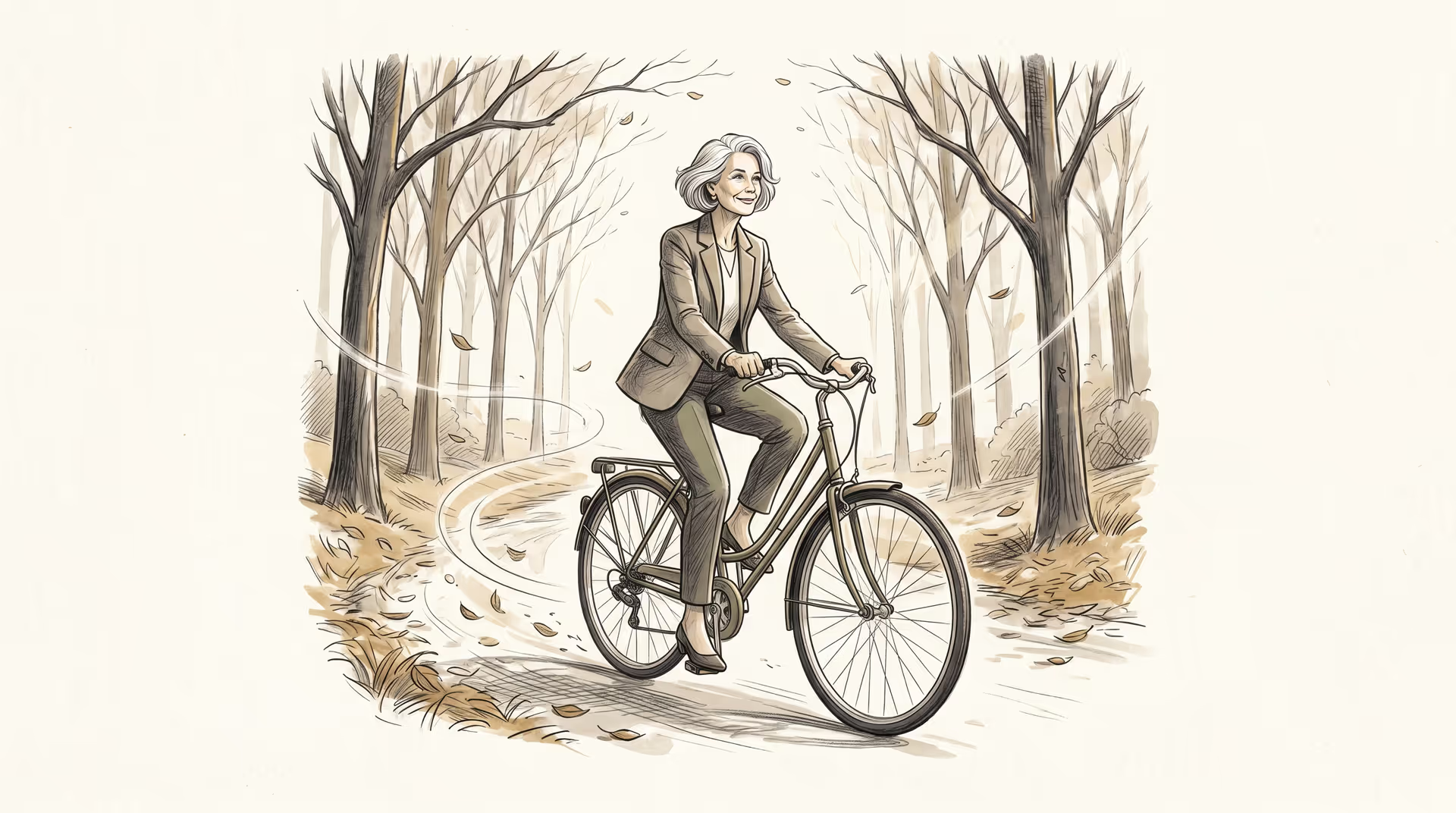
Ask most people to picture old age and you'll hear a familiar story: a shrinking world, a fading memory, a body that betrays you, and a mood that quietly dims. It's a story we absorb early, repeat often, and rarely question. The trouble is that much of it isn't true.
Decades of research from the National Institute on Aging and others paints a far more hopeful picture. Aging brings real change, but the gloomiest assumptions about it are myths, and believing them can shape how we age. Older adults who hold negative beliefs about aging tend to do worse on memory tasks and recover more slowly from illness than those with a positive outlook. In other words, the stories we tell ourselves about getting older are not harmless.
Here at Mirador, we talk with families every day who are weighing what later life will look like, for a parent, a spouse, or themselves. Sorting fact from fear is where good decisions start. The most common ones fall apart under a closer look, one at a time.
Myth vs. reality at a glance
| The myth | The reality |
|---|---|
| Memory loss and dementia are inevitable with age | Most older adults never develop dementia; serious memory loss is a sign of disease, not normal aging |
| Older adults shouldn't exercise, it's too risky | Regular activity is one of the most protective things older adults can do; inactivity is the bigger danger |
| Loneliness is just part of getting older | Loneliness is common but not normal or unavoidable, and it's addressable |
| You can't teach an old dog new tricks | The brain keeps forming new connections throughout life; learning continues into your 90s and beyond |
| Depression is a normal part of old age | Depression is a treatable medical condition, not a natural stage of aging |
Myth 1: "Memory loss and dementia are inevitable"
This is perhaps the most feared myth of all, and one of the least accurate. Some changes in memory and thinking speed are a normal part of aging, like occasionally blanking on a name and remembering it later. But significant memory loss that interferes with daily life is not a normal part of getting older. It's a symptom of disease.
The numbers tell the story. While the risk of dementia rises with age, the National Institute on Aging notes that dementia is not an inevitable consequence of aging; many people live into their 90s and beyond with sharp thinking. There's also a lot you can do: managing blood pressure, staying physically active, sleeping well, and keeping socially and mentally engaged all support cognitive health.
Myth 2: "Older adults shouldn't exercise"
Many people assume that the safest thing an older body can do is rest. The opposite is true. According to the National Institute on Aging, regular physical activity is one of the most important things older adults can do for their health; it can prevent or delay many problems that seem to come with age and improve strength, balance, mood, and independence.
Inactivity is the real risk here. A largely sedentary life accelerates muscle loss and raises the odds of falls, heart disease, and diabetes. The right approach is a sensible one: start gradually, mix in strength and balance work, and check with a doctor about any specific conditions. (For ideas, see our guide to the best exercises for seniors.)
Myth 3: "Loneliness is just part of aging"
Loneliness is common in later life, but common is not the same as normal or inevitable. Life changes like retirement, the loss of a spouse, or reduced mobility can shrink someone's social world. The mistake is treating that shrinkage as an unavoidable fate when it's usually a solvable problem.
It matters, because chronic loneliness and social isolation carry real health risks, comparable to smoking and obesity. The good news is that connection can be rebuilt at any age, through community programs, faith groups, volunteering, classes, or simply more regular contact with family. We explore practical strategies in our article on social connection and loneliness in older adults, and connection is one of the core dimensions of wellness for seniors.
Myth 4: "You can't learn new things as you get older"
"You can't teach an old dog new tricks" is folk wisdom that science has thoroughly retired. The brain remains capable of forming new connections throughout life, a property called neuroplasticity that doesn't switch off at any particular age. Older adults can and do learn new languages, instruments, technologies, and skills.
In fact, the National Institute on Aging points to lifelong learning and mentally stimulating activity as a way to support brain health. Picking up something new is both possible and genuinely good for you in later life.
Myth 5: "Depression is normal in old age"
It's easy to assume that sadness goes hand in hand with aging, that aches, losses, and limits naturally lead to a low mood. But depression is a highly treatable medical condition, and it does not come standard with growing older.
Notably, older adults as a group are not more prone to depression than younger people; many report high life satisfaction. When depression does occur, it deserves real attention and proper care. The National Institute of Mental Health emphasizes that depression in later life is treatable with therapy, medication, or both, and that persistent sadness, loss of interest, or hopelessness are reasons to talk to a doctor.
A few more worth retiring
- "Everyone has to stop driving at a certain age." There's no magic age. Driving ability depends on health and function, not a birthday. See our look at the average age elderly people stop driving and the CDC's guidance for older drivers.
- "You need much less sleep as you age." Older adults still need seven to nine hours, per the CDC. Sleep often becomes lighter and more fragmented, but the need doesn't shrink.
- "If a parent had Alzheimer's, I'm destined to get it." For most people, family history raises risk modestly but does not guarantee the disease, as the National Institute on Aging explains.
The Mirador takeaway
The thread running through every one of these myths is the same: aging is far more changeable than the gloomy narrative suggests. Bodies stay stronger with movement, minds keep growing with use, moods respond to care, and connection can be rebuilt. None of this denies that aging brings real challenges; it simply puts those challenges in proportion and reminds us how much agency remains.
That perspective matters when families face decisions about care and where to live. The goal is to support a full, engaged life at every stage, without fighting or fearing aging itself.
Frequently asked questions
Is some memory change normal as we age? Yes. Occasionally forgetting a name or where you put your keys, then recalling it later, is typical. What's not normal is memory loss that disrupts daily life; that warrants a medical evaluation.
Can starting to exercise later in life still help? Yes. Benefits to strength, balance, mood, and heart health show up even when people begin exercising in their 70s, 80s, or beyond. Start gradually and check with a doctor about specific conditions.
Are older adults really less depressed than younger people? On the whole, yes; many older adults report strong life satisfaction, and depression is not a normal part of aging. When it occurs, it's treatable and shouldn't be dismissed as "just getting old."
Why does it matter whether I believe these myths? Because beliefs shape behavior and even health outcomes. People who view aging positively tend to stay more active, engaged, and resilient, so retiring these myths is more than an attitude adjustment.
