
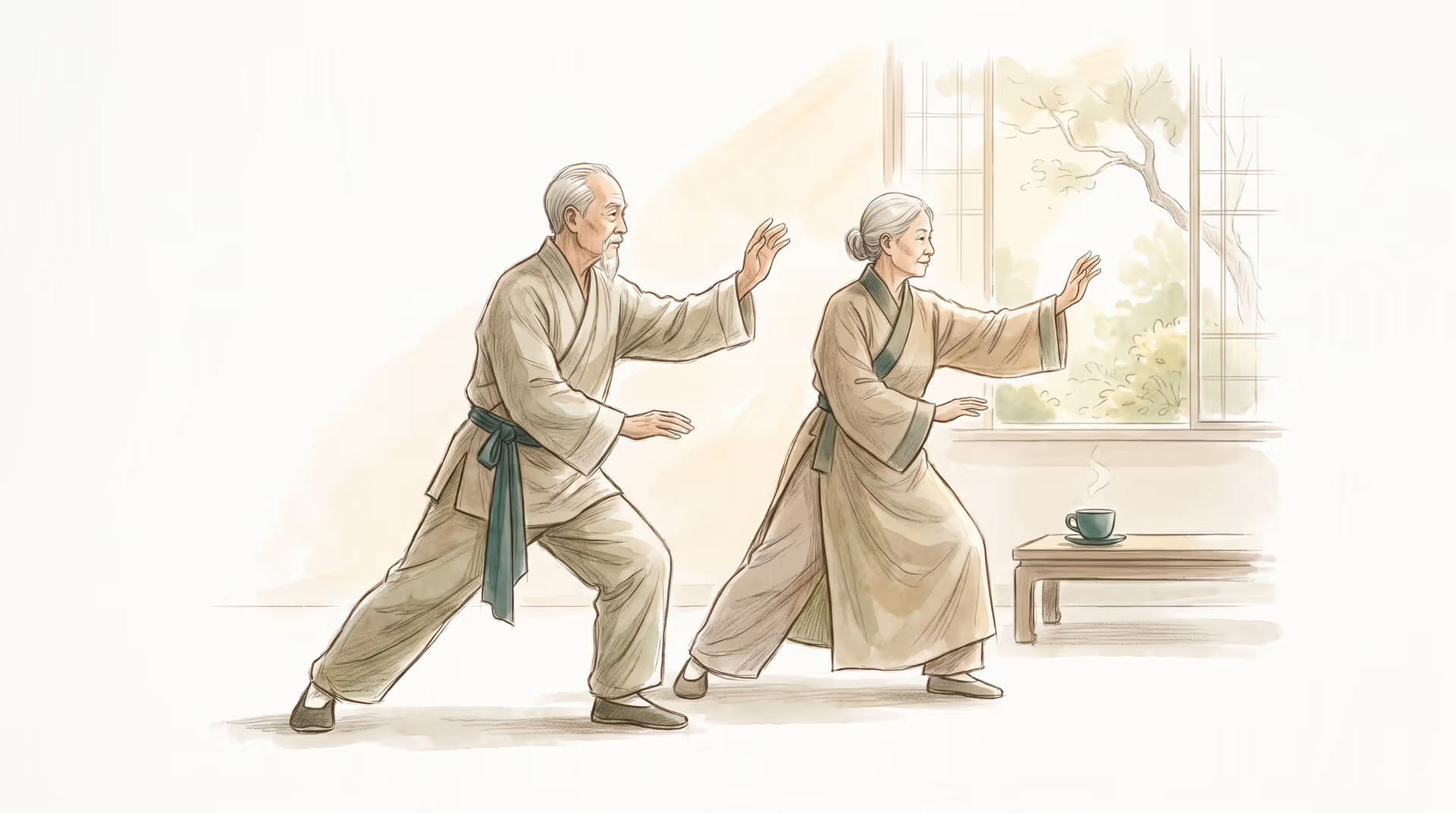
Staying active helps older adults keep strength, balance, and confidence. Martial arts can be a good way to move, think, and connect with others. This guide explains which styles suit seniors, what the research says, and how to pick a safe class or teacher.
Why consider martial arts?
Martial arts are more than self-defense. Classes combine movement, mental focus, and social time. Seniors often report benefits such as:
- Better balance and steadier walking.
- Improved strength, flexibility, and coordination.
- Stronger hearts and better endurance when classes are more active.
- Sharper focus and memory from learning patterns and techniques.
- More confidence and social connection from group practice.
Research has looked at both "soft" arts (like tai chi) and harder styles (like taekwondo or judo). Studies show improvements in balance, mobility, flexibility, and strength when older adults train under supervision. The evidence is still growing, but many programs have positive results when they are adapted for older bodies.
Martial arts that tend to work well for older adults
Not every style fits every person. Below are common choices and why seniors pick them.
-
Tai Chi
Often called “meditation in motion.” Movements are slow and low impact. Tai chi is linked to better balance and a lower risk of falls. It is a top choice for people who need a gentle start. -
Aikido
Focuses on redirecting an attacker’s energy rather than raw force. Many classes emphasize standing techniques and fluid movement. Some schools offer “no-fall” or senior-adapted sessions. -
Karate and Taekwondo (forms/kata practice)
These arts include drills and forms that build coordination and strength without full-contact sparring. Many seniors practice kata and light drills instead of fighting. -
Filipino arts (Kali/Escrima/Arnis)
These teach stick and empty-hand skills. Training can be done without heavy impact and is often useful for footwork and coordination. -
Wing Chun and other close-range arts
Emphasize technique, leverage, and sensitivity instead of power. They can be adapted to use minimal force. -
Judo and Brazilian Jiu-Jitsu (with caution)
These grappling arts improve balance and functional movement. They do involve throws and ground work, so they may be harder on the body. Many older adults train with controlled drills, no sparring, or only stand-up techniques.
Tip: There is no single “best” art for all seniors. The teacher and how the class is run matter more than the style.
What the research says (short version)
Studies show supervised martial arts can improve functional fitness in older adults. Improvements have been reported for balance, strength, flexibility, mobility, and endurance when programs are run regularly. Most studies also say the training should be tailored to the group. One review suggested that hard martial arts sessions that aim to improve fitness often run 60–90 minutes, at least twice a week, for several weeks. But research is limited, and results vary by program and participants.
Safety first
Martial arts can be safe if classes are adapted and instructors know how to work with older students. Keep these safety steps in mind:
- Talk with the doctor first. Share any heart, bone, joint, or balance issues.
- Tell the instructor about existing conditions and past injuries.
- Avoid heavy sparring or full-contact drills unless cleared by a medical professional.
- Warm up and cool down every session.
- Use modifications. Instructors can change movements to reduce joint strain.
- Choose classes that teach fall-prevention and safe technique.
- Start slowly. Rest when needed and build time and intensity gradually.
How to choose a class or teacher
When you’re helping a parent find a program, check these things:
- Experience with older adults: Ask if the teacher has worked with seniors or runs adult/senior classes.
- Class format: Do they offer beginner or adaptive sessions? Is there sparring, and how often?
- Safety practices: Do instructors screen students for health issues? Are warm-ups gentle and appropriate?
- Size and pace: Smaller classes and slower pacing help new students learn safely.
- Trial class: Many schools allow a trial or observation. Go with your parent to see how they respond.
- Reviews and referrals: Other older students’ experiences matter. Local community centers, senior centers, or health providers can often recommend good programs.
Starting at home or with in-home care help
If going out is hard, a caregiver or instructor can bring training home:
- Tai chi and many basic drills translate well to private lessons.
- Private lessons let the teacher tailor moves and pace.
- Caregivers can help clear a safe space, make sure footwear is right, and attend sessions for support.
- Online classes or recorded tai chi sessions can be useful if mobility is limited. Start with short sessions and build up.
Practical tips to keep it working
- Set simple goals: better balance when walking, stronger legs, or more energy.
- Be patient. Learning new patterns takes time.
- Aim for consistency. Short, regular practice beats occasional long sessions.
- Watch how the body feels. Pain that is sharp or new is a sign to stop and check with a doctor.
- Celebrate small wins: improved confidence, a new friend, or a clearer mind.
Final thoughts
Martial arts can offer real gains for seniors—better balance, strength, and mood. The right class is safe, adaptive, and taught by an instructor who respects older students. Talk to your parent’s doctor, look for senior-friendly programs, and start slowly. With the right approach, martial arts can be a rewarding part of a healthy, active later life.
