
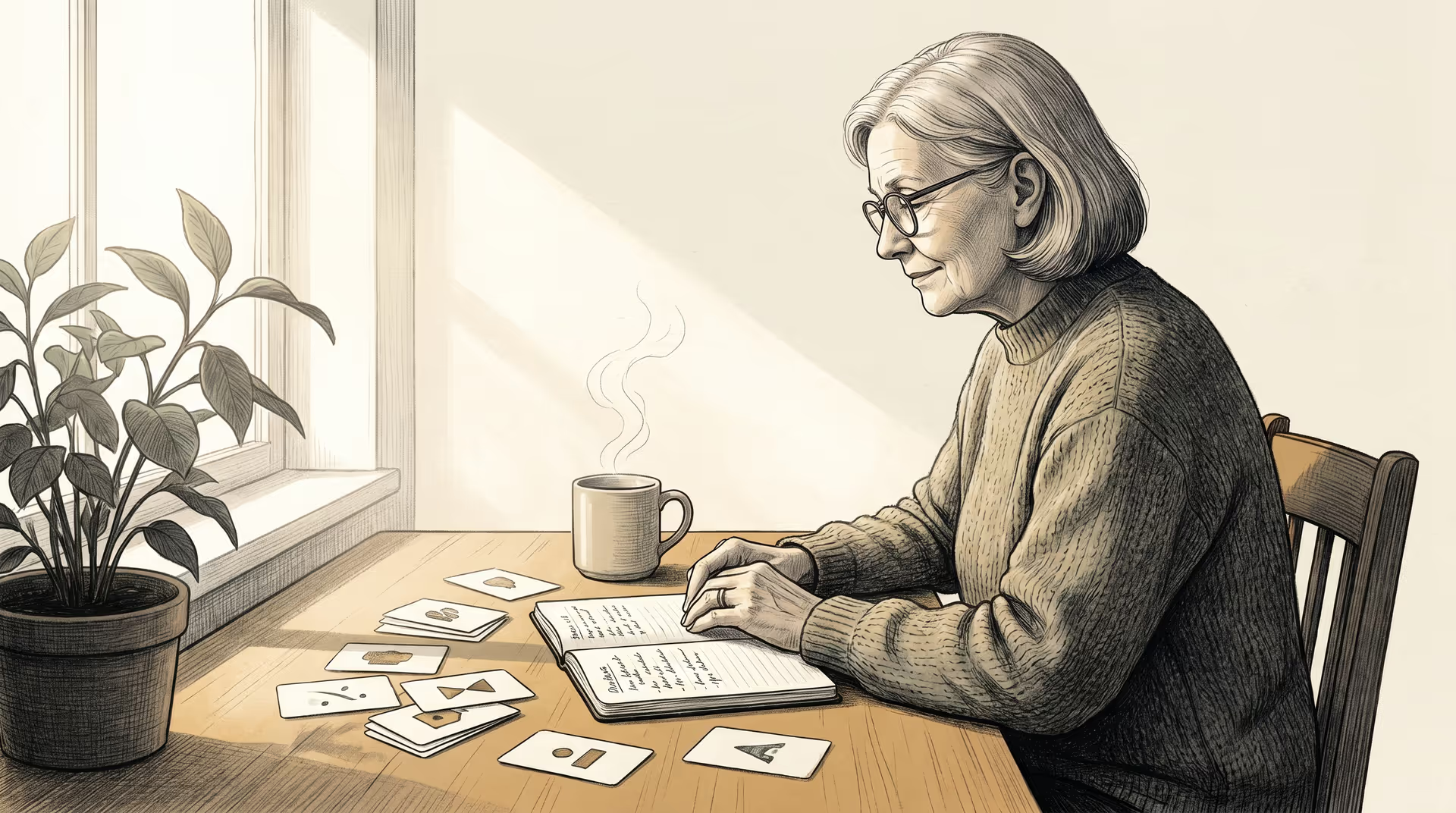
For generations, people treated slipping memory as an unavoidable toll of growing older, something they simply expected to endure. The science tells a more hopeful story. While some changes in how we think and remember are a normal part of aging, the choices we make every day meaningfully shape how well our minds hold up over time. The brain, it turns out, is remarkably adaptable in later life.
This is the idea behind the familiar phrase "use it or lose it." Your brain is a living organ that responds to how you use it, building new connections when you challenge it and growing stronger with the same habits that benefit the rest of your body. The good news for anyone who has worried about a misplaced set of keys: a sharper mind is something you can actively cultivate.
What normal aging looks like, and what it doesn't
It helps to separate ordinary aging from something worth investigating. As we get older, it is common to take a little longer to learn new information, to occasionally blank on a name, or to need a beat more time to recall where we set something down. According to the National Institute on Aging, older adults often perform just as well as younger people on memory tasks when given a bit more time; that extra moment is normal.
What is not part of typical aging is forgetting how to do familiar tasks, getting lost in places you know well, struggling to follow a conversation, or having memory lapses that disrupt daily life. The NIA's guidance on memory and aging draws this line clearly, and it is worth bookmarking for peace of mind.
The science of cognitive reserve
Researchers use the term cognitive reserve to describe the brain's ability to improvise and find alternate ways of getting a job done. People who keep learning, stay physically active, and remain socially engaged across their lives tend to build up more of this reserve, a kind of mental buffer that helps the brain stay resilient even as it ages.
One of the most encouraging findings comes from the NIA, which reported that people who followed four or five healthy lifestyle behaviors had a 60% lower risk of developing Alzheimer's compared with those who followed one or none. No single habit does the job on its own; it is the combination, and the consistency, that does the work.
A Mirador guide to brain-healthy habits
The most well-supported habits make more sense when you see how each one connects to why it helps. Understanding the mechanism makes it far easier to stick with the routine.
| Habit | Why it helps your brain |
|---|---|
| Move your body regularly | Exercise increases blood flow to the brain and supports the connections between neurons that underlie thinking and memory. |
| Keep learning something new | Novel, challenging activities (a language, an instrument, a craft) build cognitive reserve far more than repeating familiar tasks. |
| Stay socially connected | Conversation and relationships exercise memory, attention, and mood, and are linked to a lower risk of cognitive decline. |
| Prioritize quality sleep | During deep sleep the brain clears waste proteins and consolidates memories from the day. |
| Eat for your brain | A Mediterranean-style pattern (vegetables, whole grains, fish, healthy fats) is consistently tied to better cognitive function. |
| Manage blood pressure, hearing, and mood | What's good for the heart is good for the brain; treating hearing loss and depression also protects thinking. |
That last row deserves a spotlight. The same NIA research found that treating hearing loss slowed cognitive decline by nearly half in older adults at higher risk, so keeping up with hearing checkups can help protect thinking.
Move your body
Of all the habits, physical activity has some of the strongest evidence behind it. The CDC notes that regular physical activity boosts brain health, improving memory and reducing the risk of cognitive decline. You don't need to train like an athlete; brisk walking, swimming, dancing, or gardening all count. If you want a starting point, our guide to the best exercises for seniors breaks down safe, effective options.
Feed your curiosity
The "use it or lose it" principle is most powerful when you choose activities that are genuinely new. Doing the same crossword every morning is pleasant, but learning to paint, picking up conversational Spanish, or volunteering in a new role asks more of your brain. The novelty and challenge are what forge fresh neural connections.
Stay connected
Loneliness is more than an emotional burden; it carries real cognitive risk. Strong relationships keep the mind engaged and have been linked to lower rates of dementia. If isolation is a concern for you or someone you love, our piece on social connection and loneliness in older adults offers practical ways to rebuild a sense of community.
Brain games: myth vs. what actually helps
The brain-training industry has promised a lot, but the picture is more modest. Commercial "brain games" tend to make you better at that specific game. Your Sudoku times improve, but those gains rarely transfer to everyday memory or thinking in a meaningful way.
What the research consistently supports is broad, real-world cognitive engagement: learning skills that stretch you, staying socially and physically active, and pursuing genuinely novel challenges. A puzzle you enjoy is a fine part of a full, active life; just don't expect an app alone to protect your memory. Think of cognitive health the way you'd think of overall wellness: it draws on many dimensions of well-being for seniors.
When memory changes warrant a doctor
Being proactive includes knowing when to ask for help. Talk with a clinician if you or your family notice:
- Repeating questions or stories in the same conversation
- Getting lost in familiar places or while driving a known route
- Trouble managing money, medications, or appointments that were once routine
- Withdrawing from work or social activities because of confusion
- Changes in judgment, mood, or personality that others notice
Many causes of memory trouble are treatable: medication side effects, thyroid issues, vitamin deficiencies, depression, or poor sleep among them. The National Institute of Neurological Disorders and Stroke offers a clear overview of dementia and its many possible causes, and an early conversation gives you the most options.
For families facing a diagnosis that affects daily living, it helps to understand the support that specialized care can provide. Our overview of memory care explains what these communities offer and when they may be the right fit.
Frequently asked questions
Is some memory change a normal part of aging? Yes. Occasionally forgetting a name or needing extra time to recall information is typical. What's not normal is memory loss that disrupts daily life; that's worth discussing with a doctor.
Do brain-training apps really work? They generally improve only the specific skill being practiced and rarely transfer to real-life thinking. Broad engagement (learning, exercise, and social connection) has far stronger evidence.
What's the single most important thing I can do for my brain? There isn't one. The research points to a combination of habits: physical activity, lifelong learning, social connection, good sleep, and a healthy diet, practiced consistently.
Can I start in my 70s or 80s and still benefit? Yes. The brain remains adaptable throughout life, and adopting healthy habits at any age can support cognitive function.
The takeaway
Keeping your mind active as you age is about building a life full of movement, learning, connection, rest, and good food, and paying attention when something feels genuinely off. These habits reinforce one another, and it is never too late to begin. For a fuller picture of brain-healthy living, explore the NIA's resource on cognitive health and older adults, then start with whichever single habit feels most doable today.
