
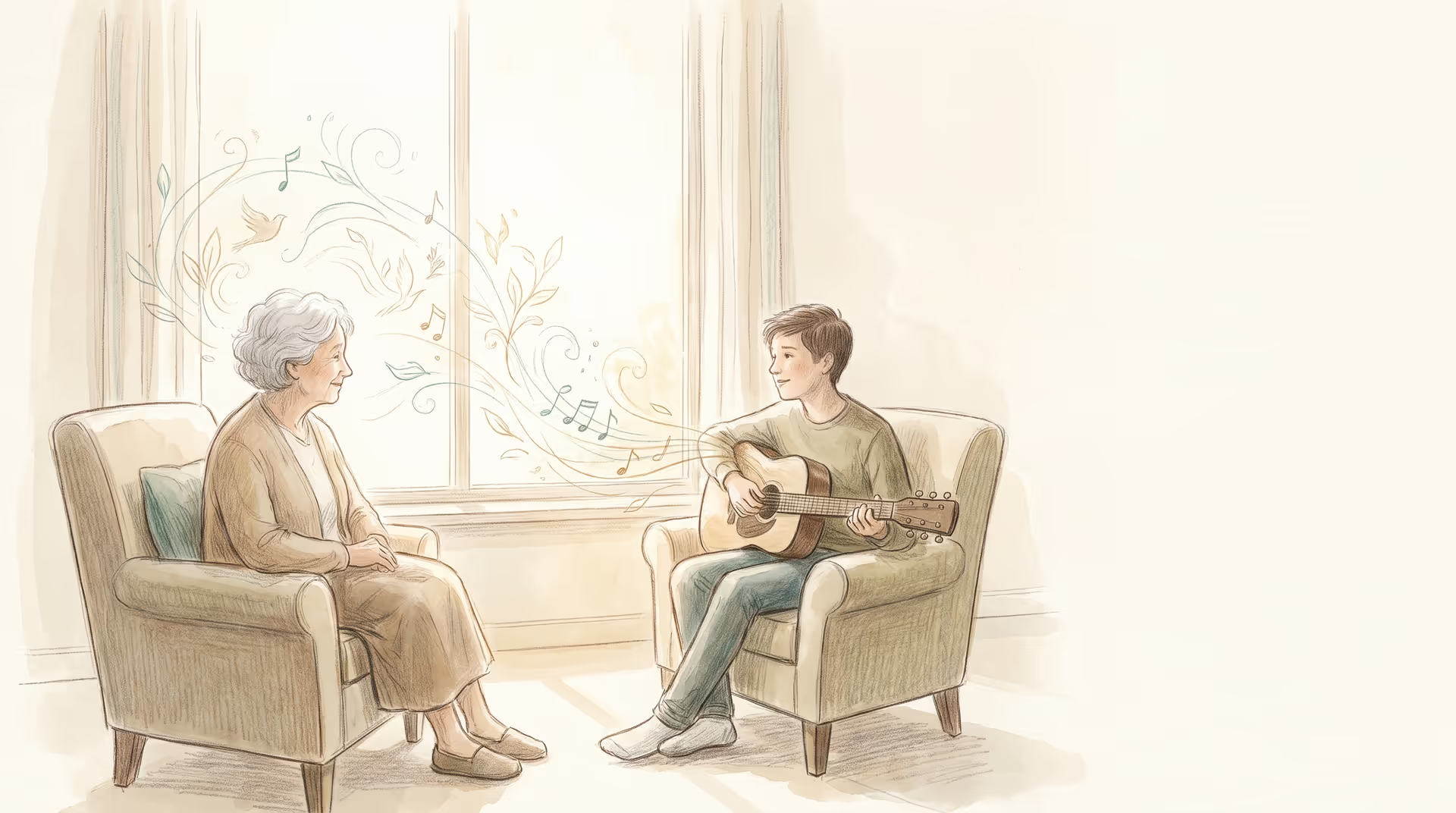
Music can do more than lift a mood. For people with Alzheimer’s or other dementias, music often reaches parts of the brain that other things do not. It can calm, connect, and sometimes unlock memories. This article explains how music therapy helps, how to use it at home, and when to bring in a professional.
Why music helps the brain with Alzheimer's and dementia
Many people with dementia keep musical memory long after other memories fade. Research shows that areas of the brain that process music — like auditory and motor regions — are often spared until late in the disease. That helps explain why someone may still hum or sing songs from their youth, even if they struggle with recent events.
Music also links strongly to emotion. Songs that were important in a person’s life can trigger vivid memories and feelings. Those music-evoked memories can be more accessible than ordinary episodic memories. Finally, music involves many brain networks at once. Rhythm, melody, language, and movement all get used together. That makes music a useful way to reach through the damage caused by dementia.
(These points are supported by reviews and clinical sources that describe preserved musical memory, music-evoked autobiographical recall, and the brain networks music activates.)
Measurable benefits of music therapy
Clinical studies and major dementia organizations report several consistent benefits of music therapy and musical interventions:
- Better mood. Music can reduce sadness and lift spirits. Music therapy has been linked to lower depression scores and less anxiety.
- Less agitation. Playing calming music often reduces restlessness and aggressive behaviors common in middle stages of dementia.
- Improved communication. Singing and rhythmic cues can help people express themselves. Families often report more eye contact, more words, and more smiles during music.
- Stronger autobiographical recall. Familiar songs often bring back memories and stories from the past.
- Cognitive gains. Some music programs show improvements in verbal fluency and certain cognitive tasks after repeated sessions.
- Movement support. Rhythm can help with walking, timing, and coordination.
- Caregiver relief. When music eases a person’s anxiety or agitation, caregivers feel less stressed and connect more easily.
These benefits appear across home settings, care centers, and controlled studies. Music therapy is generally safe and well tolerated.
How to use music safely at home
You do not need special equipment to try music at home. But a few simple practices improve results and reduce upset:
- Choose familiar music. Play songs from your loved one’s youth or early adulthood. Those tracks often work best for recall.
- Let them choose when possible. Preference matters. If they can point to or name songs, follow their lead.
- Avoid interruptions. Use music sources without ads or sudden breaks. Commercials and abrupt changes can cause confusion.
- Match the mood you want. Slow, gentle music calms. Upbeat music can boost energy or encourage movement.
- Keep volume moderate. Too loud is disorienting. Too quiet may be missed.
- Reduce background noise. Turn off TVs and radios and close windows if you can.
- Watch reactions. If a song causes anxiety, stop it. Not all music is comforting.
- Use music for timing. Try music during tasks like dressing or bathing to make routines smoother.
These tips reflect guidance from the Alzheimer’s Association and clinical specialists who work with musical interventions.
Simple music activities you can try
Here are practical ways to bring music into daily care:
- Personalized playlist. Build a playlist of 15–30 songs your parent knows and likes. Keep it handy on a phone or simple player.
- Sing-along time. Sing together, even if the words are partly forgotten. Singing uses language and breath control in helpful ways.
- Tap or clap to a beat. Rhythmic movement can be calming and improve coordination.
- Gentle dancing. If safe, standing or seated movement to music adds joy and exercise.
- Handheld instruments. Give a shakers, tambourine, or small drum. These are easy to use and promote engagement.
- Reminiscence prompts. Play a song and ask about the memory it brings up. Even short answers are meaningful.
- Background music for care tasks. Play calming music during grooming or mealtime to reduce resistance.
Start short. Try one activity for 10–15 minutes and note the response. Repeat what works.
When to bring in a music therapist
A trained music therapist can help when needs are complex. Consider professional help if:
- Your loved one has severe agitation or behavioral issues that do not respond to simple music.
- You want a tailored program to support memory, speech, or movement.
- You need guidance on safe instruments, group sessions, or how to integrate music into medical care.
Music therapists assess abilities and design structured sessions. They can also train family members and caregivers to use music effectively.
Watch for triggers and adjust
Music is powerful, so it can also trigger strong, unwanted emotions. A song tied to a sad event may increase distress. Always watch facial expression, body language, and mood. If a choice creates anxiety, stop and try something else. Keep a record of what helps and what does not. Over time you will build a reliable playlist.
Getting started — practical tips
- Make a short starter playlist with songs from the 15–30 years when your parent was a teen or young adult.
- Use an ad-free streaming account, CDs, or local files to avoid interruptions.
- Schedule music at predictable times: after breakfast, during dressing, or before bedtime.
- Invite family members to join. Hearing familiar voices can boost engagement.
- Keep sessions short and frequent. Small daily doses help more than long, rare sessions.
Final thoughts
Music is a low-cost, low-risk tool you can try at home right away. It will not cure dementia, but it can improve mood, ease agitation, boost communication, and help families connect. Start small. Watch closely. Build playlists around what your loved one enjoys. If you find music helps, consider talking with a certified music therapist for tailored support. Music often brings back a bit of the person you miss. It can also make caregiving a little easier and more joyful.
