
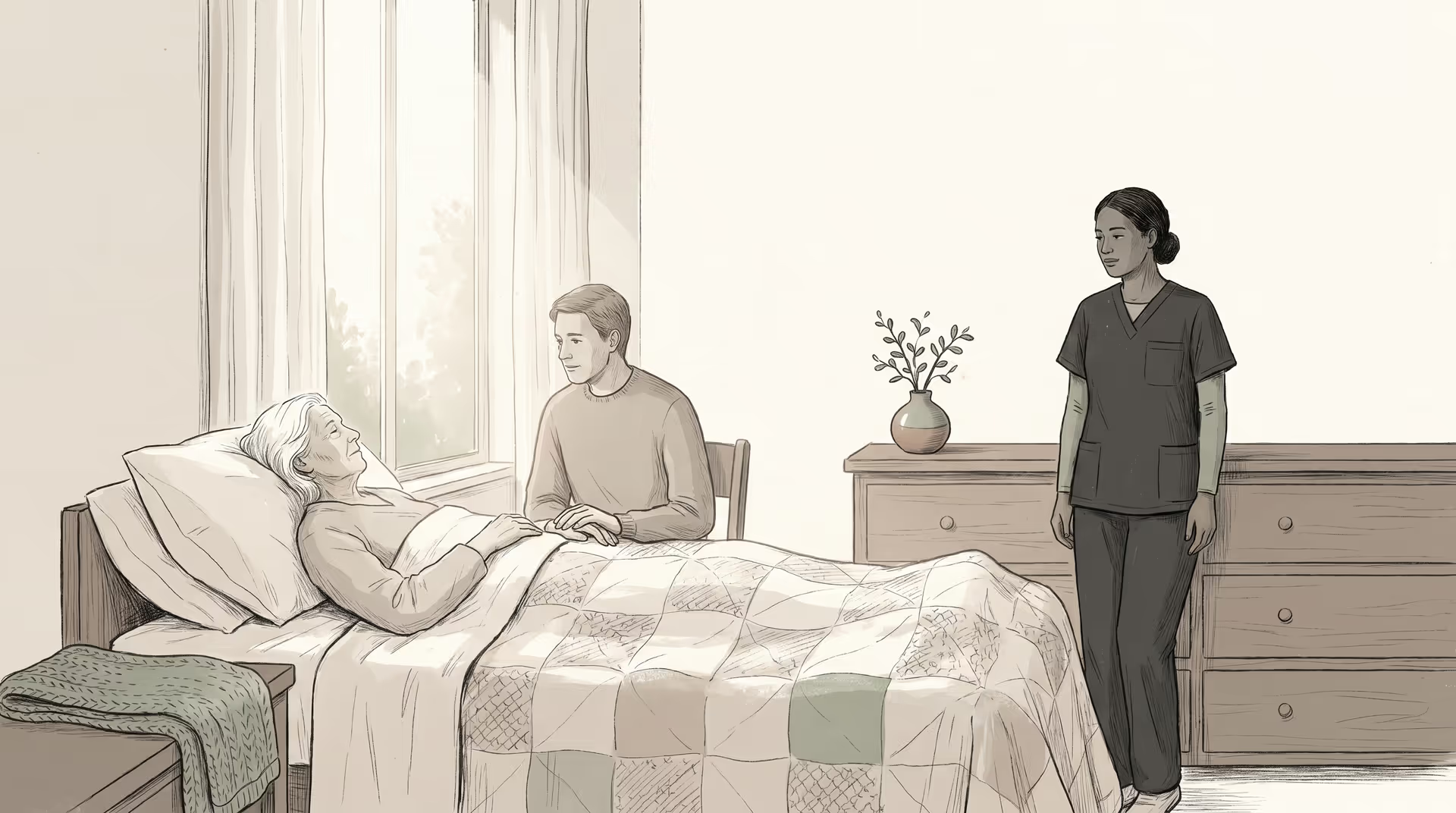
Few conversations are harder than the one that begins, "It may be time for hospice." For many families, the word itself sounds like surrender. In practice, hospice is the opposite: it is an intensive, deeply personal form of care designed to make a person's remaining time as comfortable, dignified, and meaningful as possible. Understanding what hospice actually is (and what it is not) can turn a frightening decision into a confident one.
What hospice care is, and who it's for
Hospice is medical care that shifts the goal from curing an illness to maximizing comfort and quality of life when a serious illness can no longer be cured. It does not hasten death or require anyone to give up. A coordinated team takes over the daily work of managing pain, symptoms, and the emotional weight of a final chapter, so the person and their family can focus on living the days they have.
Hospice serves people of any age with a terminal illness whose doctor believes treatment to cure the disease is no longer working or wanted. The most common diagnoses include advanced cancer, heart failure, dementia, lung disease, kidney failure, and stroke. Care centers on both the patient and the whole family, whom the team treats as part of the unit of care.
Eligibility: the six-month guideline
To qualify for the Medicare Hospice Benefit, two physicians (often the patient's doctor and the hospice medical director) must certify that, if the illness runs its expected course, the person likely has six months or less to live. The patient also agrees to focus on comfort rather than treatments aimed at curing the illness.
This six-month figure is a flexible prognosis guideline. According to the National Institute on Aging, if a person lives longer than six months, hospice care can continue as long as a doctor re-certifies that the person remains terminally ill. People are not "discharged for living too long." A patient can also leave hospice at any time (for example, to pursue a new treatment) and re-enroll later if they choose.
Hospice vs. palliative care
These two terms are constantly confused, and the difference matters. Both prioritize comfort, but they apply at different stages and carry different rules.
| Palliative Care | Hospice Care | |
|---|---|---|
| When it applies | Any stage of a serious illness, from diagnosis onward | When the illness is terminal and life expectancy is about six months or less |
| Curative treatment | Provided alongside treatments meant to cure or control the disease | The team sets aside curative treatment in favor of comfort |
| Prognosis required | None | Physician certification of ~6 months or less |
| Where it's given | Hospital, clinic, or home | Wherever the person lives, plus inpatient settings as needed |
| Who it's for | Anyone with a serious illness | People nearing the end of life, plus their family |
In short: all hospice care is palliative, but not all palliative care is hospice. Palliative care can begin the day of diagnosis and run for years; hospice begins when the focus turns fully to comfort.
The hospice care team and its services
Hospice is delivered by an interdisciplinary team, so no single person (or family) carries the load alone. The team typically includes:
- Physicians who oversee the plan of care and manage symptoms
- Nurses who coordinate care and visit regularly, with on-call support 24/7
- Home health aides who help with bathing, grooming, and daily personal care
- Social workers who navigate resources, paperwork, and family dynamics
- Chaplains or spiritual counselors for those who want them
- Trained volunteers who offer companionship and respite for caregivers
- Bereavement counselors who support the family for up to 13 months after a death
Beyond skilled visits, hospice covers the medications, medical equipment (hospital beds, wheelchairs, oxygen), and supplies related to the terminal illness: items that families often don't realize hospice covers.
Where hospice care is delivered
A common misconception is that hospice is a place. Usually, it is a service that comes to the person. Medicare recognizes four levels and settings of care:
- Routine home care: the most common. Care is delivered wherever the person calls home: a private residence, an assisted living community, or a skilled nursing facility.
- Continuous home care: short periods of intensive nursing at home during a crisis, such as uncontrolled pain.
- General inpatient care: symptom management in a hospital or inpatient hospice unit when the team can't control it at home.
- Respite care: a brief stay in a facility so family caregivers can rest, typically up to five days at a time.
How hospice is paid for
For most families, the financial relief is significant. The Medicare Hospice Benefit (Part A) covers virtually all hospice services related to the terminal illness, typically with no out-of-pocket cost for visits and care, and only small copayments (no more than $5) for prescription drugs for symptom relief, plus a 5% share for inpatient respite care. Medicaid and most private insurance plans, including Medicare Advantage, offer comparable hospice coverage.
What hospice does not pay for is room and board if the person lives in an assisted living or skilled nursing setting; that cost continues separately. Families often pair hospice with savings, long-term care insurance, or veterans' benefits to cover residential costs while Medicare handles the clinical care. If your loved one needs help with bathing, dressing, and other daily tasks before reaching hospice eligibility, our guide to personal care for seniors explains those options.
The Mirador take
At Mirador, we see hospice as a redirection of effort, away from fighting a disease and toward fully supporting the person. The families who tell us they have the fewest regrets are almost always the ones who reached out earlier than they thought they needed to. Hospice helps most when measured in weeks and months, not days. If you're wondering whether it's "too soon," that uncertainty is usually a sign it's time to ask the question.
Frequently asked questions
Does choosing hospice mean giving up? No. Hospice means changing the goal from curing the illness to maximizing comfort and quality of life. Many patients and families describe it as gaining a dedicated team.
Can someone leave hospice if their condition improves? Yes. A patient can stop hospice at any time to pursue curative treatment and can re-enroll later if they again meet the eligibility criteria.
Is hospice only for cancer patients? No. While cancer is common, hospice serves people with heart failure, dementia, lung and kidney disease, stroke, and other advanced illnesses.
How long can a person stay in hospice? There is no fixed limit. As long as a physician re-certifies that the person remains terminally ill, hospice care can continue beyond the initial six-month period.
Where does hospice care happen? Most often wherever the person lives (at home, in assisted living, or in a nursing facility), with hospital or inpatient hospice units available when symptoms need closer management.
