
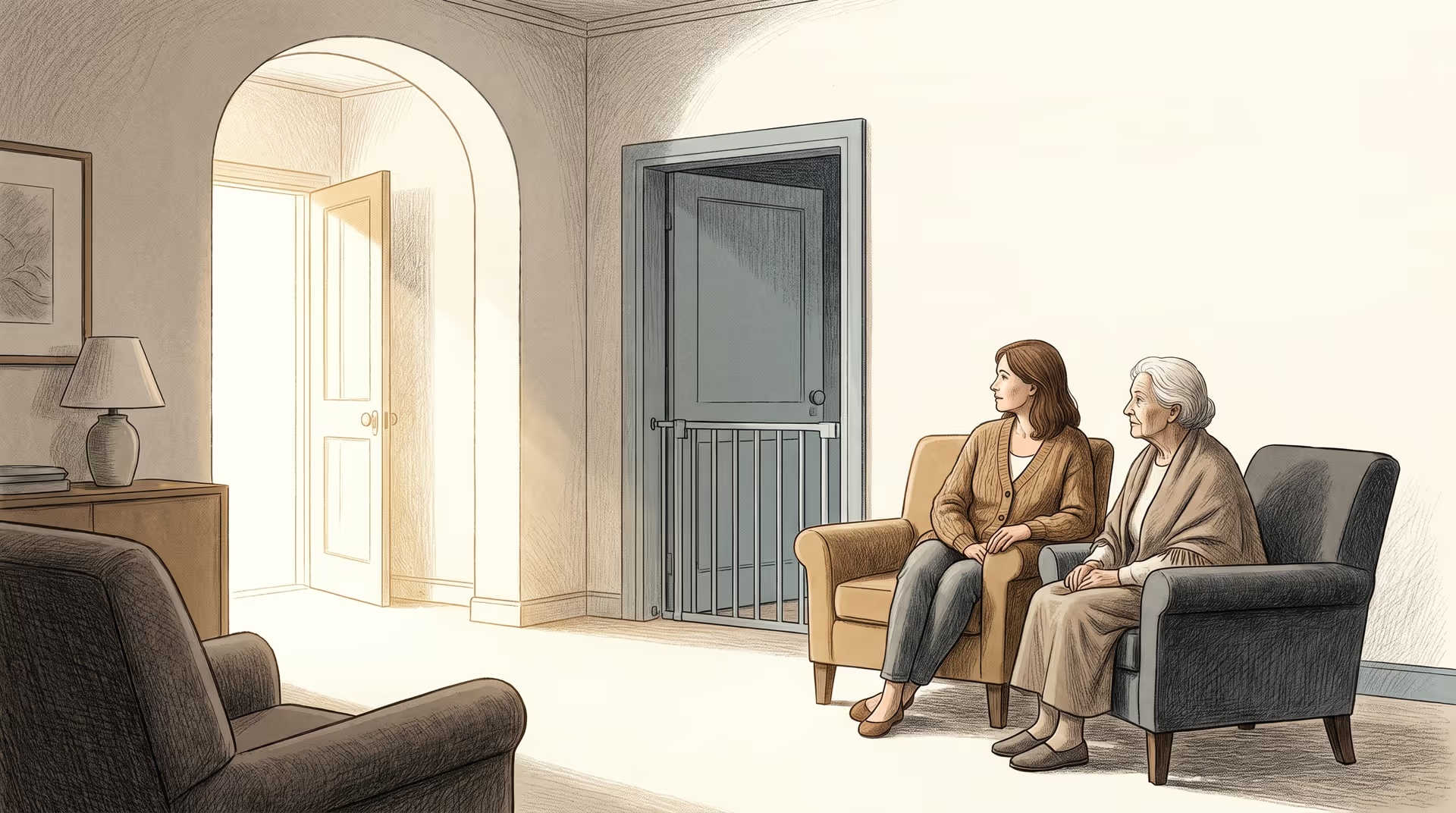
When you start touring senior living communities, two options come up again and again: assisted living and memory care. They can look similar from the lobby (comfortable apartments, shared dining rooms, friendly staff), but they are built for different people and different needs. Choosing the wrong one can mean either paying for care your loved one doesn't need or, more worryingly, placing them somewhere that can't keep them safe.
The differences, laid out side by side, can help you match the setting to the real person in front of you instead of a brochure.
The short version
Assisted living is for older adults who are mostly capable but need a hand with some activities of daily living: bathing, dressing, medication reminders, or getting to meals. Residents make their own choices, come and go freely, and value independence with a safety net.
Memory care is a specialized form of assisted living for people living with Alzheimer's disease or another form of dementia. The building, the staff training, and the daily rhythm are all designed around cognitive decline: wandering, confusion, sundowning, and the need for constant, gentle supervision. Learn more in our overview of what memory care is.
The simplest way to think about it: assisted living supports the body. Memory care supports the body and the mind.
Side-by-side comparison
| Dimension | Assisted Living | Memory Care |
|---|---|---|
| Who it's for | Mostly independent seniors needing help with daily tasks | Adults with Alzheimer's or another dementia |
| Care focus | Physical support, ADLs, medication management | Cognitive support plus all physical care |
| Staffing ratio | Lower; residents are more self-directed | Higher; closer, more frequent supervision |
| Staff training | General caregiving and ADL support | Specialized dementia training (de-escalation, redirection) |
| Security | Standard building safety, emergency call systems | Secured/locked exits, enclosed courtyards, wander alarms |
| Environment | Apartment-style, larger campuses | Smaller, calm layouts with visual cues to reduce confusion |
| Activities | Outings, fitness, social clubs, hobbies | Structured, cognitively supportive therapies (music, memory boxes, sensory) |
| Daily routine | Flexible, resident-driven | Predictable, consistent; routine itself is therapeutic |
| Typical cost | Lower | Roughly 20 to 30% higher than assisted living in the same community |
Care, staffing, and training
Both settings help with the basics of daily life: bathing, dressing, grooming, medications, and meals. The difference is in how staff are trained and how closely they watch.
In assisted living, caregivers respond when a resident asks for help. In memory care, caregivers learn to anticipate. A resident with dementia may not remember to eat, may become agitated at sundown, or may try to leave looking for a home that no longer exists. Memory care staff learn techniques like redirection, validation, and de-escalation, and there are simply more of them per resident.
Security and environment
This is where the two diverge most visibly. Assisted living communities are open: residents take walks, run errands, and have visitors freely. Memory care communities are secured: exits are locked or alarmed and outdoor spaces are enclosed, so a resident prone to wandering stays safe without feeling confined.
The physical design matters too. Memory care floor plans are deliberately simple and calm, with clear visual cues, good lighting, and minimal noise, all of which reduce the confusion and anxiety that crowded, complex spaces can trigger. The National Institute on Aging's home-safety guidance reflects many of the same principles these communities are built around.
Activities
Assisted living activities look like a busy social calendar: fitness classes, day trips, card games, happy hours. Memory care programming is gentler and more structured, because routine and familiarity themselves are therapeutic. Think music therapy, sensory activities, reminiscence work, and simple repeatable tasks that provide a sense of purpose without overwhelming. The Alzheimer's Association's care-options resources describe these dementia-specific approaches in more detail.
Cost
Memory care almost always costs more than assisted living in the same community, commonly 20 to 30% more, because of the higher staffing ratios, specialized training, and secured environment. Neither is routinely covered by standard Medicare, though some long-term care insurance, VA benefits, and Medicaid waivers may help. When you compare quotes, ask exactly what the base rate includes and how "care levels" are priced, since dementia care often carries add-on tiers as needs increase.
How to know which one your loved one needs
Use this checklist. The more memory-care items that ring true, the more likely it's time for that specialized setting:
- Has a formal diagnosis of Alzheimer's or another dementia
- Wanders, gets lost, or leaves and can't find the way back
- Has trouble recognizing familiar people or places
- Forgets to eat, take medications, or turn off the stove
- Experiences sundowning, agitation, or aggression
- Needs cues or hands-on help for nearly every daily task
- Has had safety incidents (falls, leaving the building) in a less-secure setting
If most of these don't apply and the need is mainly physical help, assisted living is usually the right, less restrictive (and less expensive) choice. Not sure where your parent falls? Our guide to the signs an aging parent needs help can help you read the early indicators. For a clinical reference point, the NIA's overview of the signs of Alzheimer's and the Alzheimer's Association stages of dementia are good starting points.
When to move from assisted living to memory care
Many families start in assisted living and transition later, and that's often the right path. Move-up signals include repeated wandering or exit-seeking, escalating confusion or agitation that disrupts the community, weight loss from forgetting meals, or staff telling you their setting can no longer keep your loved one safe.
A practical advantage: many communities have both levels under one roof. When you tour, ask whether memory care is available on the same campus. Choosing a community that has it means that if dementia progresses, your loved one can move down the hall instead of across town, which keeps familiar faces close and avoids the disruption that's especially hard on someone with memory loss.
The Mirador take
Don't let a sales tour decide for you. The right answer comes from honestly assessing the person (their cognition, their safety, and their daily reality) and then finding a setting that matches, without paying for more restriction than they need. Because real cost and care details vary by community, verify specifics directly: tour in person, ask pointed questions about staffing and security, and confirm a community's standing on a neutral source like Medicare's Care Compare before you sign anything.
Frequently asked questions
Is memory care the same as a nursing home? No. A nursing home (skilled nursing) provides round-the-clock medical care for complex health conditions. Memory care is specialized assisted living focused on dementia and supervision; it doesn't provide intensive medical treatment.
Does Medicare pay for assisted living or memory care? Generally no. Standard Medicare doesn't cover the room-and-board or custodial care in either setting. Long-term care insurance, Medicaid waivers, and VA benefits may help offset costs.
Can someone with early dementia stay in assisted living? Often, yes. In the early stages, assisted living can provide enough support. The move to memory care typically comes as wandering, confusion, or safety risks increase. See the Alzheimer's Association care-options guide for more.
Can a person move from memory care back to assisted living? Rarely, because dementia is progressive. The far more common path is assisted living to memory care, which is why choosing a community that has both can spare your family a second move. The federal alzheimers.gov dementia-care resources offer additional planning guidance.
