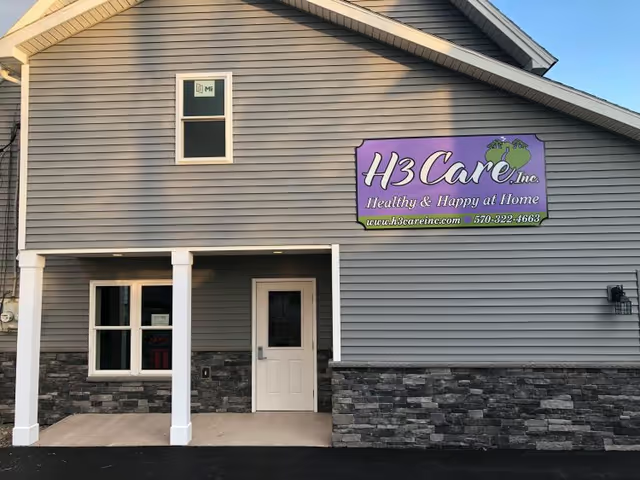
Overall impression: The collected summaries describe an agency with clear strengths in direct-care quality and workplace culture. Reviewers consistently characterize caregivers and nurses as caring, professional, and client-centered — comments highlight friendly in-home staff, reliable nurses, and interactions that leave clients feeling uplifted. Office personnel are also described as cordial and service-oriented, and internal culture is framed as supportive, which aligns with notes about long staff tenure and employee satisfaction.
Caregiver quality: The dominant pattern is positive for caregiver demeanor and professionalism. Multiple remarks emphasize compassion, respectful conduct, and clinically appropriate nursing presence. These observations suggest that, where continuity exists, the agency provides caregivers who are able to establish rapport and deliver a satisfactory client experience.
Communication and reliability: The summaries also identify operational gaps. Several reviewers reported miscommunication and problems with scheduling, which translate into inconsistent shift coordination and occasional reliability issues. These are presented as administrative coordination weaknesses rather than pervasive clinical failings, but they can affect day-to-day service continuity and family confidence.
Staffing and hiring: There are indications of unevenness in hiring and candidate communication; at least one account described a negative experience during recruitment. Taken together with perceived variability in on-shift competence, this points to potential areas for improvement in hiring procedures, orientation, and ongoing training to ensure consistent caregiver skill levels.
Value and management: Positive notes about workplace culture, staff longevity, and customer-service orientation imply effective management in areas of staff support and client relations. Reviewers who praised the agency tended to recommend it, suggesting perceived good value for families seeking in-home senior care. Nevertheless, prospective clients should inquire about scheduling practices, caregiver matching, and staff training processes to confirm operational fit.
Notable patterns: The overall pattern is one of strong interpersonal care and supportive office interactions coupled with administrative friction points—primarily scheduling, shift communication, and hiring-process clarity. Families and referral sources evaluating the agency will likely find strong caregiver engagement, but should verify systems for scheduling reliability and staff competency assurance before committing.