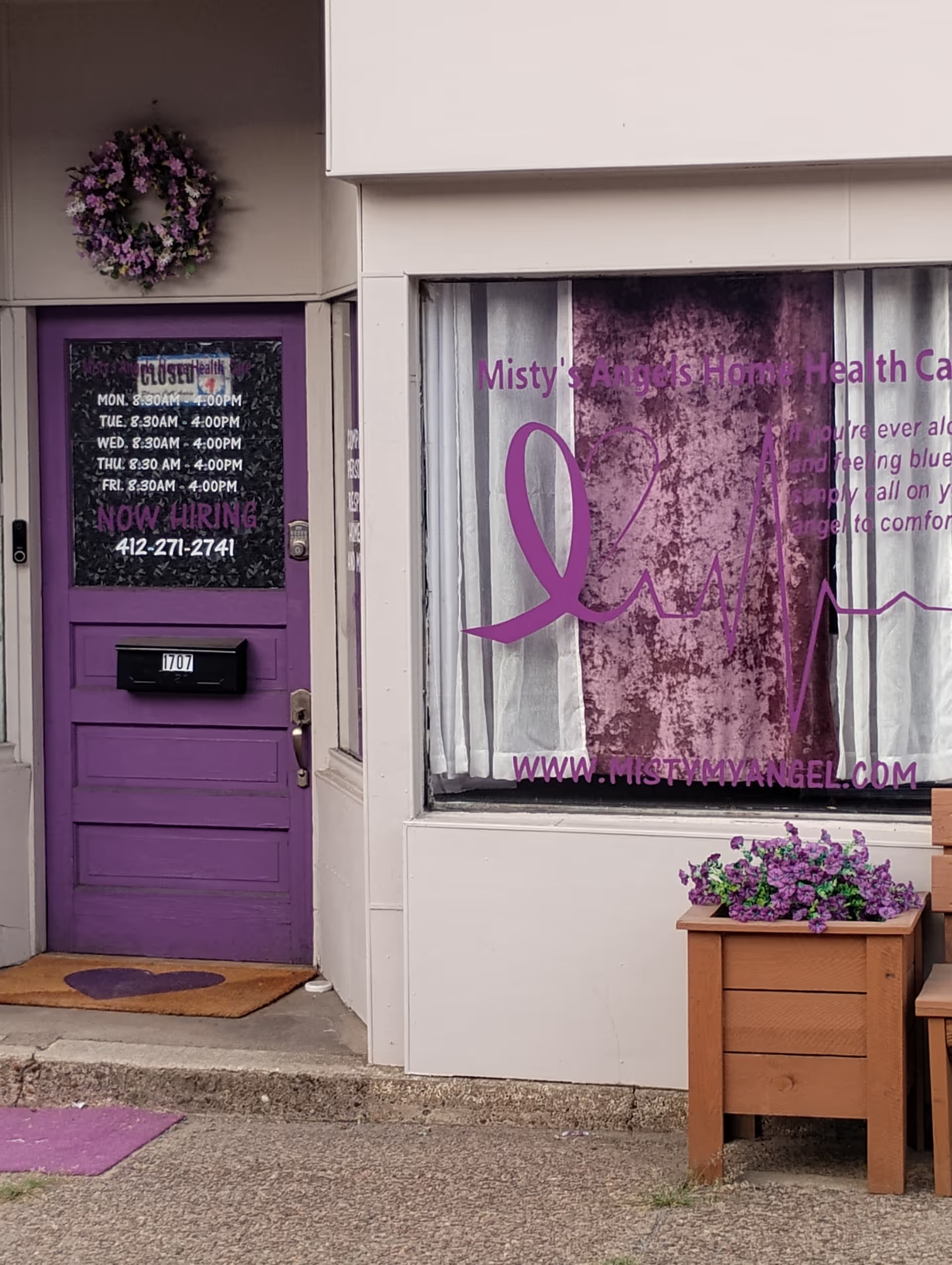
Overall impression: Reviews for Leann’s Loving Hands Home Care show a strong pattern of positive experiences centered on caregiver demeanor and personalized attention, alongside recurring operational concerns that affect reliability and family confidence. Many families described caregivers as compassionate, attentive, and professional; these caregivers were frequently credited with improving client well-being and reducing family stress. Several reviews emphasize a family-like approach to care, support through hospital transitions, and flexible intake or scheduling when needed.
Caregiver quality: Caregiver performance is a clear strength for the agency in many accounts. Reviewers use terms such as compassionate, caring, hands-on, and professional to describe individual aides who develop good rapport with clients and often go beyond basic tasks. At the same time, there are isolated but meaningful accounts of caregivers whose performance did not meet expectations. That mix suggests variability in caregiver competence and reliability — prospective clients should expect strong care in many cases but also consider asking about caregiver vetting, training, and continuity if consistency is a priority.
Office communication and management: Office and management communication receives mixed feedback. Some reviewers praise strong communication and helpful staff; others have difficulty reaching the agency or the owner and describe limited responsiveness. These contrasts point to uneven accessibility and escalation procedures at the agency level. Families who prioritize a clear single point of contact or rapid response should confirm how the agency handles urgent calls, after-hours issues, and supervisory follow-up.
Reliability and scheduling: Scheduling flexibility and punctual, consistent coverage are noted positively by many families, but operational lapses are also reported. Concerns include missed shifts or no-shows, duties not completed during shifts, and lapses in medication administration. These issues represent agency-level weaknesses in shift coverage, task follow-through, and medication-management systems rather than isolated stylistic complaints. Prospective clients should ask about backup staffing, medication administration protocols, and how missed shifts are remedied.
Value and overall patterns: Overall sentiment skews positive; families commonly describe improved quality of life, gratitude for supportive caregivers, and willingness to recommend the agency. However, the recurring operational themes — unreliable coverage, communication gaps, and task/medication-management issues — are significant enough to influence decision-making. Before contracting, families may want to request written care plans, clarify medication-handling procedures, verify primary contact pathways, and establish contingency plans for missed shifts to align expectations with the agency’s variable operational performance.