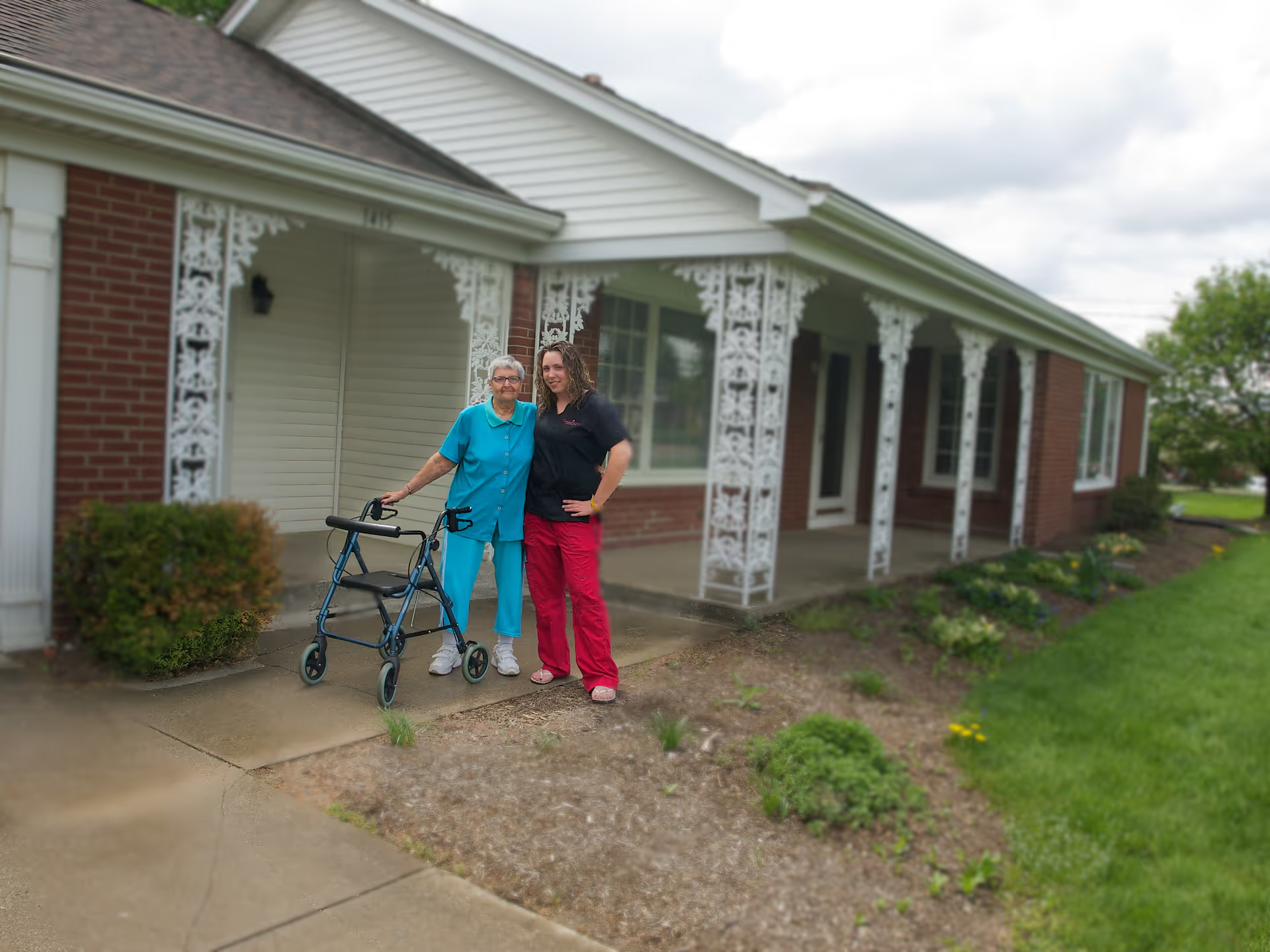
The reviews present a mixed but coherent picture. At the caregiver level, families consistently described warm, compassionate, and patient aides who provide attentive, nearly family-like support in the home. Clinical staff and direct-care caregivers were frequently characterized as knowledgeable and professional, and the agency’s ability to deliver a broad range of services — including home health, personal care, and hospice — is viewed as a substantive strength. Several comments also emphasize proactive collaboration with other providers, which reviewers framed as an important component of coordinated care.
Counterbalancing those positives are recurring administrative and reliability concerns. Multiple reviewers cited poor office communication, including unanswered calls and lack of callbacks, as a primary operational weakness. Staffing reliability also emerged as a pattern: backup or replacement coverage has at times been unavailable, and reviewers described gaps in continuity when assignments changed. In addition, perceptions of variable managerial professionalism — including examples of unprofessional behavior from nursing leadership — contributed to questions about the agency’s internal oversight and consistency.
These dynamics affect perceived value. When front-line caregivers and clinical coordination function as described, families considered the service an indispensable partner and were likely to recommend the agency. However, unpredictable follow-through and administrative responsiveness diminished confidence for some clients, eroding the benefits of the otherwise strong hands-on care. Billing and pricing were not a prominent theme in the summaries provided; overall assessments of value appear closely tied to reliability and communication rather than cost alone.
Taken together, the pattern suggests two distinct experiences: consistently high marks for individual caregivers and clinical capability, and recurrent concerns about office-level responsiveness, scheduling reliability, and managerial consistency. Prospective clients would benefit from confirming backup-staffing protocols, expected communication pathways and escalation contacts, and continuity plans during intake to help align expectations with the agency’s strengths and operational limits.