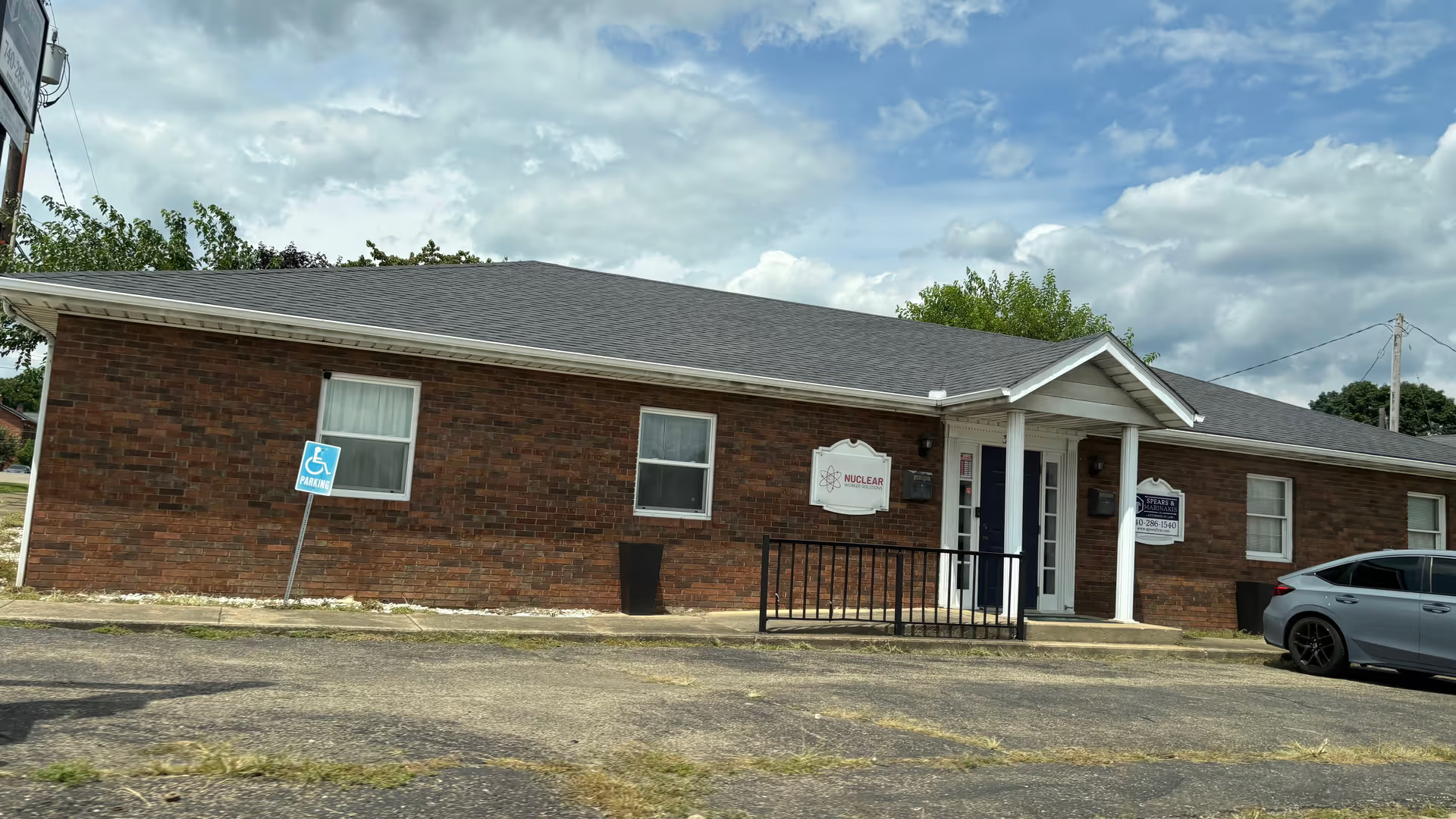
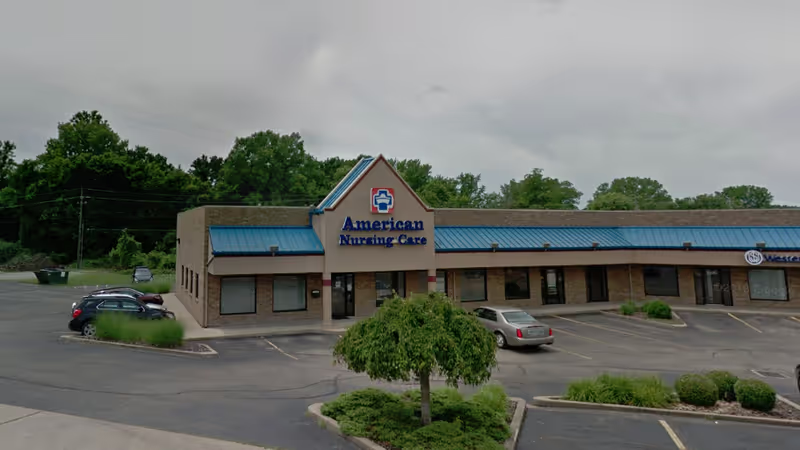
Reviewers portray Nuclear Care Partners as an agency with a strong clinical and relational focus. Caregivers, including RNs and CNAs, are commonly described as compassionate, attentive, and professional; many accounts highlight caregivers who go beyond basic duties to assist with paperwork, appointments, and advocacy. Families consistently credit the agency with helping clients remain at home and reducing caregiver-family stress, and reviewers frequently praise the staff’s expertise in managing complex or specialized health needs.
Operational strengths cited include proactive and responsive management, timely communication, and flexible scheduling options such as same-day or ASAP visits. Multiple comments reference helpful coordination with medical appointments, rapid processing for approvals, and an active referral network when an external provider is more appropriate. The agency’s administrative resources — including a user-friendly website and step-by-step guidance — are noted as practical supports during intake and ongoing care.
Despite the overall positive tone, several reviews raise agency-level concerns about communication and administrative consistency. Specific criticisms point to unclear or inconsistent information from office staff, occasional difficulty getting questions resolved, and a sense of procedural runaround during intake or approval processes. There are also mentions of recent operational changes and variable interactions with particular staff members, suggesting some unevenness in the client experience across different points of contact.
In terms of reliability and scheduling, reviewers generally describe dependable caregiver availability and prompt responses to urgent needs; the reported examples of rapid response and same-day visits reinforce this impression. For families assessing value, the predominant impression is favorable: reviewers emphasize high perceived value through personalized attention, help navigating benefits/programs, and the ability to keep loved ones at home.
For prospective clients, the pattern to note is strong hands-on caregiving and active care coordination combined with episodic administrative friction. When engaging the agency, it may be useful to confirm key administrative details in writing and to establish a clear point of contact for approvals and scheduling to reduce the likelihood of inconsistent information. Overall, the balance of feedback suggests a clinically capable, community-oriented provider with generally high family satisfaction and a handful of operational areas that could benefit from improved consistency.