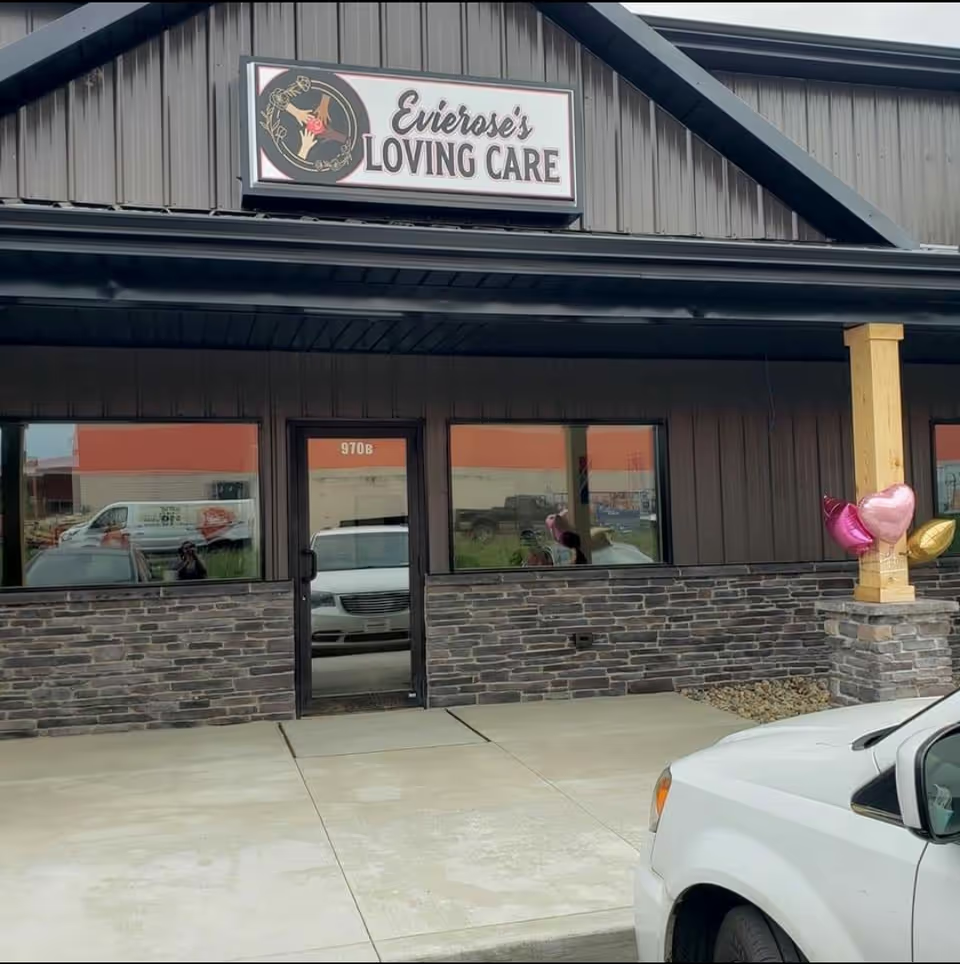
The reviews indicate a mixed picture: several reviewers praised the agency's office team for being energetic, personable, and client-focused, while other comments raise significant operational concerns that affected the quality and continuity of in-home care. The contrast between positive front-office interactions and negative care outcomes is a notable pattern across the feedback.
Caregiver quality appears inconsistent. Praise centers on friendly, engaging staff in administrative and client-facing roles, but other accounts describe lapses in caregiver attentiveness and professionalism, particularly for clients with higher dependency needs (for example, bed-bound clients). These accounts point to variability in bedside skills, task follow-through, and overall reliability of individual aides rather than uniformly competent performance across all caregivers.
Communication and management receive mixed marks. Several reviewers describe the office staff as helpful and energetic, which suggests a strength in day-to-day client interactions. At the same time there are recurring comments about poor communication from management, inconsistent supervisory follow-through, and difficulty getting problems resolved. This creates a split impression: capable front-desk personnel paired with weaknesses in oversight and escalation.
Reliability and scheduling are frequent areas of concern. Reviews reference missed shift coverage, aide no-shows, and frequent aide changes, which undermines continuity of care and complicates family oversight. These patterns imply weaknesses in scheduling, backup staffing, and caregiver retention that prospective clients should verify before engagement.
On value and complaint handling, reviewers express dissatisfaction with the care received relative to expectations. One reviewer alleged a threatened report to a protective-services registry during a dispute, highlighting potential adversarial approaches to conflict resolution. Taken together, these comments suggest families should confirm the agency's policies on supervision, incident reporting, and dispute resolution when selecting services.
Notable patterns for prospective clients and families: verify continuity and backup staffing plans; ask about training and experience with high-dependency clients; request a single point of contact for escalations and clear escalation procedures; and seek references about supervision and shift reliability. The agency appears to have strengths in office-level client engagement but recurring operational issues that can materially affect day-to-day caregiving and continuity of service.