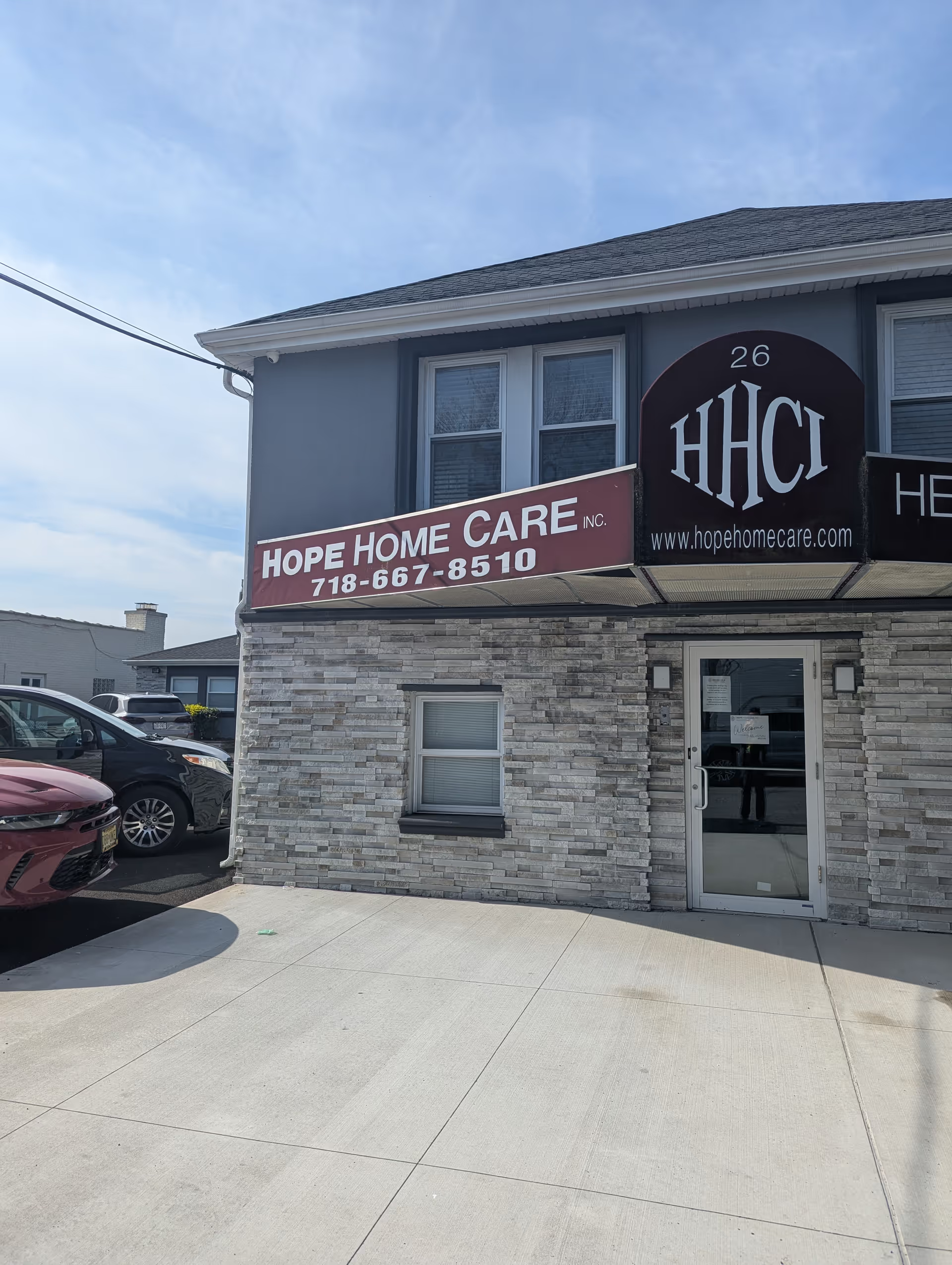
Available review text for Hill Top Home of Comfort is uniformly brief and positive, using concise descriptors such as "professional," "loving," "caring," and noting a high rating. Those terms indicate that families perceive the agency's caregiver teams as warm and respectful and that the agency maintains a favorable reputation among reviewers.
Caregiver quality appears to be a central strength in the reviews: language emphasizing caring and love suggests that aides provide empathetic, relationship-oriented support. However, the lack of operational detail prevents a confident assessment of clinical competencies or task-specific skills (for example, medication oversight, safe transfers, or complex personal-care hygiene practices). Prospective clients should therefore verify training credentials, background checks, and clinical experience during intake conversations if those elements are important to the care plan.
Office communication and management cannot be fully characterized from the available text. The positive tone implies satisfactory interactions between families and staff, but reviewers did not specify how the agency handles care-plan updates, point-of-contact availability, or escalation pathways. Families evaluating the agency should ask for clear communication protocols, a designated care coordinator, and examples of how the office documents or communicates changes to care.
Reliability, scheduling flexibility, and value-for-cost are similarly underdescribed. The high overall rating is consistent with reliable service, but the reviews do not provide evidence on topics such as regular caregiver assignment, backup coverage for absences, punctuality, or how cancellations and overtime are billed. Before committing, request a sample weekly schedule, policies on substitute caregivers, and written explanations of billing practices and cancellation terms to assess operational fit and value.
Notable pattern: reviews are overwhelmingly favorable but sparse. That pattern suggests a strong emotional endorsement of caregiver demeanor and an overall positive reputation, while leaving operational questions unanswered. For decision-making, combine the positive reputation with targeted due diligence: confirm caregiver qualifications, request written policies on scheduling and billing, and obtain references that address day-to-day reliability and communication. This approach will translate the favorable impressions in the reviews into a clearer picture of whether the agency meets a particular client's clinical and logistical needs.