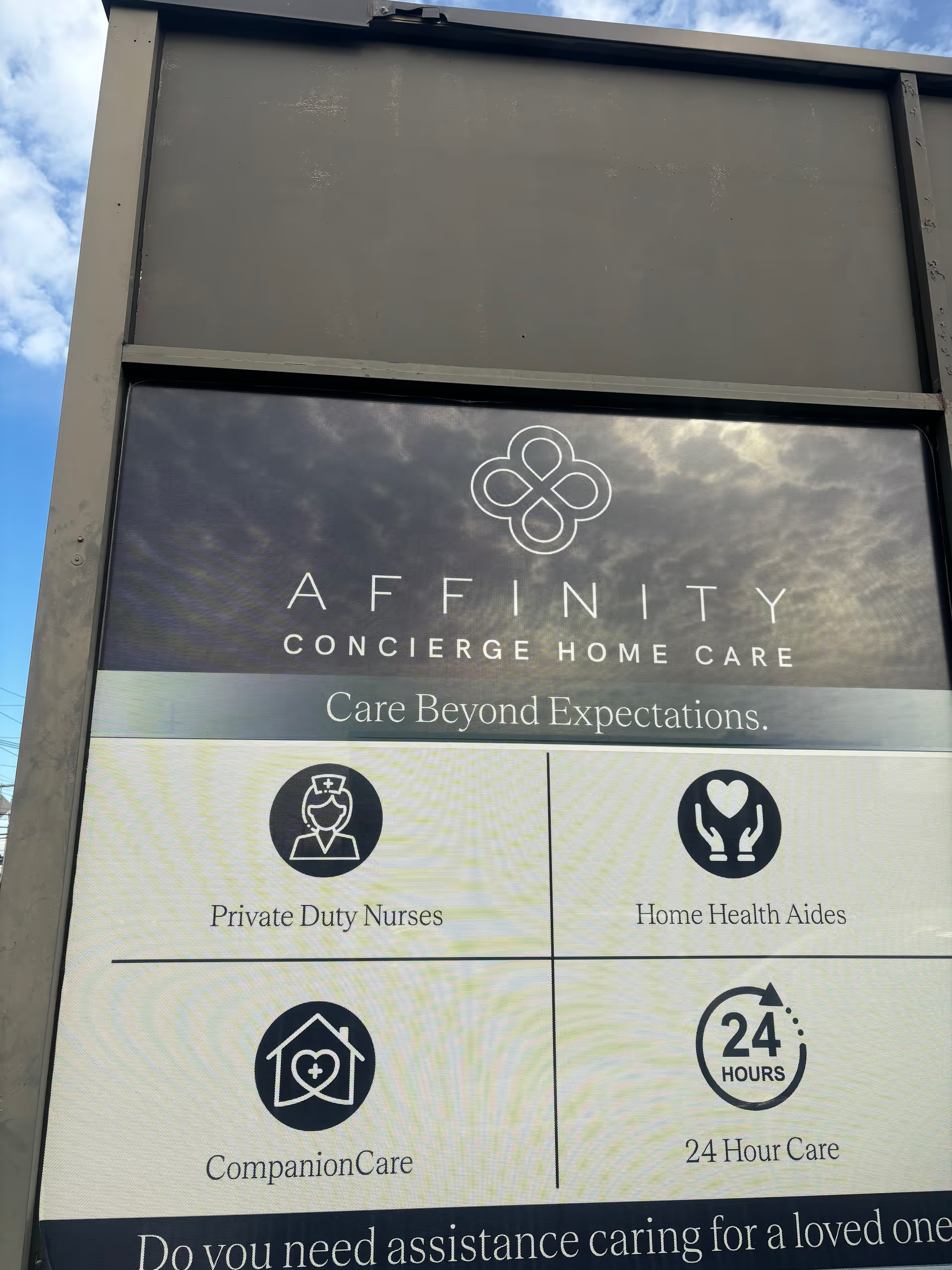
The review set presents a mixed but generally positive picture of day-to-day caregiver interactions alongside some operational weaknesses. Positive comments repeatedly emphasize staff demeanor and organization: caregivers are described as warm, respectful and accommodating, and families noted an on-time, organized orientation/onboarding process. Several summaries mention accessible communication channels (phone/text) and nurses who visit to discuss procedures, which suggests clinical oversight is part of the offering.
Caregiver quality and clinical oversight are commonly cited strengths. Reviewers used terms such as professional, helpful and supportive when referencing aides and nursing staff. The presence of nurses who discuss procedures points to active clinical involvement rather than purely nonmedical companionship, and many families found the caregivers pleasant and easy to work with.
Office communication and reliability show divergent experiences. Multiple summaries praise proactive communication about paperwork and availability to answer questions; however, a distinct set of comments describes poor responsiveness to calls and lapses in follow-up. This creates an uneven experience where routine administrative or preparatory contacts are handled well for some clients but are inconsistent for others.
Reliability and care coordination raise notable concerns for a subset of families. While orientation and scheduling were described as well organized by several reviewers, at least one account indicated a clinically consequential breakdown that resulted in a hospital return. This points to potential gaps in transition planning and care escalation procedures rather than a universal operational failure, but it is significant enough that prospective clients should ask about hospital-transition protocols and contingency staffing.
Billing and administrative issues appear as an area to probe before engagement. One review referenced outstanding payments and contemplated formal complaint, which, combined with other mentions of administrative lapses, suggests the agency can have uneven billing transparency or follow-through. Families should request clear written agreements, itemized invoicing practices, and a contact for billing disputes.
Overall, the dominant pattern is of a team that delivers personable, organized in-home care with clinical input, balanced against episodic administrative and communication shortcomings. Prospective clients would benefit from directly confirming points of concern during intake: who the clinical contacts are, how after-hours communication is handled, written billing policies, and the agency’s procedures for hospital transitions and urgent care escalation.