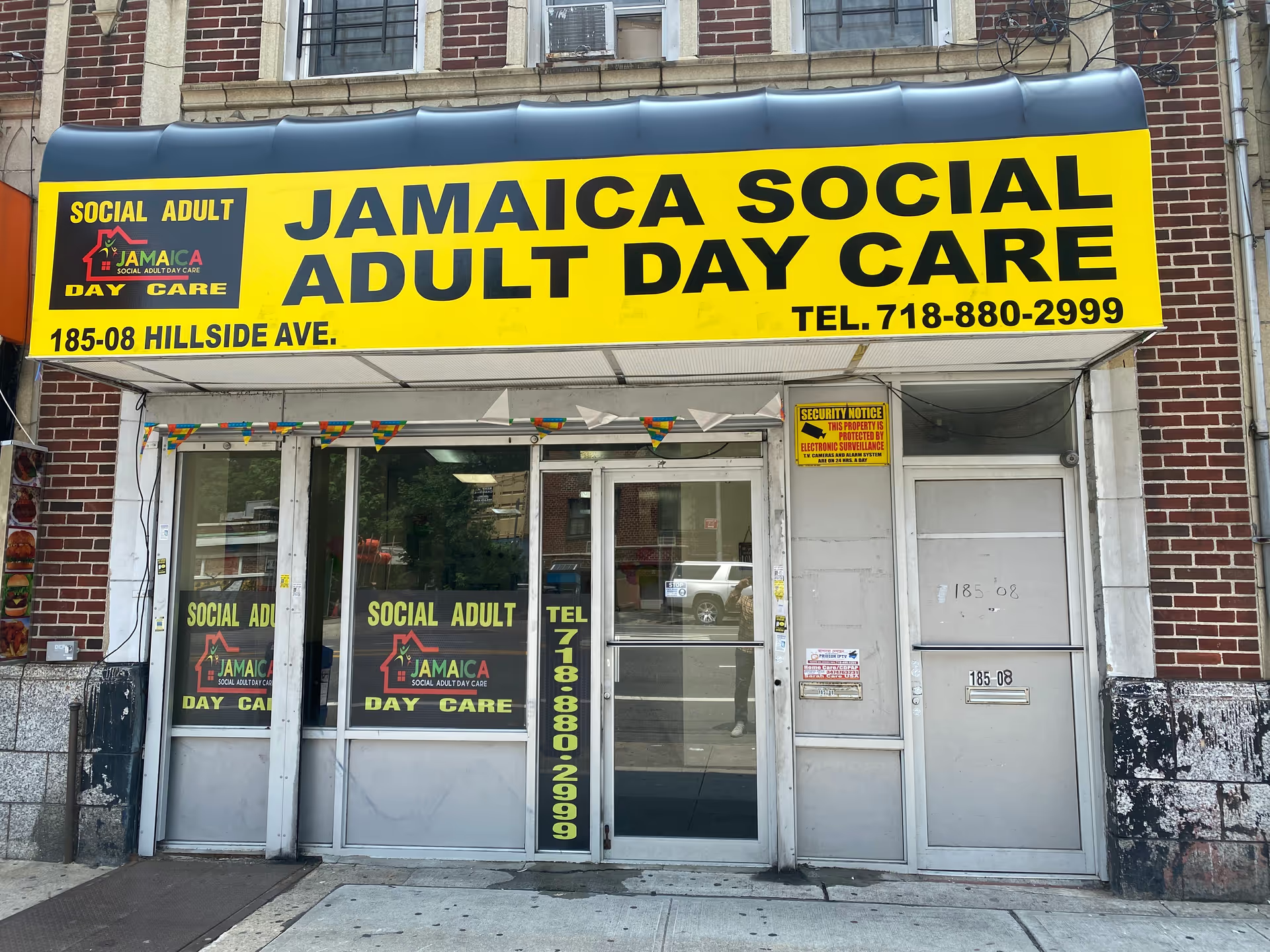
Overall impression: Reviews reflect a polarized but informative pattern. Many families describe strong, relationship-driven care characterized by compassion, attentiveness and long-term caregiver availability. At the same time, a subset of reports identify operational weaknesses that affect consistency of service, particularly around scheduling, weekend coverage and office coordination.
Caregiver quality: The most consistent positive theme is interpersonal skill. Numerous families praise caregivers as patient, understanding and capable of clear, respectful communication; several reviewers named specific aides and supervisors positively. Caregiver-client matching is frequently highlighted as a strength where the agency succeeds. Conversely, there are recurrent notes about uneven clinical skill levels — especially when dementia-specific approaches or language support are required — and isolated but impactful concerns about caregiver professionalism during some shifts. These comments point less to uniformly poor care than to variability in individual caregiver training and oversight.
Office communication and management: Management and supervisory responsiveness receives mixed feedback. Many reviewers single out directors and supervisors as accessible and solution-focused, with helpful after-hours responsiveness. At the same time, a pattern of weak office communication and coordination appears in other accounts: difficulty reaching the office, unclear handoffs, and instructions that were not consistently followed. This suggests strengths in individual supervisor engagement but gaps in centralized administrative communication and follow-through.
Reliability and scheduling: Scheduling flexibility and last-minute responsiveness are noted positives — families appreciate the ability to adapt care as needs change. However, parallel concerns about reliability emerge: missed shifts, inconsistent weekend/Sunday coverage, and scheduling gaps were reported. These operational reliability issues represent a key area where families experienced disruption, even when they were otherwise satisfied with caregiver quality.
Value and overall recommendation: Many families express high satisfaction and would recommend the agency, citing the perceived value of warm, personalized care and responsive scheduling. Reviews do not include widespread commentary on billing or cost transparency, so value perceptions are driven primarily by relationship quality and responsiveness rather than documented pricing feedback.
Notable patterns and takeaways: The agency demonstrates clear strengths in relationship-based caregiving, individualized matching and responsive, family-oriented service. The primary operational risks to weigh are inconsistent weekend coverage, variability in dementia- and language-specific training, and gaps in office-level communication and shift reliability. Prospective clients should ask specific questions about weekend/Sunday availability, dementia-care training, language capabilities, and the agency's protocols for ensuring consistent caregiver assignments and timely office follow-up when evaluating fit.