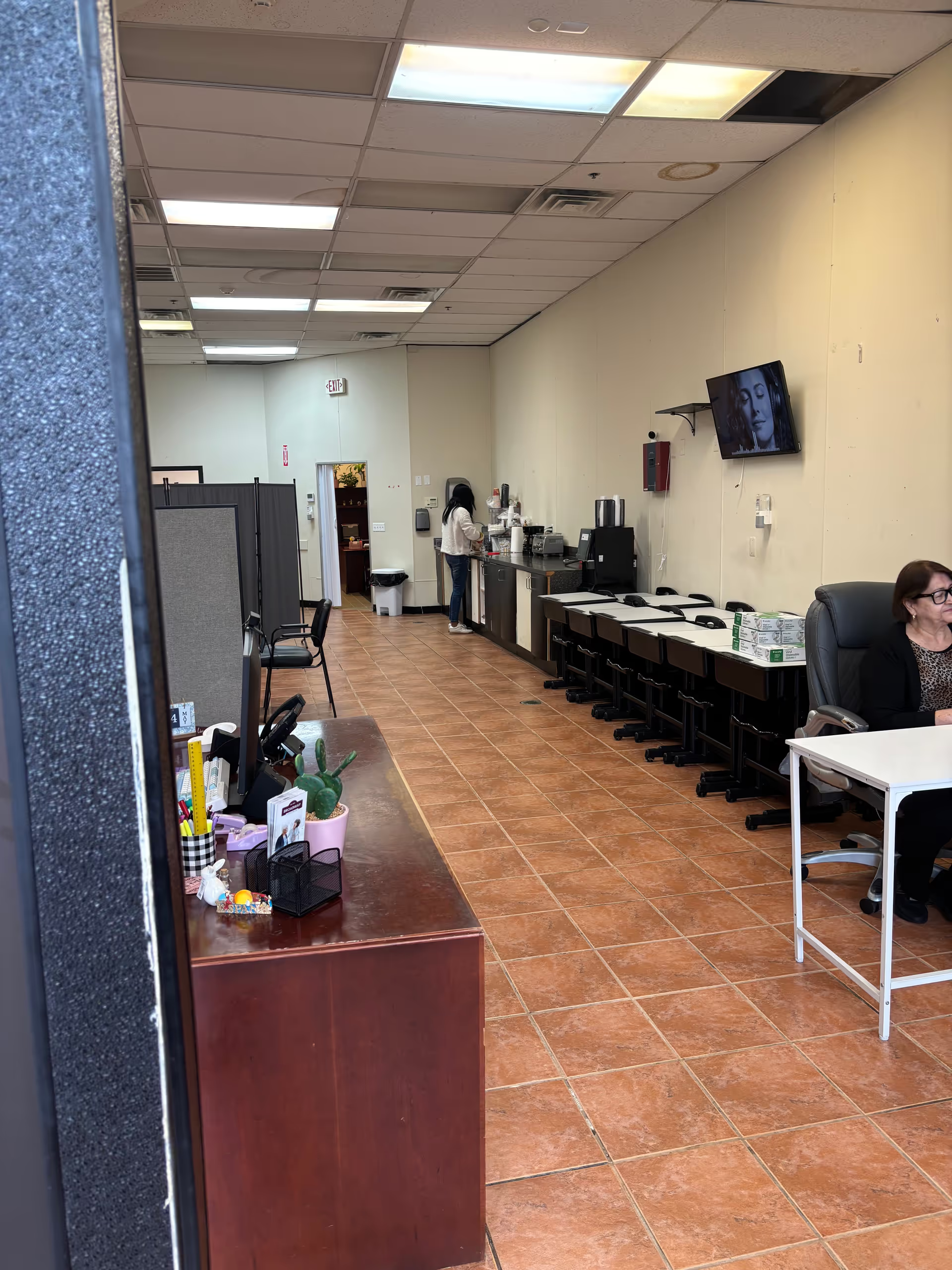
Preferred Care at Home of Northwest New Jersey earns consistent praise for the interpersonal quality of its frontline staff. Families frequently describe caregivers as compassionate, respectful and attentive; reviewers also highlight professionalism and a team-oriented culture among aides and nursing/administrative staff. Several accounts emphasize thorough documentation of visits and activities, and the availability of live-in or overnight aides when needed, which supports continuity of care for long-term clients.
Office-level communication and management responsiveness are cited as strengths. The agency’s case managers and specific staff members (named in reviews) are described as informative and helpful, and families report that management is accessible for questions and coordination. The agency is noted for addressing scheduling problems quickly — reviewers mention consistent shift coverage and rapid caregiver replacement when mismatches occur — and for working collaboratively with families on reassignment or care-plan adjustments.
Areas that appear to be recurring operational limitations include the training and preparedness of substitute caregivers and occasional challenges with caregiver-client matching during the initial onboarding period. While the agency often remedies mismatches, these patterns suggest uneven substitute training and a need for stronger upfront matching processes. There are also indications that the agency has limited capacity for hospice-level or very high-acuity home care; at least one family experienced unmet expectations in an end-of-life situation, which points to a need for clearer scope-of-service communication and care coordination for hospice cases.
Value and reliability are generally viewed positively. Multiple families describe the care as meeting long-term needs and recommend the agency; reviewers specifically call out safety-focused practices and above-and-beyond efforts by staff. Prospective clients should weigh these strengths against the noted operational traits: confirm how substitutes are trained and matched, clarify the agency’s policy and experience with hospice or very high-acuity needs, and establish expectations for reassignment processes so family members understand their likely role in transitions.