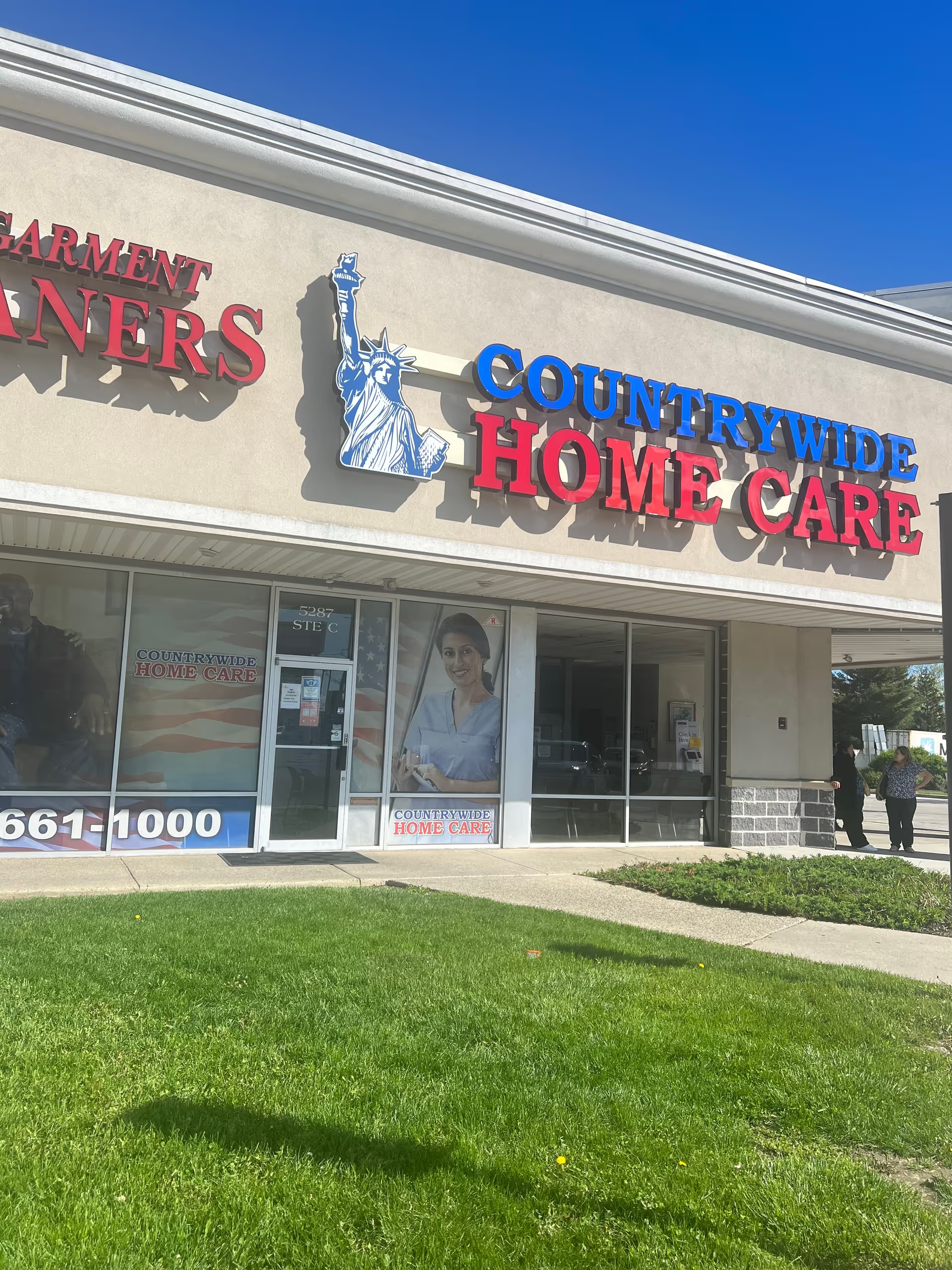
The reviews present a consistently positive view of caregiver quality and interpersonal rapport. Caregivers are described as professional, respectful, and able to form long-term relationships with clients and families; one reviewer characterized staff as having become "part of the family," which suggests strong continuity of care and familiarity with client preferences. Several mentions of experience across hospital, facility, rehabilitation, and home settings indicate that the caregiver team has cross-setting clinical exposure and the capacity to support transitions of care.
Office communication and management receive favorable comments. Reviewers highlight a warm, caring office staff and describe management as kind and generous. Responsiveness and quick reaction times are emphasized, which supports a perception of dependable scheduling and prompt problem resolution. The combination of a responsive office and consistent caregiver assignments appears to underpin reliable shift coverage and day-to-day service stability.
While the narrative is broadly positive, there are areas with limited information in the reviews that prospective clients may want to probe. Reviews offer little detail on billing structure, pricing transparency, or how charges are explained and reconciled, so there is limited visibility into value and billing processes. Similarly, the reviews do not specify the availability of specialized clinical services (for example, complex medication management or advanced nursing procedures) or the technological supports used for care coordination and documentation.
Notable patterns: relational continuity and warm office engagement are clear strengths; operational details that matter to some families—billing transparency, explicit specialty-service offerings, documented contingency plans for large-scale staffing changes, and use of electronic care-coordination tools—are not well represented in the available feedback. Prospective clients should confirm those operational items during intake: ask about billing practices and sample invoices, delegation and training for higher-acuity needs, backup staffing protocols, and how care notes and schedules are shared with families.