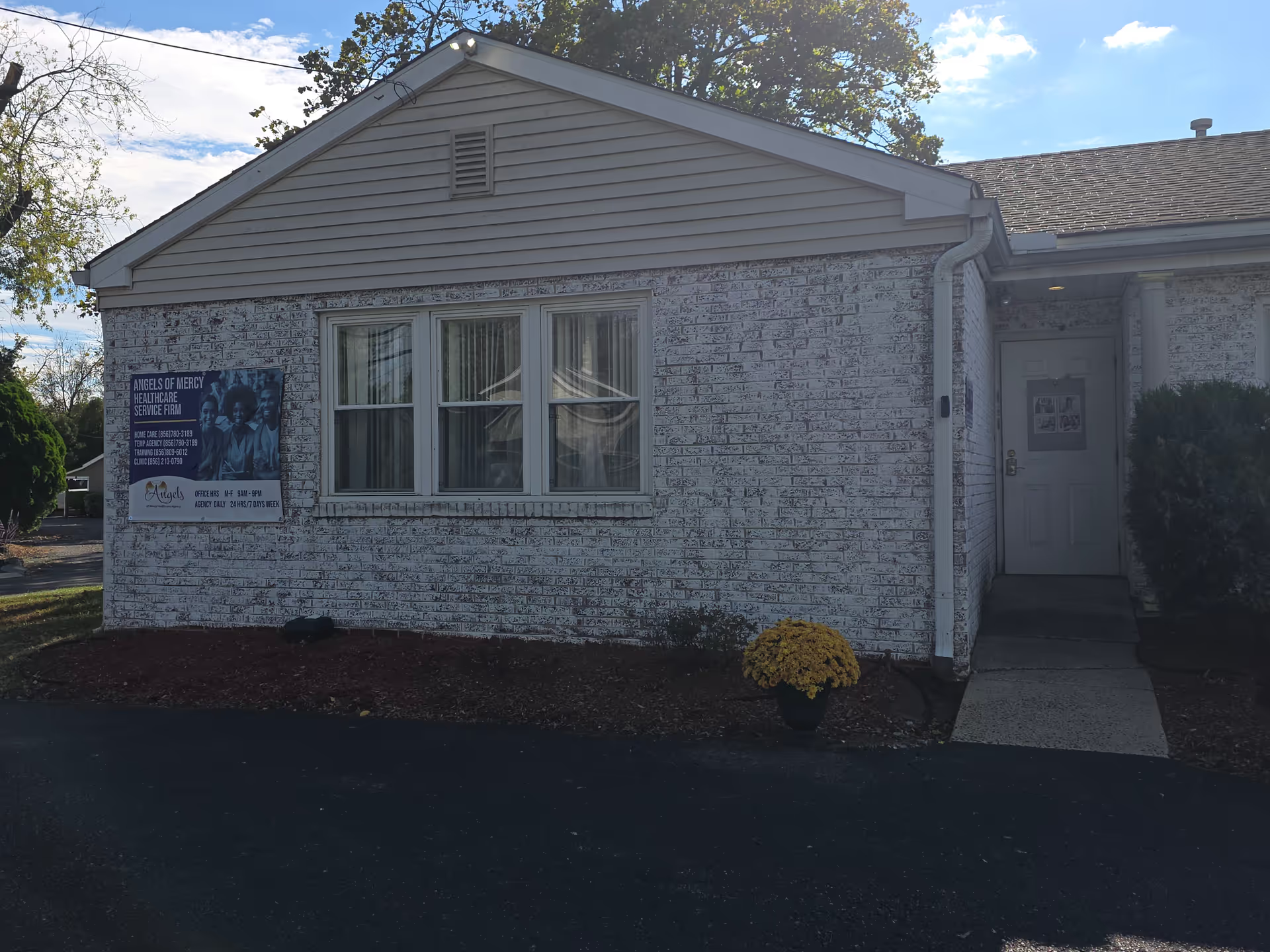
Overall impression: Reviews reflect a strong pattern of compassionate, attentive in-home caregiving supported by an engaged office team. Many families praised individual caregivers for warmth, patience and the ability to form family-like bonds; several reviews specifically noted skill with medically complex or bedridden clients and comforting presence during end-of-life situations. The agency is frequently credited with rapid response—same-day setups, smooth hospital-to-home transitions, and proactive emergency support—and with providing families measurable peace of mind.
Caregiver quality: Caregivers are consistently described as kind, respectful, and professional. Reviewers highlight aides who are personable, patient, and able to provide both hands-on care and emotional support. There are repeated comments about particular staff members and coordinators who provide dependable case management and comforting presence, which suggests strengths in caregiver selection and pairing in many cases. At the same time, multiple accounts indicate variability in skill level: some assignments were characterized as delivering only basic care or exhibiting knowledge gaps. This points to an uneven distribution of clinical competence across the caregiver pool rather than a universal shortfall.
Office communication and management: The agency’s office staff and coordinators receive frequent positive mention for being pleasant, efficient, and responsive—examples include quick setup, helpful scheduling, and attentive follow-up. Specific staff members were singled out by name for good coordination. However, there are also critiques of management-level communication: reviewers described unannounced management interactions, inconsistent handling of concerns, and adversarial exchanges in a few cases. These mixed experiences indicate effective front-line administrative responsiveness in many cases, alongside occasional lapses in conflict resolution and supervisory communication.
Reliability and scheduling: Scheduling flexibility is a clear strength—reviewers note short-shift options, easy scheduling, and willingness to accommodate family needs. The agency also demonstrated capacity for rapid deployment and interim coverage when needed. Conversely, a recurrent operational weakness is coverage instability: staffing shortages and last-minute cancellations were raised as significant concerns and in some cases undermined continuity of care. Placement mismatches (clients paired with less-suited aides) and gaps in shift fulfillment appear to be primary drivers of dissatisfaction where they occur.
Value and billing: Several families characterized services as affordable and worth the cost, emphasizing the value of peace of mind and the quality of individual caregivers. At the same time, there are isolated comments about pricing limits reducing the number of days of care a family could afford and at least one critique implying lower quality associated with lower-cost options. Reviewers also raised transparency questions around scheduling and cancellation policies, suggesting a need for clearer communication about billing implications tied to schedule changes.
Notable patterns and takeaways: Strengths clearly center on compassionate, person-centered caregivers, strong initial intake and rapid onboarding, and effective case managers who provide timely coordination. The main operational risks for prospective clients are variability in caregiver competency, periodic staffing shortages that affect shift reliability, and uneven management responsiveness when conflicts arise. Families prioritizing rapid setup, empathetic aides, and strong emergency responsiveness are likely to find value; families for whom uninterrupted, highly consistent shift coverage is essential should clarify staffing guarantees and cancellation/billing policies before engagement.