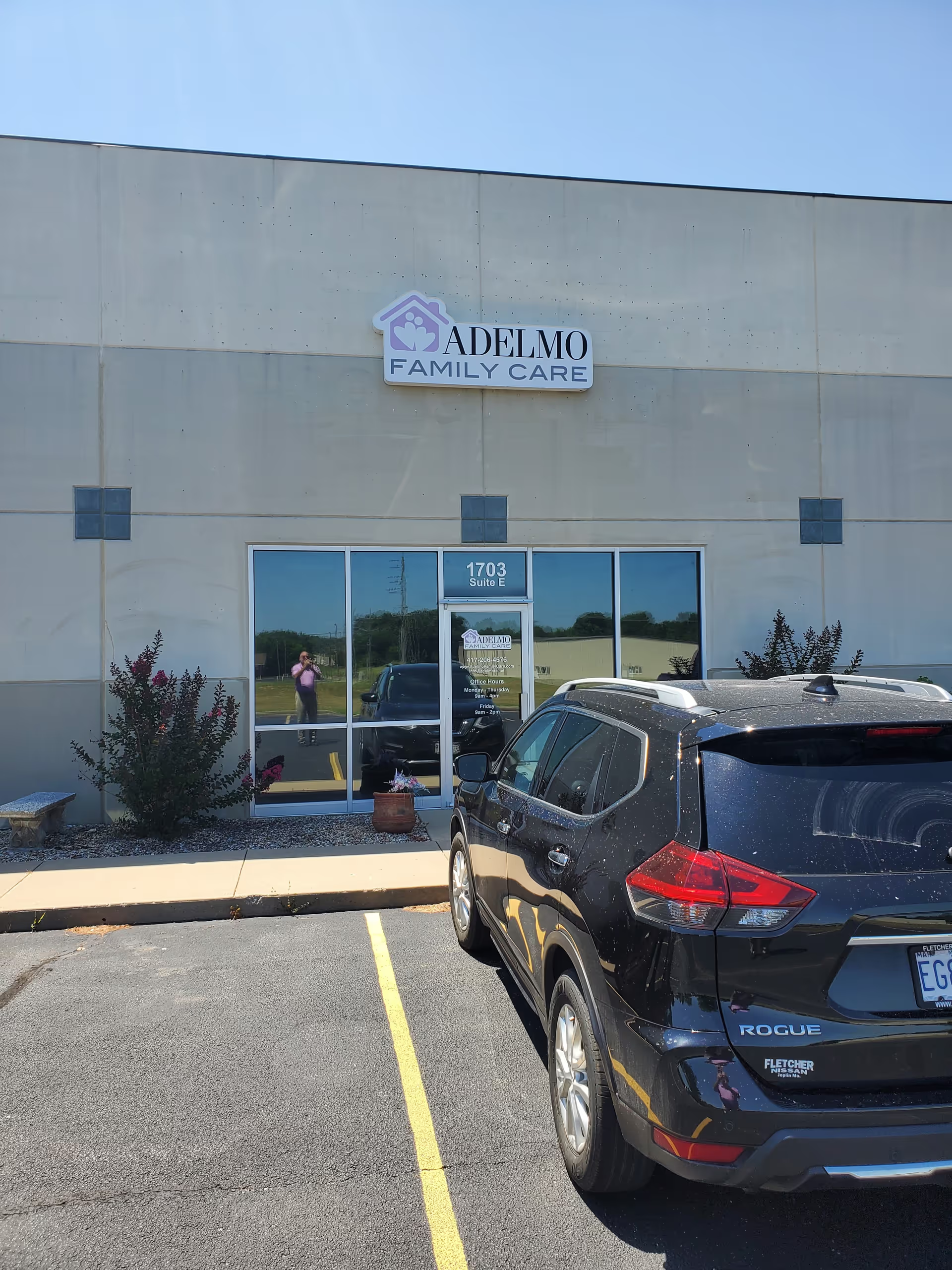
Overall impression: The agency is presented primarily as a small, home-like residential setting with a strong emphasis on warmth, social programming, and individualized attention. Many comments highlight a clean environment, active calendar of outings and holiday events, and a welcoming atmosphere that families found comforting. Caregivers and front-line staff are repeatedly described as kind and engaged, and several families singled out the administrator (named in multiple comments) for going above and beyond family expectations.
Caregiver quality: Caregiver conduct and interpersonal skills are a clear strength in the available feedback. Reviewers consistently describe staff as compassionate, attentive to medical and dietary needs, and proactive in creating a family-like environment. Activities, outings, and pet-friendly policies were noted as supporting residents' social and emotional well-being. At the same time, there is evidence of variability in day-to-day care: while many report excellent, high-touch caregiving, at least one account described service shortcomings that affected daily comfort and led to a rapid move-out decision. This pattern suggests generally strong caregiver attitudes with occasional inconsistencies in execution.
Communication, management, and reliability: Administrative responsiveness and direct engagement by leadership are frequently cited as positive attributes; families report clear, personal communication and staff who make extra efforts. Scheduling flexibility and accommodation for special requests (including service animals) were also praised. However, operational weaknesses appear in consistency and reliability: comments point to lapses in housekeeping and food service quality, and to occasional responsiveness gaps. These issues indicate that while management is engaged, operational controls for day-to-day consistency—especially around meals, housekeeping, and routine care tasks—may not be uniformly enforced.
Scheduling, reliability of shifts, and level-of-care considerations: Reviewers describe helpful, accommodating staff and flexible scheduling for activities and visits. There is less detailed information about formal shift reliability and billing practices in the available summaries; where concerns arise, they cluster around inconsistent daily-care performance rather than documented scheduling or billing policies. One particular theme is that the home may not be optimal for residents with higher-acuity daily-care needs: prospective families should clarify the facility’s clinical capacity and routines for medication and personal-care hygiene management if those needs are present.
Value and notable patterns: Many families presented the setting as a positive value for a homelike, socially active residence with engaged staff. The most notable negative pattern relates to variability—primarily meal quality and housekeeping—where experiences ranged from praise to significant dissatisfaction. That variability, combined with generally strong interpersonal care and an involved administrator, suggests the agency is well suited for residents seeking a sociable, family-oriented environment but that prospective clients should verify consistency in daily services during a tour and in contract terms.
Bottom line: Strengths include compassionate caregivers, a clean and home-like environment, active programming, and an involved administration. The main operational concerns are variability in meal and housekeeping standards and occasional lapses in daily-care consistency; those concerns may limit suitability for residents with more complex, high-acuity needs. Prospective families will likely get the clearest picture by observing mealtime routines, housekeeping practices, and staff handoffs during a visit and by asking specific questions about clinical capabilities and quality-control processes.