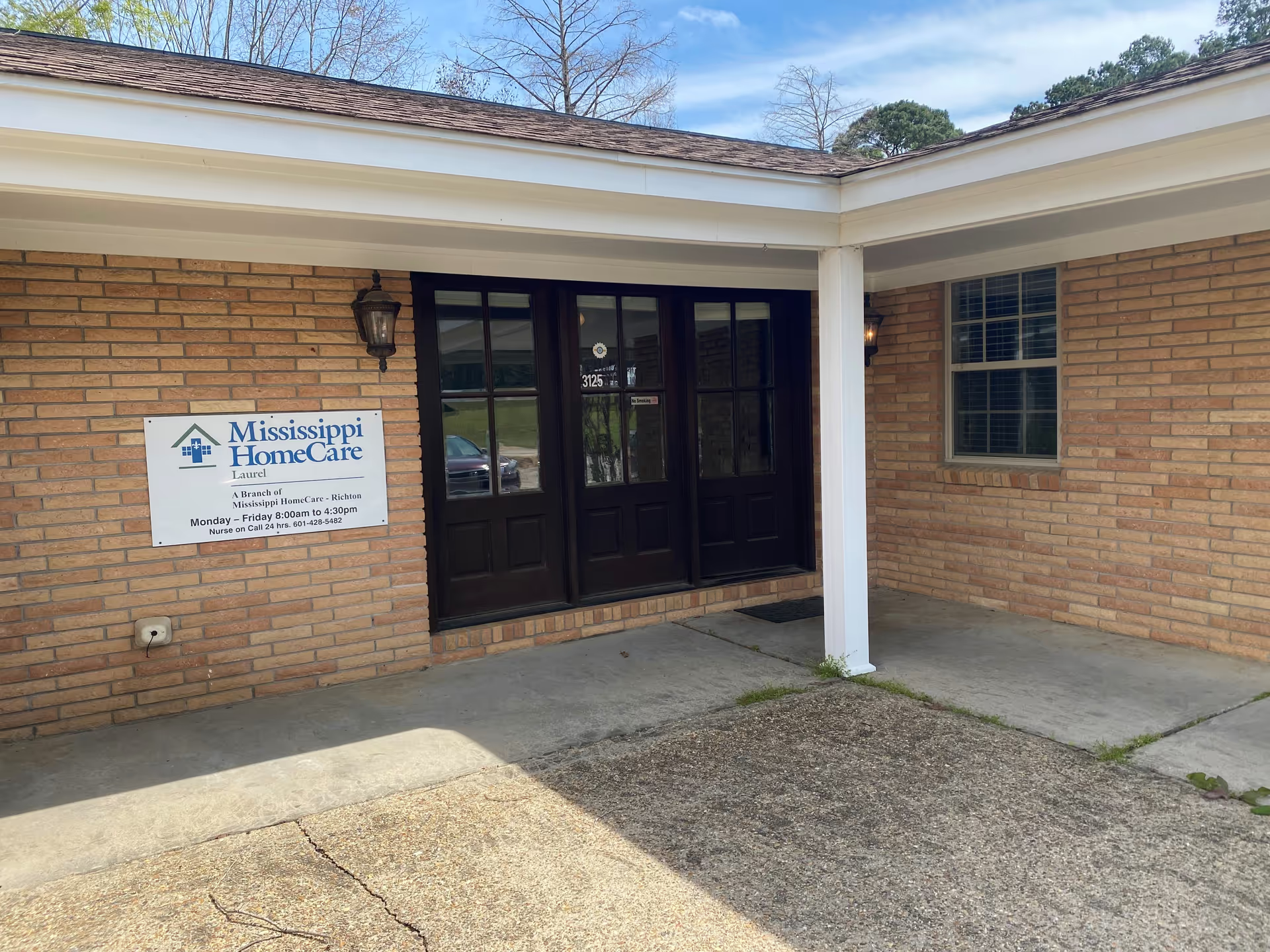
Overall impression: Reviews of ProCare Home Health are predominantly positive, with many families praising the compassion, professionalism and clinical skill of caregivers and nurses. Positive comments highlight caregivers who are patient, respectful and attentive; several notes mention nurses who provided detailed explanations and practical support during recovery. Office staff and administrators are frequently described as accessible and helpful, and the agency receives multiple endorsements as an effective home-based care provider.
Caregiver quality: Caregivers are consistently described as compassionate, supportive companions who provide personalized care and clear explanations. Reviews emphasize patience, attention to detail, and practical nursing skills that aided clients' recoveries. There are mentions of individualized care plans and caregivers taking extra steps to meet client needs, which suggests competency both in hands-on care and in client communication.
Communication and office management: A recurring strength is clear, timely communication from the office and administrators. Families report being kept informed, receiving helpful answers to questions, and finding staff willing to discuss care. Named staff members are noted positively, indicating that some clients experience a collaborative relationship with management and scheduling staff.
Reliability and scheduling: Many reviewers describe punctual, on-time visits and an accommodating approach to scheduling. The agency appears capable of arranging flexible coverage and responding to changing needs, and several reviews single out staff responsiveness and willingness to meet client preferences.
Value and outcomes: Multiple reviewers associate the agency with effective care and positive recovery outcomes, and several explicitly recommend ProCare. Comments about thoughtful, effective care and gratitude for assistance imply that families perceived good value relative to the services provided.
Notable concerns and patterns: Amid the largely favorable feedback, there are isolated but significant negative comments. One reviewer described poor care and an allegation of misleading sign-up practices; another noted a failure of follow-up after a hospital stay. Taken together, these items point to operational risks that prospective clients should check in advance: clarity of the onboarding process and contract terms, explicit plans for post-discharge follow-up, and mechanisms the agency uses to ensure consistent caregiver quality across clients.
Practical recommendations: Prospective clients and families should verify sign-up and billing terms up front, confirm the agency's post-discharge follow-up procedures, ask about caregiver matching and continuity, and request a clear communication plan for problems or changes in care. While the overall pattern of reviews emphasizes compassionate, skilled staff and responsive office support, confirming those operational details will help mitigate the infrequent but important concerns noted by reviewers.