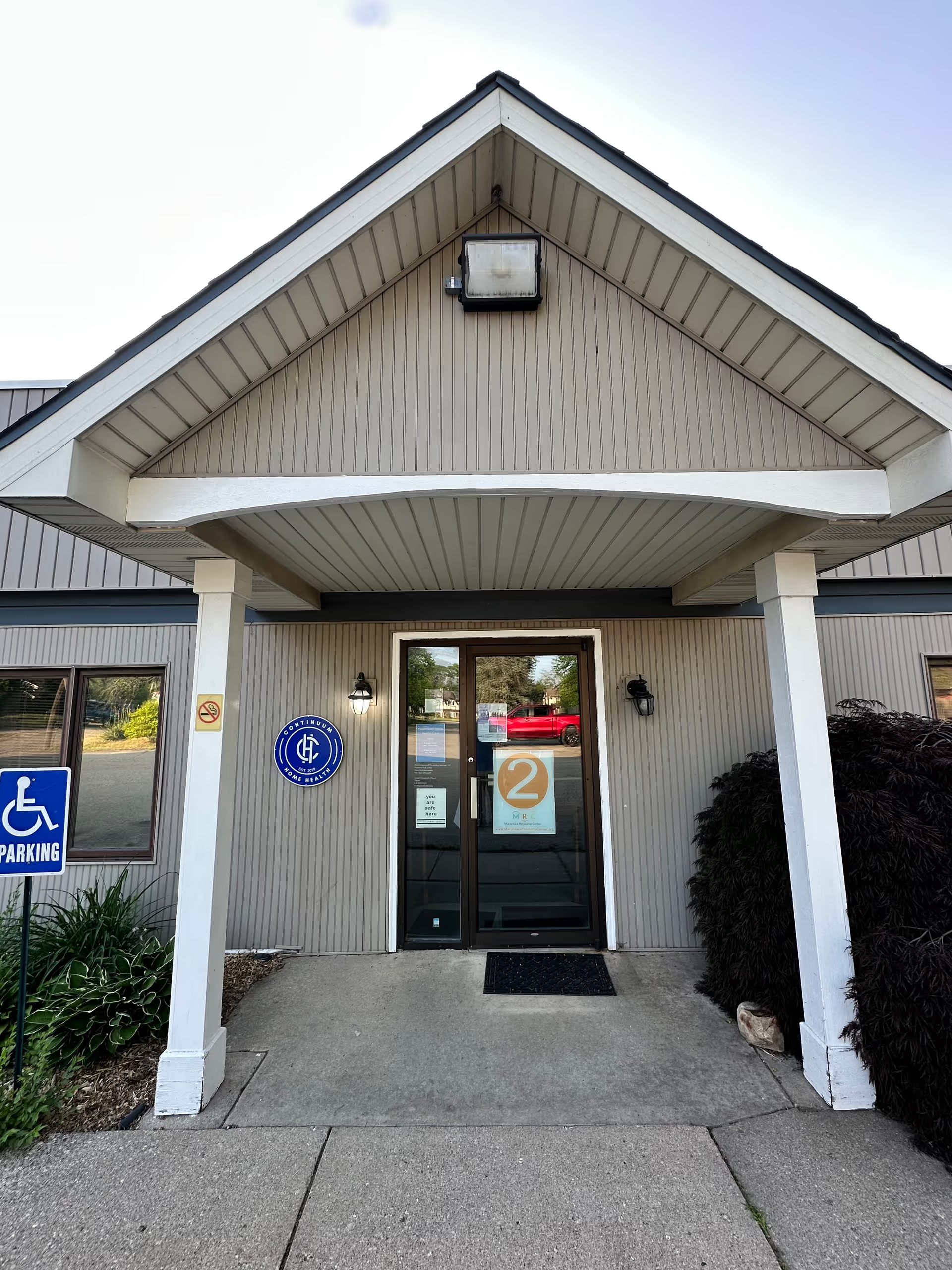
Overall impression: Reviewers emphasize a care team that is skilled, compassionate, and clinically knowledgeable. The agency's PACE-based services are described as meeting medical needs and providing useful socialization and community programming; several comments characterize staff as professional and suitable for referrals.
Caregiver quality: Caregivers are consistently described in positive terms — compassionate, skilled, and holding high professional standards. Clinical staff are viewed as knowledgeable and capable of managing clients' medical needs, which contributes to a sense of clinical safety and continuity for families seeking medically oriented in-home support.
Communication and management: A notable pattern concerns communication and decision-making style. Families describe an expectation that they will need to advocate actively to secure timely responses or changes. Some interactions are perceived as paternalistic, with staff or clinicians asserting their judgment in ways that families interpret as dismissive of family input. This suggests a top-down approach to care coordination in some cases.
Reliability, scheduling, and responsiveness: Reviewers did not focus on routine shift reliability or frequent no-shows; the primary operational issue raised relates to responsiveness from care coordination and the pace of implementing requested actions. Delays until follow-up or escalation were a recurring theme, indicating that timeliness of administrative or clinical follow-through may be uneven.
Value and billing: The dominant value signal from reviews is clinical: medical needs are being met and caregivers are competent and caring. There were no substantive patterns identified around billing transparency or pricing in the supplied summaries, so the perceived value primarily rests on care quality and PACE service benefits.
Notable patterns and takeaways: The agency demonstrates clear strengths around caregiver compassion, clinical knowledge, and community-oriented services. Prospective clients and families should weigh those strengths against a pattern of delayed responsiveness and a need to be proactive advocates for care adjustments. Asking specific questions about care-coordination timelines, how family preferences are incorporated into care plans, and escalation pathways for unresolved issues may help set expectations and reduce the need for repeated follow-up.