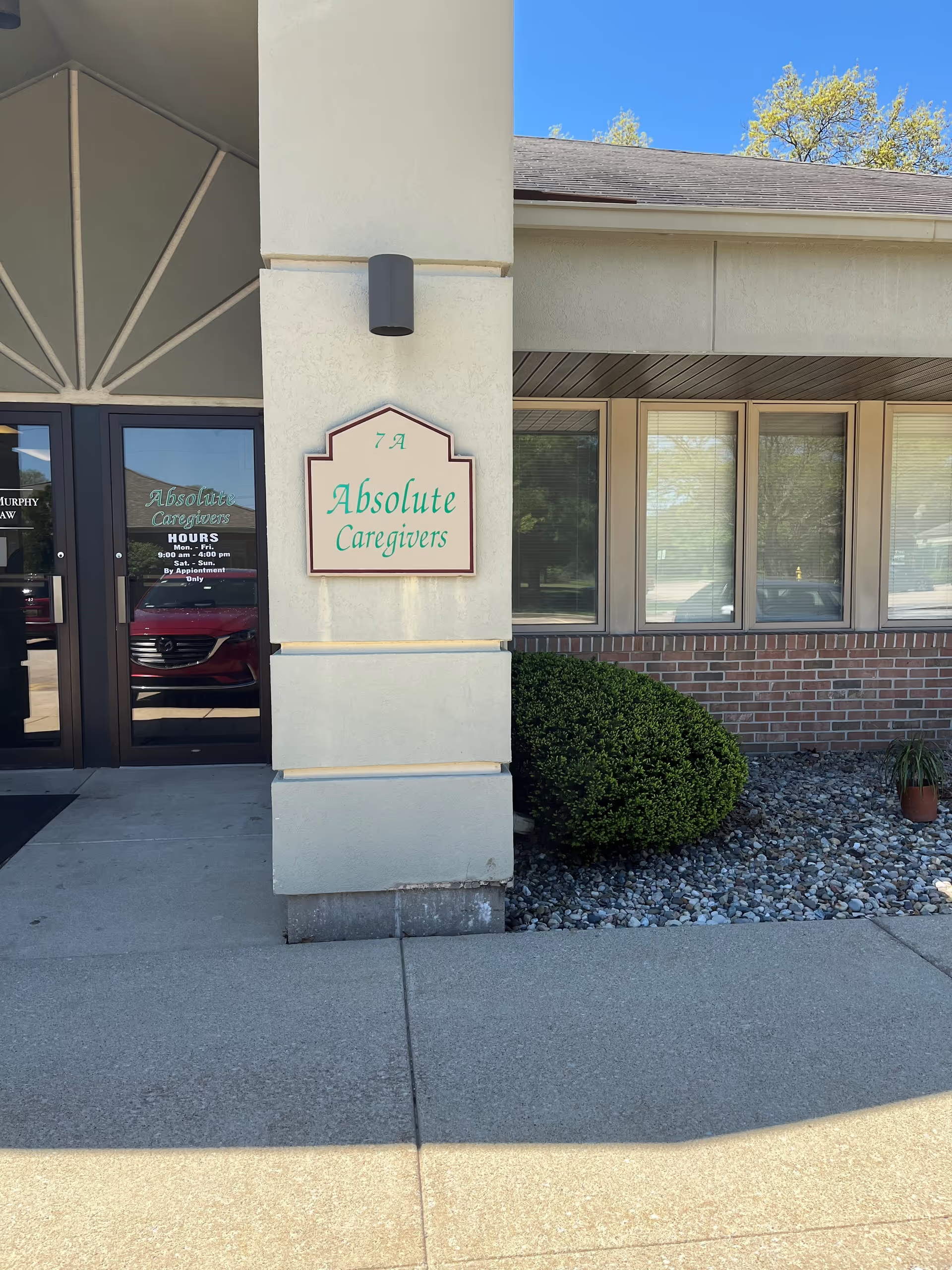
The reviews emphasize interpersonal strengths: caregivers are repeatedly described as compassionate, loving, and treating clients like family. Language such as "professional," "respectful," and "friendly" suggests staff who prioritize dignity and positive rapport with clients and families. These descriptors indicate the agency is perceived as providing warm, person-centered support well-suited to companionship and basic in-home assistance.
Operationally, reviewers characterize the staff as reliable, and reviewers express strong gratitude and recommendations. That combination supports an interpretation that the agency delivers consistent, on-time care and establishes trust with families. The repeated use of "professional" alongside compassionate language implies a balance of interpersonal skill and workplace standards rather than purely informal caregiving.
That said, the summaries are brief and focused on qualitative impressions; there is little specific commentary about clinical scope, care-plan documentation, or the level of clinical training among caregivers. Prospective clients should ask the agency about nurse oversight, formal care-plan updates, and how complex medical needs are handled to confirm clinical capabilities beyond companionship and personal support.
Similarly, the summaries provide limited detail about scheduling nuance and administrative practices. While "reliable" appears, there is sparse information on overnight coverage, holiday staffing, backup caregivers, or how scheduling changes are managed. Families may wish to verify assignment continuity, emergency backup procedures, and policies for shift changes.
On billing and management, reviewers express overall satisfaction but do not offer specifics about pricing, invoicing, or cancellation policies. Those areas remain unclear from the available summaries; confirming rates, billing cycles, and insurance or benefit processing is recommended. Likewise, the public feedback provides limited visibility into formal supervisory routines and caregiver training pathways, so asking about orientation, ongoing education, and supervisory check-ins will help clarify quality controls.
Overall pattern: strong, consistently positive impressions of warmth, respect, and reliability from caregivers, paired with limited operational detail in areas families commonly probe (clinical specialization, scheduling depth, billing transparency, and management oversight). For families prioritizing compassionate, relationship-driven in-home care, the agency's strengths are evident; for those requiring documented clinical services or precise administrative assurances, a targeted intake conversation is advisable.