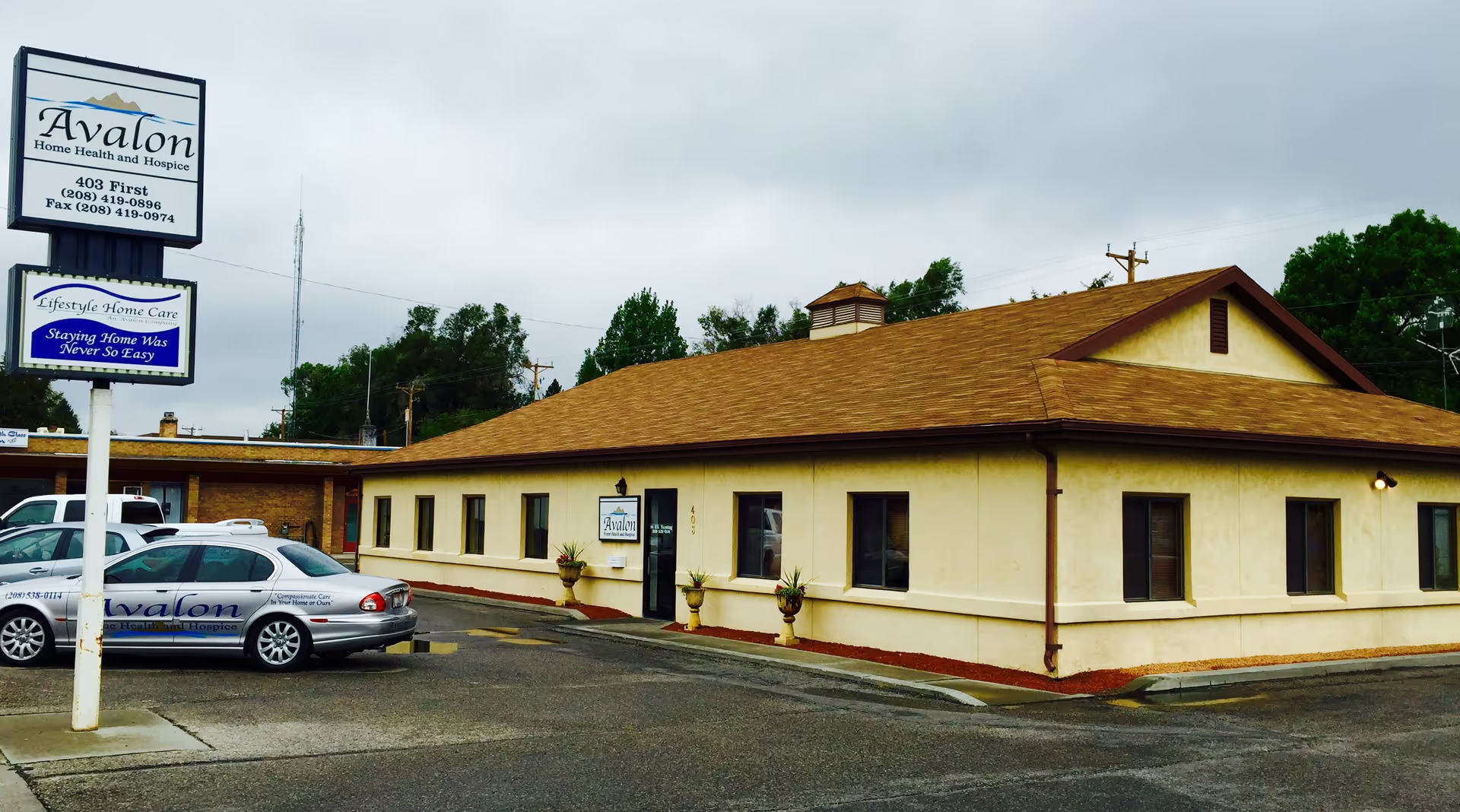
Overall impression: Reviews indicate a facility that many families find compassionate and welcoming. Positive themes include warm, attentive caregivers, clean and well‑kept buildings, engaging activities, and appealing meals — factors families commonly cite when assessing day‑to‑day quality of life. Several reviewers specifically praised administrators and named staff for kindness and responsiveness, and visitors noted pleasant, family‑friendly spaces such as an attractive courtyard.
Caregiver quality: The dominant pattern in the feedback is that frontline caregivers are caring and resident‑focused. Language used by families emphasizes dignity, individualized attention, and a home‑like atmosphere. A number of families singled out individual caregivers and administrators by name for the quality of their interactions and the comfort they provided to residents and relatives.
Communication and management: Alongside positive comments about specific staff, a subset of reviews raises concerns about office communication and management practices. These include examples of unclear or delayed communication between family and office staff and inconsistent enforcement of facility policies. While many families experienced effective coordination, the existence of communication gaps appears to be an operational weakness that can affect family confidence.
Reliability of shifts and scheduling: Staffing reliability is a mixed area. Positive accounts suggest consistent, attentive coverage, but other feedback highlights irregular caregiver assignments, frequent turnover, and occasional reliability problems. Those patterns suggest the agency may struggle at times to maintain stable staffing and consistent caregiver‑resident pairings, which can affect scheduling flexibility and continuity of care.
Safety and professionalism: Most comments describe respectful, compassionate care; however, a smaller number of reviews express concerns about caregiver professionalism and adherence to safety or compliance practices. These are presented as operational inconsistencies rather than pervasive patterns, but they are important for prospective families to assess directly during tours and interviews.
Value and billing: Many families characterize the overall care, activities, and meals positively, and the facility's acceptance of Medicaid was noted as a practical benefit. There was less specific feedback about billing processes in the summaries provided; prospective clients should confirm billing terms, extra fees, and contract details during the intake process.
Patterns and recommendations: The overall picture is of a facility with strong strengths in day‑to‑day caregiving, programming, and environment, tempered by intermittent operational weaknesses related to staffing stability and office communication. Prospective families would be well served by (1) meeting administrators and named caregivers during a visit, (2) asking about average staff tenure and strategies for shift coverage, (3) clarifying communication protocols and escalation paths, and (4) reviewing safety, training, and compliance procedures. These steps can help reconcile the positive lived experience many families describe with the operational concerns mentioned by others.