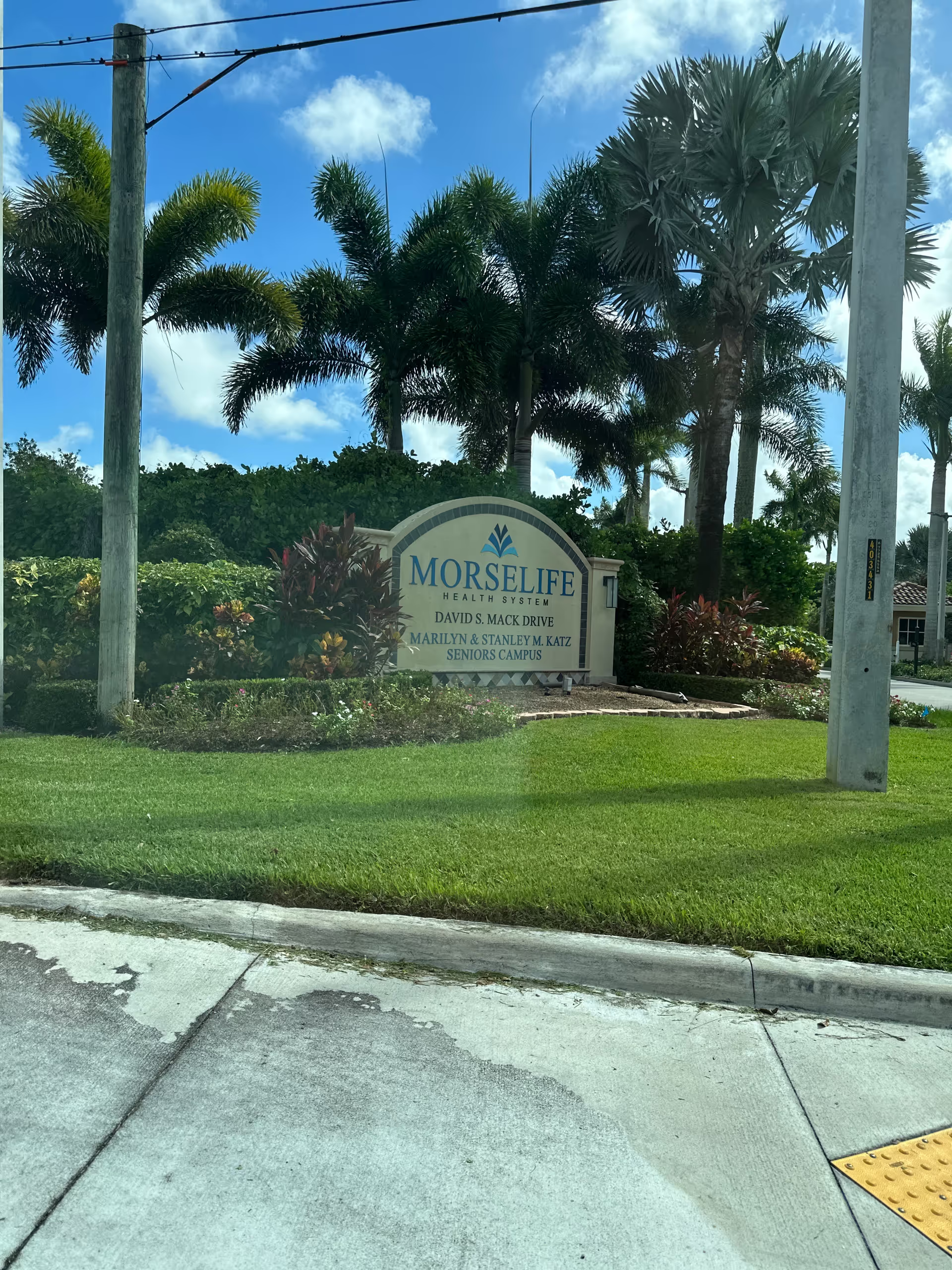
The review set reflects a polarized experience: a substantial number of families praise interpersonal care, rehabilitation outcomes and the facility environment, while a consistent thread of operational and clinical concerns emerges from other accounts. Strengths commonly cited include attentive, compassionate caregivers and skilled rehabilitation services that produce measurable functional gains. Many reviewers highlight clean, well-maintained spaces, engaging activities, culturally responsive services and specific staff members who provided helpful admissions tours or clear family updates. For short-term rehab stays, physical and occupational therapy performance is a frequently noted positive, with reports of rapid mobility improvement and strong therapy-to-discharge coordination.
Contrasting with those positives are recurring agency-level weaknesses that prospective clients should consider. Reviews indicate uneven caregiver performance and continuity: assignments can be inconsistent, turnover is high, and language barriers sometimes impede communication. Scheduling and reliability are recurrent issues—missed assignments, no-shows, sparse night coverage and delayed response to calls are described. Clinical management concerns appear in multiple summaries, including medication-administration lapses and instances of delayed clinical escalation or oxygen/medical-supply issues. Several accounts also raise transfer and manual-handling concerns, suggesting gaps in safe patient-movement protocols.
Administrative and management themes recur across reviews. Families report poor phone responsiveness, front-desk rudeness in some cases, voicemail routing problems, and general difficulty reaching decision-makers. Billing and claims-processing problems are also prominent: denied payments, unclear billing procedures, perceived inaccuracies, and aggressive collection activity are reported. Operational disorganization is noted at the leadership level, with reviewers pointing to inconsistent internal communication, occasional maintenance delays, and weaknesses in inventory or personal-property controls.
Safety and severe-incident notes appear in a minority of accounts: a few reviewers raised allegations of serious incidents and described concerns following a client's clinical decline. These are not universal experiences but are significant enough to recommend careful due diligence. Food and dining receive mixed feedback — some praise the dietary program while others find meal service variable.
Implications for families: this provider appears capable of delivering strong rehabilitative outcomes and compassionate bedside care when staffing and coordination are effective, but the system-level issues can materially affect experience and safety. Before committing, families may wish to ask specific questions about staffing ratios and continuity, night and on-call coverage, medication administration protocols, transfer training and equipment, property-inventory procedures, billing/insurance workflows (including Medicaid and out-of-network situations), and the facility’s complaint-resolution process. Confirming named staff contacts for clinical concerns and obtaining written expectations for billing and supplies may help mitigate some of the recurring operational risks highlighted in these reviews.