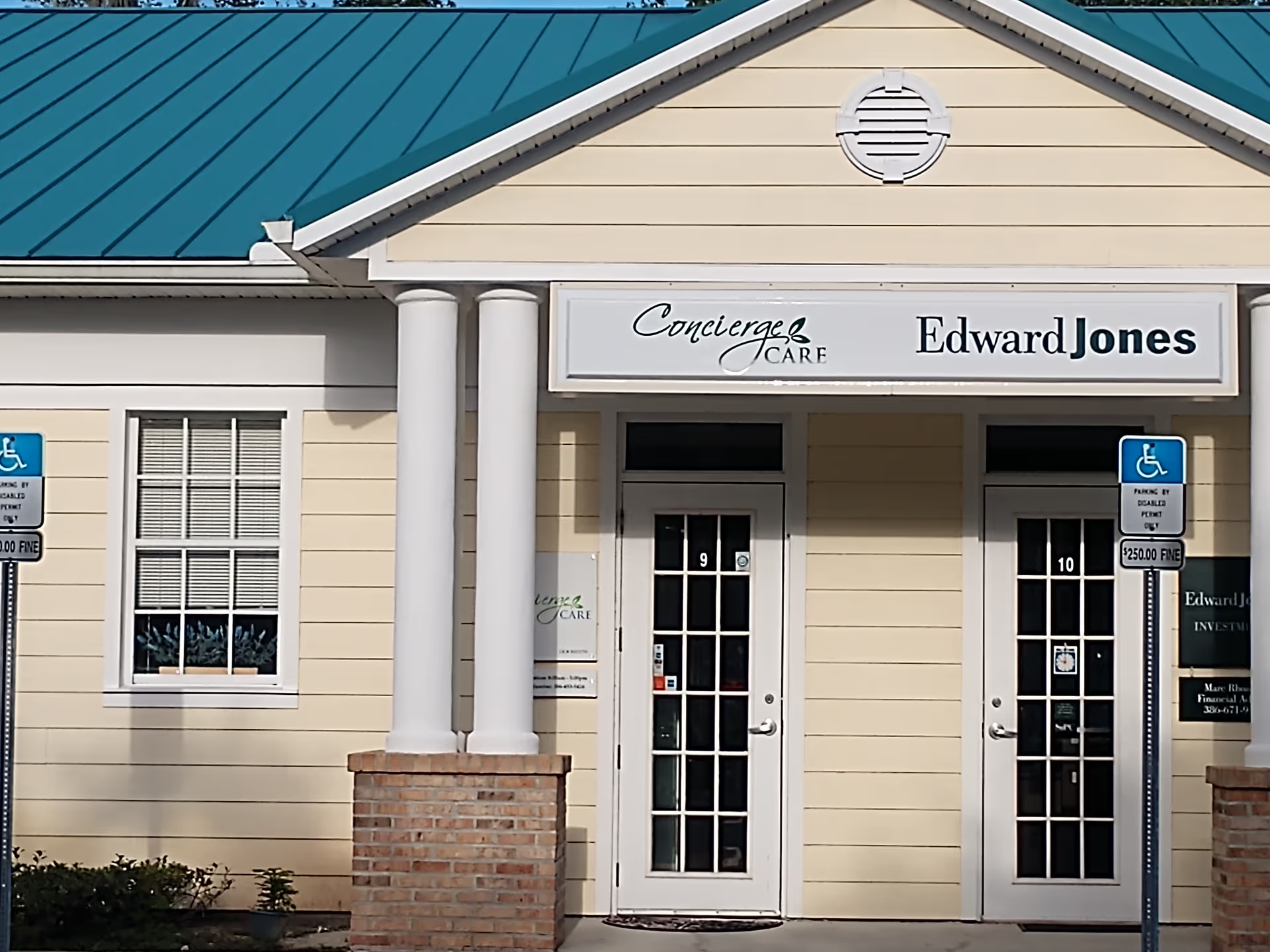
Reviewers consistently highlight strengths in frontline caregiving and client experience. Caregivers are described as warm, compassionate, and professional; families emphasize respectful, dignity-preserving interactions and the development of strong bonds between caregivers and clients. The agency's approach to matching — including attention to personality and specific needs — and the emphasis on nonmedical services (companionship, errands, grocery shopping, transportation to appointments or church) are recurring positives. Several comments also reference thorough caregiver screening and training, suggesting a focus on preparing staff for in‑home elder support.
Office operations and communication receive generally favorable comments. Many families praised the onboarding and orientation process as clear and informative, and they named local leaders and coordinators as approachable and supportive. Reviewers report reliable shift coverage and punctuality, including coverage for short-notice needs and some rapid availability windows (for example, 12-hour shifts). This combination of consistent scheduling and responsive communication is described as reducing family stress and enabling clients to remain at home with supportive assistance.
Value and organizational culture are also notable themes. The agency is portrayed as family- and mission-oriented, with an employee-focused culture that reviewers found comforting; several reviewers mentioned the owners and local managers by name, which contributed to a sense of personal investment in care quality. Community engagement and veteran-support options were mentioned as additional service strengths. Overall, families framed the service as practical and life-enriching rather than clinical or impersonal.
A minority of comments raise operational cautions prospective clients should consider. One reviewer described poor management communication and an unprofessional termination experience; while this appears isolated in the dataset, it points to a potential vulnerability in administrative responsiveness or dispute handling. Because the organization is expanding across counties, reviewers implicitly identify a risk of variability as operations scale: continuity of local management and consistency of practice could become more dependent on a small core leadership team. Prospective clients may want to confirm local oversight, backup-staffing policies, and administrative escalation procedures during intake.
In summary, the reviews portray an agency whose primary strengths are caregiver compassion, personalized matching, thorough onboarding, and operational responsiveness that eases family burden. The main operational caveats to probe further are administrative communication practices and how the agency will maintain consistency as it grows. Families evaluating this provider would be well served to ask specific questions about continuity plans, backup caregivers, and written communication channels before engagement.