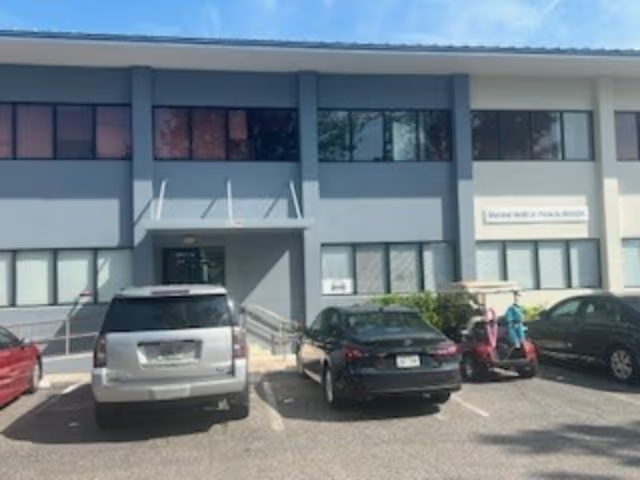
Review feedback indicates a mixed performance profile for Discovery At Home. On the clinical side, reviewers highlight competent nursing and a well-developed range of services — including home health, private-duty care, and outpatient therapy — that can meet typical medical and rehabilitation needs for seniors. Individual caregivers have been described as compassionate in some cases, which is a clear strength when present.
At the operational level, however, several recurring themes emerge. Reliability of shift coverage is a prominent concern: families cited frequent no-shows, last-minute gaps in coverage, and inconsistent caregiver assignments. These reliability issues directly affect day-to-day care stability and can increase the burden on family caregivers. Scheduling flexibility is therefore limited in practice when shifts are not consistently staffed or when the agency does not provide timely backup coverage.
Office communication and management responsiveness are additional areas of concern. Reviewers described difficulties getting clear answers about service plans, therapy scheduling, and follow-through on promised services. There are consistent notes of a mismatch between what was agreed during intake and what was ultimately delivered, which creates uncertainty about value and billing fairness. Several comments point to passive-aggressive or unprofessional interactions from office or scheduling staff, and to a perception that management does not always provide timely accountability when problems arise.
Caregiver quality appears uneven: while some clients received attentive, kind nursing and aides, others encountered conduct and care-quality issues that reviewers characterized as raising safety or personal-care concerns. That pattern suggests variability in hiring, training, supervision, or matching practices. Families considering enrollment should ask about caregiver vetting, training, and how the agency handles performance incidents.
On value and billing, the principal theme is expectation management: when services that were arranged (for example, specific therapy visits or promised supports) were not completed, families questioned the value of what they paid for and sought clearer contracting and billing transparency. Prospective clients may benefit from obtaining written service plans, escalation contacts, and backup staffing procedures before committing.
In sum, Discovery At Home appears to offer substantive clinical capabilities and valuable service lines for seniors, but operational weaknesses—particularly around scheduling reliability, office communication, clarity of service agreements, and management follow-through—are significant patterns in the feedback. Families seeking care should weigh the agency’s clinical strengths against these operational risks and clarify expectations, contingency plans, and escalation paths up front.