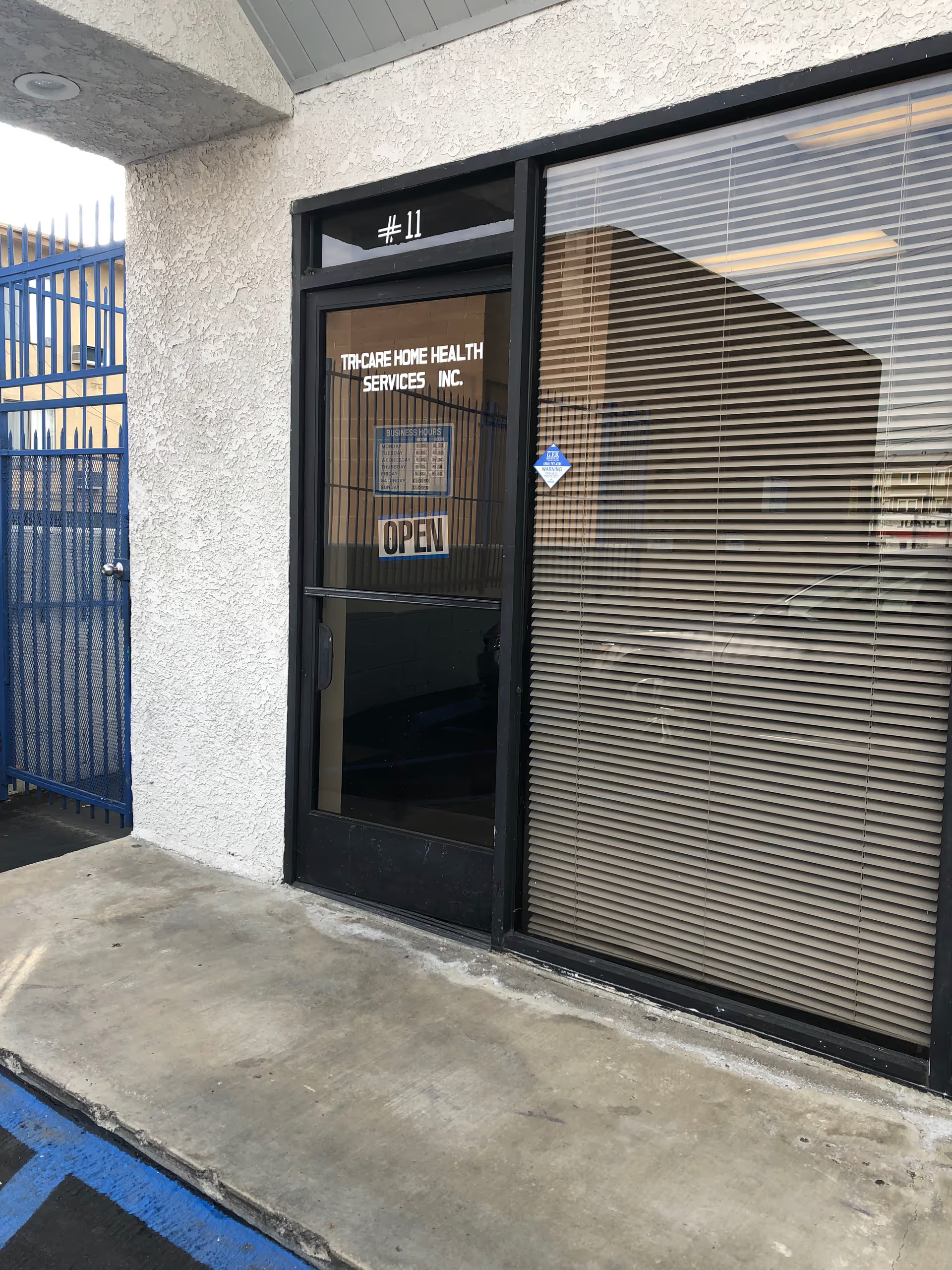
Reviews for this agency present a mixed picture: families and referring clinicians frequently praise the organization's office team as professional and helpful, and several reviewers note that the agency comes recommended by healthcare providers. When services are functioning as intended, reviewers describe care that meets residents' needs and express high overall satisfaction, often endorsing the agency to others.
At the caregiver level there are dual themes. Positive comments emphasize competent, accommodating aides who match client needs. Counterbalancing those are concerns about clinical competence and medical oversight: a number of reviewers described situations that they felt reflected poor adherence to clinical instructions or gaps in medication/medical management. Relatedly, reviewers raised equipment and logistics issues — for example, assistive devices or required toileting equipment not being provided or coordinated in a timely manner — which directly affect day-to-day safety and comfort.
Office communication and management also show mixed signals. The scheduling and referral process is often handled professionally, and staff are seen as helpful and responsive in many cases. However, other reviewers described weak accountability after adverse events and opaque incident-handling communication, including attempts at shifting responsibility. Several reviewers also cited reliability problems such as late arrivals, inconsistent shift coverage, and what they perceived as premature or poorly coordinated discharge practices.
These patterns affect perceptions of value: families who experience consistent caregiver assignments, clear communication, and effective equipment provisioning view the service favorably. Where clinical oversight, task completion, or scheduling reliability are uneven, families consider the service less dependable and less good value relative to expectations. There is limited commentary about billing in these summaries; value judgments appear closely tied to reliability and safety rather than price alone.
For prospective clients: clarify the agency's procedures for clinical oversight and training, written protocols for assistive-equipment provisioning, continuity/backup staffing plans, and how incidents are investigated and communicated. Asking for references from other healthcare providers and for documented policies on discharge timing and shift coverage can help families evaluate whether the agency's operational strengths align with their priorities.