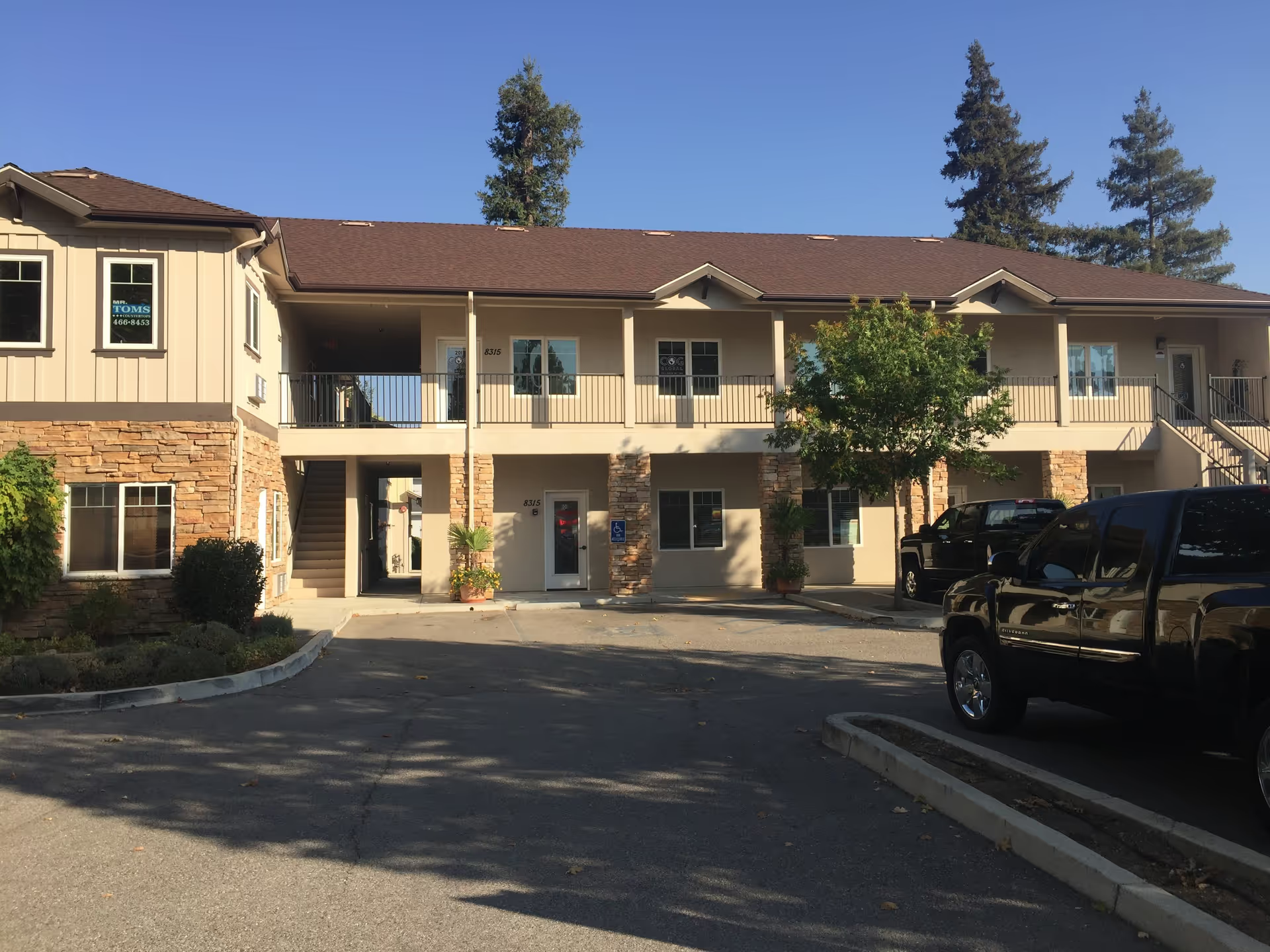
These review summaries present a mixed picture. Several comments convey that caregivers can deliver attentive, skilled hands-on care and left a positive overall impression for families. At the same time, the summaries include a number of serious operational and oversight concerns that prospective clients should evaluate before contracting services.
Caregiver quality appears to be variable. When caregivers are described positively, families emphasize competence and attentive direct care. However, the summaries also reference incidents pointing to unprofessional caregiver conduct and household-property incidents; those items suggest inconsistency in staff behavior and supervision. There are also specific concerns about management of a client with respiratory risk, which indicates potential gaps in clinical risk monitoring and condition-specific protocols.
Office communication and consent processes emerge as an area of weakness. Summaries include claims of financial decisions made without family consent and broader billing or transparency concerns. These suggest the agency may not have robust, consistently applied procedures for obtaining explicit consent for financial transactions or for communicating charges clearly to families.
Reliability and scheduling are not the dominant themes in these summaries: there is no clear pattern of missed shifts or chronic scheduling failures described. That said, the presence of operational and oversight complaints implies families should confirm caregiver matching, continuity of staff, and contingency plans for coverage directly with the office before engagement.
Value and billing are explicit issues. One summary cites a very high cost level (approximately $17,000 per month) and questions about whether services matched that price point. Combined with concerns about unapproved financial decisions and billing transparency, this creates a practical risk for families who prioritize clear, documented cost arrangements and tight oversight of expenditures.
Taken together, the patterns point to an agency that can provide strong direct caregiving but may have uneven supervisory controls, especially around household safety and property protection, condition-specific clinical monitoring, and financial consent/billing practices. Prospective clients should ask targeted questions about staff training and supervision, clinical protocols for high-risk conditions, background checks and property-safeguarding procedures, documented consent processes for billing and expenditures, and written pricing agreements to assess whether the agency’s operations align with their expectations and risk tolerance.