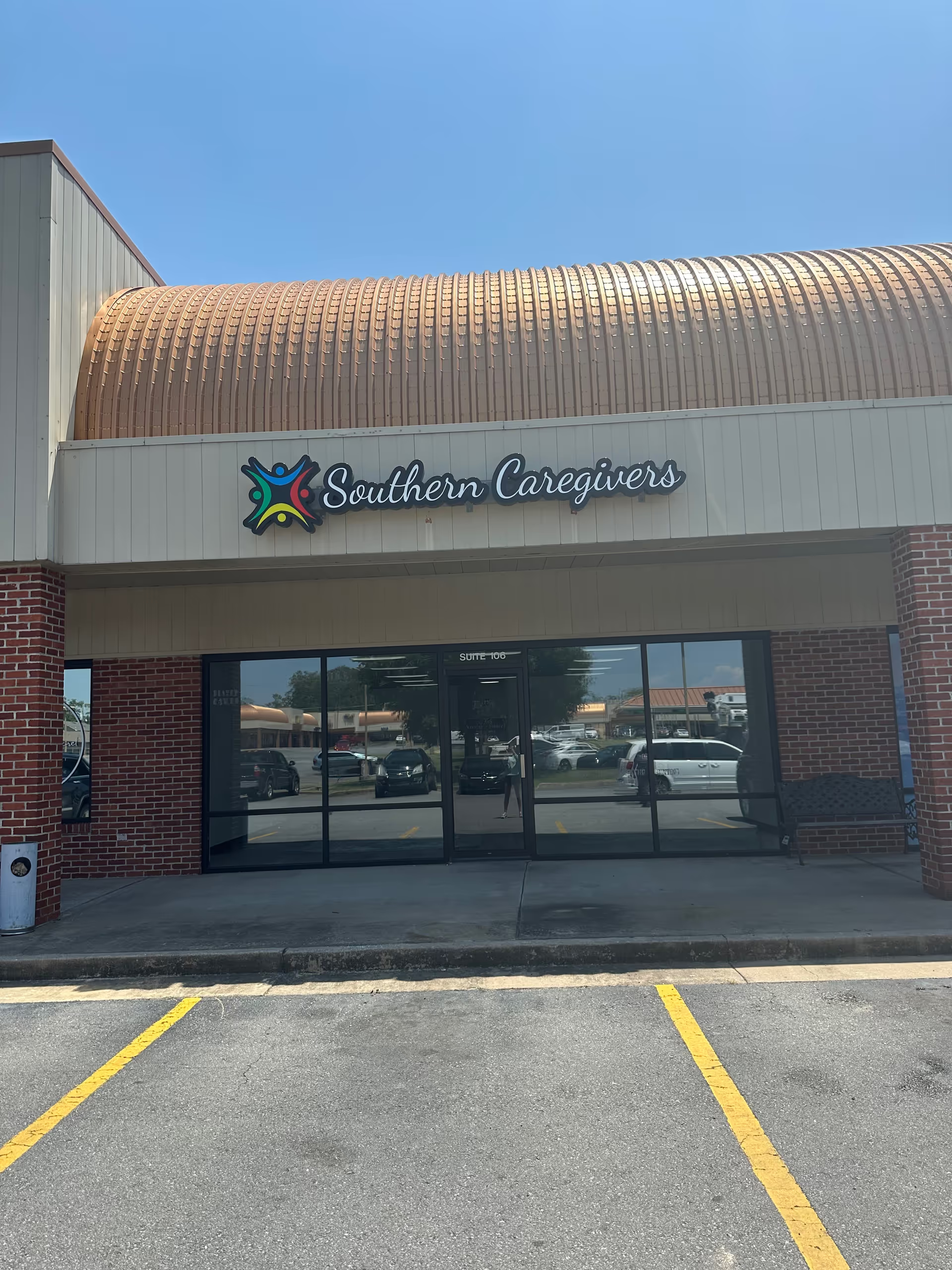
The available review summaries for Arkansas Hospice Pine Bluff show a polarized experience among families. On the positive side, reviewers express clear appreciation for caregivers and the hospice team: comments emphasize compassionate bedside care, a supportive hospice approach, and family-centered support that some families found highly recommendable. These observations suggest the agency can provide meaningful emotional and practical support at end of life when operations align with individual expectations.
Conversely, at least one review expresses a strongly negative overall impression. That contrast indicates variability in caregiver quality and conduct rather than a uniformly positive or negative pattern. Clinically, this reads as inconsistent implementation of care standards — some clients receive attentive, respectful support while others experience deficiencies in the same domains. Such variability can reflect uneven caregiver training, differing supervision, or gaps in matching caregivers to client needs.
Office communication and reliability emerge as additional areas of concern by implication. The mixed feedback suggests the agency’s responsiveness, scheduling flexibility, and shift consistency are variable; families who were satisfied perceived reliable, coordinated service, while dissatisfied families perceived lapses. These operational traits affect caregivers’ ability to deliver consistent care and directly influence family perceptions of value.
There is limited explicit information about billing, but the divergence in overall assessments implies families differ in whether they feel the service delivered matches expectations and cost. Management-level patterns that could explain the split include variable oversight, inconsistent training or supervision, and uneven communication protocols.
For prospective clients and families, the notable pattern is polarization: the agency is capable of delivering compassionate, supportive hospice care, yet experiences exist that point to inconsistent performance. When evaluating this provider, ask specific questions about caregiver training and turnover, methods for ensuring schedule and shift reliability, channels for urgent and routine communication, and how quality concerns are escalated and remedied. These inquiries can help identify whether an individual family is likely to experience the supportive care several reviewers praised or encounter the operational shortcomings implied by other feedback.