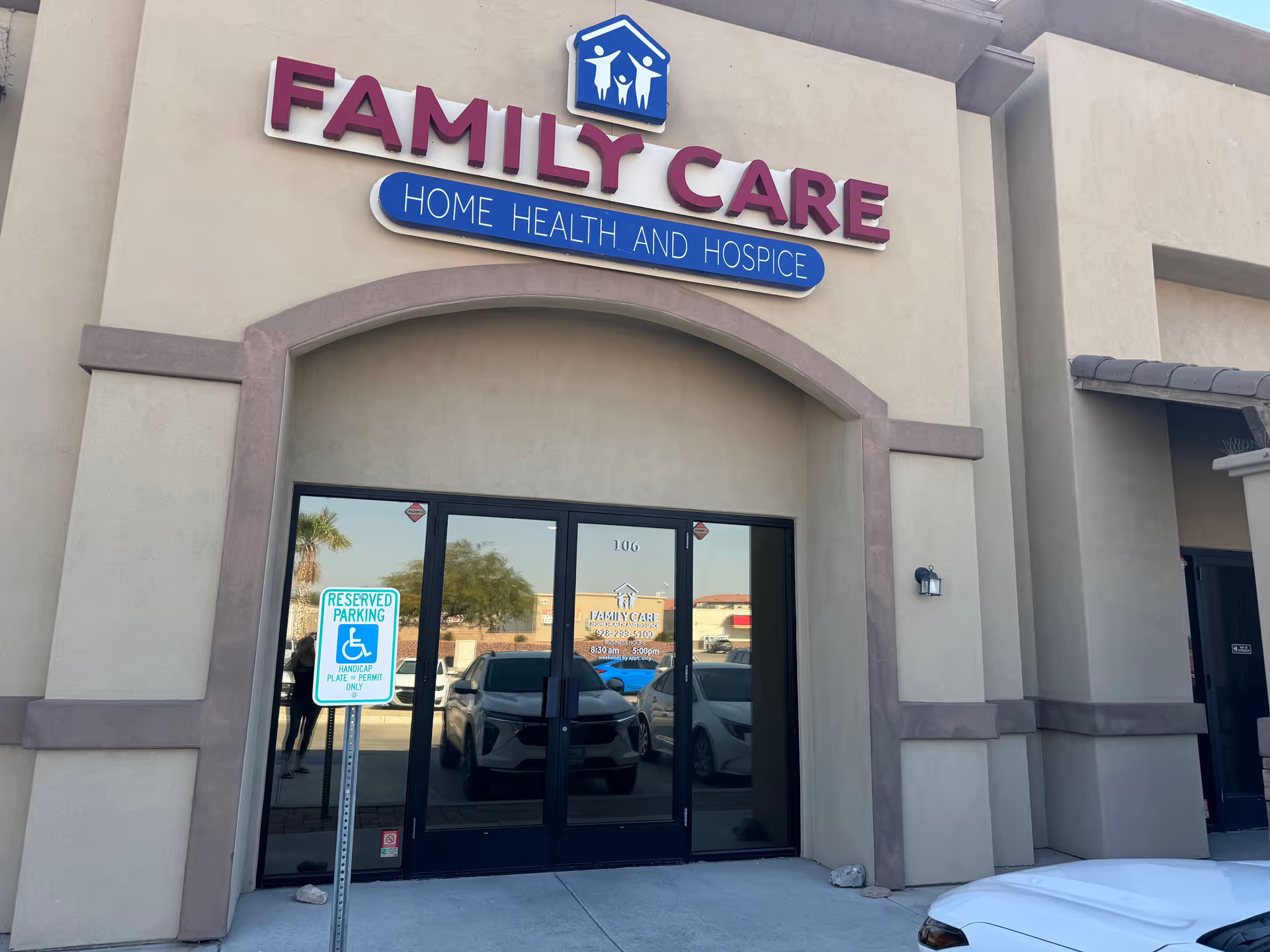
Overall impression: Reviewers consistently characterize the agency’s frontline clinical teams as compassionate, patient, and knowledgeable. Many families highlight nurses who provide steady emotional and end-of-life support, who are reachable at night and on weekends, and who assist with medication management and equipment setup. Several accounts emphasize respectful, dignity-focused care and clear explanations that helped family decision-making during hospice and palliative stages.
Caregiver quality and reliability: Clinical staff receive strong and recurrent praise for bedside manner, attention to comfort, and practical assistance. The agency appears capable of providing consistent nursing-level support across day and night hours; reviewers describe meticulous care and supportive facilitation of peaceful end-of-life transitions. That said, there are isolated indications of caregiver-family compatibility issues that affected some households. Prospective clients should ask about caregiver matching and preferred continuity of assignment when arranging services.
Office communication and scheduling: Communication is a mixed area. Many reviewers describe responsive, timely contact with clinicians, while others describe inconsistent office-level communication and a lack of proactive updates. Scheduling and coordination gaps are mentioned—examples include difficulty getting timely administrative follow-up and occasional mismatches between planned and delivered services. These items point to weaknesses in back-office coordination rather than the clinical team's bedside performance.
Billing, management, and operations: Financial experience is uneven. Some clients note competitive pricing and good value, while others report billing discrepancies, charges for items they did not expect, or promises that were not honored. Operational critiques include references to outdated administrative technology, leadership and organizational instability, and deficiencies in accountability and follow-up. Those patterns suggest that administrative and management processes may not be as robust as the clinical program.
Notable patterns and practical advice: The dominant strengths are clinical compassion, around-the-clock nursing access, and practical hospice support, including equipment setup and medication assistance. The dominant risks for families are administrative: inconsistent office communication, unclear billing practices, and coordination gaps that can affect continuity. When considering this agency, families should clarify billing policies in writing, confirm scheduling and caregiver assignment procedures, and establish a direct escalation contact for administrative or safety concerns. Doing so will help leverage the agency’s clinical strengths while reducing exposure to the noted operational weaknesses.